

Shinkansen WiFi and Mobile Data: Staying Connected at 300 km/h
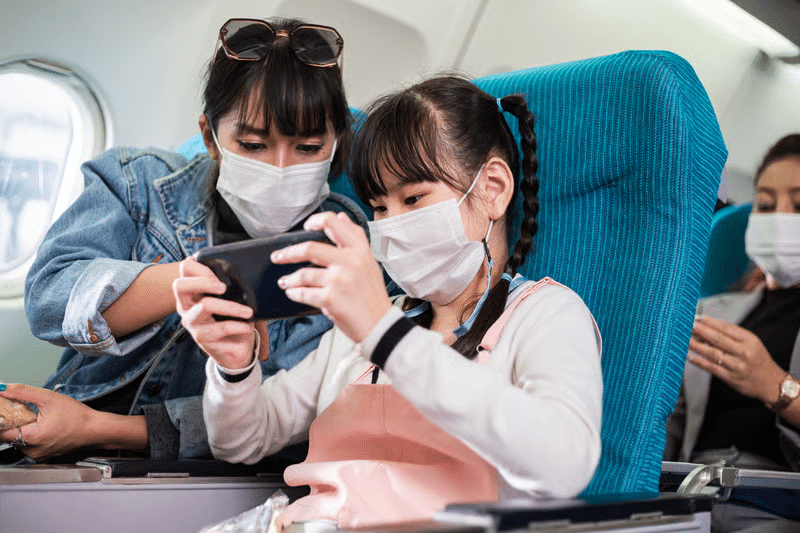
Few travel experiences capture Japan’s reputation for precision and infrastructure ambition quite like the Shinkansen — trains running at up to 320 km/h between cities with timetable accuracy measured in seconds, connecting Tokyo to Osaka in two and a half hours, Kyoto to Hiroshima in under two. For international visitors, the bullet train is often the single most anticipated logistics experience of a Japan trip. The natural question follows immediately: will my phone actually work at that speed, through that many tunnels, across that much distance?
Shinkansen WiFi and mobile data performance is, with some genuine nuance, a connectivity success story. Japan’s combination of trackside carrier infrastructure investment and free onboard WiFi has produced a high-speed rail connectivity experience that ranks among the best in the world — better than most European high-speed rail, dramatically better than most North American rail connectivity, and matched closely only by South Korea’s KTX. Understanding how that connectivity actually works — what’s free WiFi versus what’s your own eSIM data, where tunnels interrupt signal, and how this varies by specific Shinkansen line — helps every rider plan their on-train time effectively.
This guide covers how Shinkansen connectivity infrastructure works, the reality of the free onboard WiFi service, mobile data performance via your Japan eSIM, tunnel coverage gaps, line-by-line performance across Tokaido, Sanyo, Tohoku, and Hokuriku routes, and the best eSIM strategy for long Shinkansen journeys.
How Shinkansen Connectivity Works
Understanding Shinkansen connectivity requires distinguishing between two separate systems: the train operator’s free onboard WiFi service, and your own mobile carrier’s signal reaching the train through trackside infrastructure.
Trackside Carrier Infrastructure
Japan’s three major carriers — NTT Docomo, SoftBank, and KDDI/au — have installed extensive trackside antenna infrastructure along Shinkansen routes, supplemented by repeater systems inside tunnels on many sections. This infrastructure allows your phone, connected to your Japan eSIM, to maintain a normal mobile data connection throughout most of a Shinkansen journey — the same way it would on any train, just engineered for trains moving at speeds where handoffs between cell towers happen far more frequently than on a stationary device.
This trackside infrastructure is what shinkansen japan esim users actually rely on for connectivity during their journey — not the train’s own WiFi system, which is a separate, supplementary service.
JR’s Onboard WiFi System
Separately, Japan Railways operates free onboard WiFi (“JR-EAST Free Wi-Fi” or similar branded services depending on the operating company) on most current Shinkansen rolling stock. This service connects to the internet via the train’s own connection to ground infrastructure — essentially the train acting as a mobile router connected to the same trackside network that serves individual phones.
Both systems exist simultaneously, and which one your device actually uses depends on whether you’ve connected to the train’s WiFi network or are relying on your own SIM/eSIM’s cellular connection.
Free WiFi on Shinkansen: Reality Check

Japan rail wifi on Shinkansen trains has improved significantly in recent years, but understanding its actual capabilities prevents the disappointment that comes from expecting more than the service delivers.
What Shinkansen Free WiFi Actually Offers
Free onboard WiFi is available on the Tokaido, Sanyo, and most Tohoku Shinkansen services, with rollout to additional lines continuing. The service requires no payment but typically has session time limits (commonly 3 hours per connection, requiring reconnection) and bandwidth that, while functional for browsing and messaging, is not designed for heavy streaming or large file transfers across an entire train of passengers sharing the same connection.
The Realistic Free WiFi Experience
For basic tasks — checking email, browsing maps (when the connection holds), messaging apps, light web browsing — Shinkansen free WiFi works adequately. For video streaming, video calls, or large uploads, the shared bandwidth across a full train car of passengers using the same free service produces inconsistent results, particularly on busy services during peak travel periods (Friday evenings, weekend mornings, holiday periods).
Why Most Experienced Travelers Use Their eSIM Instead
The practical consensus among frequent Shinkansen riders is that bullet train wifi japan free service is a reasonable backup but not the primary connectivity method. Your own Japan eSIM, connecting via trackside carrier infrastructure rather than the shared train WiFi, generally delivers more consistent performance because you’re not sharing bandwidth with an entire carriage of fellow passengers on the same connection. For shinkansen long ride data needs — video calls, streaming, significant work tasks — your eSIM’s direct carrier connection is the more reliable choice.
Mobile Data While on the Train
Using your Japan eSIM directly — rather than connecting to the train’s WiFi — is the connectivity approach that delivers the most consistent shinkansen internet experience for most practical purposes.
What to Expect From Carrier Data
On Docomo, SoftBank, or KDDI eSIM plans, mobile data on Shinkansen trains delivers speeds that handle every standard travel task: maps and navigation (when not in active tunnel sections), messaging, browsing, social media, and moderate video streaming. Speed measurements on open sections between tunnels typically show LTE speeds of 20–80 Mbps, with 5G availability on select sections of the Tokaido Shinkansen delivering higher speeds where coverage has been deployed.
Network Handoff at High Speed
Shinkansen trains moving at 300+ km/h pass through cell coverage areas far more rapidly than a car or regular train — meaning your device performs many more network handoffs per minute than typical mobile use. Japan’s carriers have engineered their Shinkansen corridor infrastructure specifically to manage this handoff frequency smoothly; the practical result is that most users don’t notice the handoffs happening, experiencing instead a generally continuous connection with predictable brief interruptions specifically tied to tunnel sections rather than random handoff failures.
Practical Task Performance
Navigation apps: Pre-loaded routes continue functioning through brief signal gaps since the route data is cached; live map tile loading pauses briefly in tunnels and resumes on exit.
Video calls: Generally stable on open track sections; expect brief freezes or drops during tunnel passages, with most calling apps reconnecting automatically within seconds of tunnel exit.
Streaming: Functional but benefits from some buffer tolerance — downloading content for offline viewing before boarding remains the more reliable approach for tunnel-heavy routes specifically.
Messaging and email: Essentially unaffected by brief interruptions; messages queue and send/receive as connection resumes.
Tunnel Coverage Gaps
Shinkansen tunnel signal interruption is the most predictable and well-understood limitation of bullet train connectivity — a physics reality rather than an infrastructure failure, and one that Japan’s carriers have worked to minimize through tunnel repeater installations on many key sections.
Why Tunnels Interrupt Signal
Radio signals don’t penetrate solid rock effectively, and Shinkansen tunnels — particularly the long mountain-crossing tunnels on routes through Japan’s mountainous terrain — create genuine signal dead zones unless repeater infrastructure has been installed inside the tunnel itself to relay signal from external antennas.
Repeater Infrastructure Progress
Japan’s carriers have progressively installed repeater systems in many of the longer and more heavily traveled Shinkansen tunnels, particularly on the Tokaido Shinkansen given its status as Japan’s busiest and most economically important rail corridor. This investment has meaningfully reduced the duration and frequency of complete signal loss compared to the network’s earlier years, though it hasn’t eliminated tunnel gaps entirely — particularly on longer mountain tunnels and on lines with lower overall traffic volume that receive correspondingly lower infrastructure investment priority.
What Tunnel Gaps Actually Feel Like
For most Shinkansen tunnel passages on well-covered routes, the experience is a brief interruption — typically seconds to under a minute for shorter tunnels — followed by signal recovery. Longer tunnels without repeater infrastructure (some sections on less-trafficked lines, and a few of the longest mountain crossings even on major routes) can produce gaps of several minutes. Shinkansen tunnel signal patterns are predictable enough that frequent riders learn to anticipate them on routes they travel regularly.
Tokaido, Sanyo, and Tohoku Lines

Connectivity quality varies meaningfully by specific Shinkansen line, reflecting each route’s traffic volume, tunnel density, and the corresponding infrastructure investment priority it has received.
Tokaido Shinkansen WiFi and Coverage
The Tokaido Shinkansen — connecting Tokyo to Shin-Osaka via Nagoya and Kyoto — is Japan’s busiest and most economically critical rail line, and tokaido shinkansen wifi and mobile coverage reflect this priority status. All three major carriers maintain the most comprehensive trackside infrastructure and tunnel repeater coverage on this route compared to any other Shinkansen line.
The most notable coverage interruptions on the Tokaido route occur at the Shin-Tanna Tunnel (one of the route’s longest) and several tunnels through the Hakone-area mountains between Odawara and Atami. Even on these sections, repeater infrastructure has reduced gap duration significantly compared to the route’s earlier connectivity history.
Sanyo Shinkansen WiFi and Coverage
The Sanyo Shinkansen extends the Tokaido line westward from Shin-Osaka to Hakata (Fukuoka), passing through Okayama, Hiroshima, and the Kanmon Strait tunnel connecting Honshu to Kyushu. Sanyo shinkansen wifi and mobile coverage is strong, though slightly less comprehensive than the Tokaido line’s investment level given somewhat lower overall traffic volume. The Kanmon Tunnel crossing under the strait between Honshu and Kyushu is a notable tunnel section with more limited connectivity than the route’s other tunnels.
Tohoku Shinkansen WiFi and Coverage
The Tohoku Shinkansen connects Tokyo northward to Sendai, Morioka, and ultimately Aomori and the Hokkaido extension. Tohoku shinkansen wifi and coverage is good through the more densely populated southern sections (Tokyo to Sendai) and becomes more variable through the northern Tohoku countryside, consistent with the broader rural Tohoku coverage pattern that favors Docomo’s network depth.
Hokuriku Shinkansen WiFi and Coverage
The Hokuriku Shinkansen, connecting Tokyo to Kanazawa via Nagano and through the mountainous Hida region, includes some of the most tunnel-intensive sections of any major Shinkansen route. Hokuriku shinkansen wifi and mobile coverage shows more frequent and sometimes longer tunnel interruptions than the Tokaido or Sanyo lines, reflecting both the route’s more challenging mountain terrain and its comparatively lower (though growing) traffic volume.
Best Japan eSIM Use on Long Shinkansen Rides
For travelers planning extended Shinkansen journeys — whether a single long ride (Tokyo to Hakata is nearly five hours) or a multi-segment trip across several lines — specific eSIM strategies improve the on-train connectivity experience.
Network Choice for Shinkansen-Heavy Itineraries
For shinkansen japan visitor itineraries built around extensive rail travel — a Japan Rail Pass-style trip covering multiple regions — Docomo provides the most consistent coverage across the full range of Shinkansen lines, including the less-trafficked Tohoku and Hokuriku routes where its rural depth advantage extends to the rail corridor infrastructure as well. For travelers concentrating primarily on the Tokaido and Sanyo lines (the Tokyo-Osaka-Hiroshima-Fukuoka corridor), all three carriers perform comparably well given these routes’ high investment priority.
Practical Preparation for Long Rides
Download content before boarding. For shinkansen long ride data efficiency, downloading streaming content, podcasts, or offline maps before departure — using station or hotel WiFi — eliminates dependency on maintaining a continuous connection through the journey’s tunnel sections.
Don’t rely on the free train WiFi for important calls. If you need to make an important video call during a Shinkansen journey, your own eSIM’s carrier connection is more reliable than the shared train WiFi service, which can become congested on busy trains.
Expect brief interruptions as normal, not as a problem. Understanding that tunnel-related gaps are a predictable physics reality rather than a connectivity failure helps manage expectations — particularly for travelers used to mobile networks in countries where gaps are less common but also less predictable.
Japan JR Pass and eSIM Coordination
For travelers using a Japan Rail Pass alongside a Japan eSIM, japan jr pass wifi access (the free onboard service) and your eSIM’s mobile data work as complementary systems — neither requires special coordination with the other. Your JR Pass covers train fare; your eSIM covers connectivity; the train’s free WiFi is available as a supplementary option regardless of which fare product you’re traveling on.
Tips for Tour Groups
Shinkansen travel is a common component of organized Japan tours, and group connectivity has specific considerations on bullet trains.
Individual eSIMs for Group Coordination
For shinkansen japan tourist groups, individual eSIMs per traveler — rather than relying on a single shared hotspot — is the recommended approach. Shinkansen seating often separates group members across different car sections or even different cars on busy trains, making independent connectivity important for group communication and individual navigation needs at connecting stations.
Reserved Seating and Connectivity Planning
Tour groups booking reserved Shinkansen seating together should be aware that car-to-car signal quality can vary slightly based on antenna positioning, though this is a minor consideration compared to the route-level and tunnel-related factors covered above. The practical group travel recommendation is ensuring every participant has independent eSIM connectivity rather than depending on seating arrangements for shared connectivity.
Managing Data During Multi-Day Rail Tours
For tour groups undertaking extensive multi-day Shinkansen-based itineraries, Japan Sim Data’s unlimited or higher-data plans remove consumption anxiety across days that combine intensive rail travel with destination exploration — bullet train photography, route research, and connectivity during long rides add up across a rail-intensive multi-city tour.
According to JR East’s official information, the free WiFi service available on Shinkansen and other JR East trains continues to expand in coverage and capability as part of the company’s ongoing digital infrastructure investment for international and domestic travelers. For travelers planning rail-intensive Japan itineraries, the Japan National Tourism Organization provides Shinkansen route planning resources that complement connectivity preparation for multi-city rail trips.
Conclusion

Shinkansen WiFi and mobile data performance reflects Japan’s broader infrastructure achievement: a high-speed rail network that maintains connectivity at 300+ km/h with predictable, manageable interruptions rather than the unreliable patchwork found on most of the world’s rail systems. Your Japan eSIM, connecting via trackside carrier infrastructure, generally delivers more consistent results than the free onboard WiFi for tasks that matter — video calls, sustained browsing, navigation — while the free WiFi remains a useful backup for basic browsing and messaging.
The Tokaido and Sanyo lines — carrying the bulk of Japan’s domestic and international Shinkansen traffic — receive the most comprehensive infrastructure investment and deliver the most consistent connectivity of any Shinkansen routes. The Tohoku and Hokuriku lines, while still well-served by Japan’s standards, show more variability that rewards Docomo’s network depth for travelers prioritizing rail connectivity on these routes.
Japan Sim Data’s eSIM plans on Docomo, SoftBank, and KDDI deliver the trackside carrier connectivity that makes Shinkansen travel genuinely productive and connected — not just fast. Explore Japan Sim Data’s eSIM plans and stay connected through every kilometer of Japan’s extraordinary high-speed rail network.
Frequently Asked Questions
Q1: Is Shinkansen WiFi free, and is it good enough to rely on?
A: Yes, Shinkansen onboard WiFi is free on most current rolling stock across the Tokaido, Sanyo, and most Tohoku lines, with no payment required. It’s adequate for basic browsing, messaging, and email, but bandwidth is shared across the entire train car, making it less reliable for video calls or streaming during busy periods. Most experienced travelers use their own Japan eSIM as the primary connection and treat the free train WiFi as a useful backup rather than the main connectivity method.
Q2: Why does my phone lose signal in Shinkansen tunnels?
A: Radio signals don’t penetrate solid rock effectively, and tunnels create genuine coverage gaps unless carriers have installed repeater systems inside the tunnel to relay signal from external antennas. Japan’s carriers have installed repeaters in many of the longer, more heavily traveled tunnels — particularly on the Tokaido Shinkansen — significantly reducing gap duration. Less-trafficked lines and longer mountain tunnels, particularly on the Hokuriku Shinkansen, show more frequent and sometimes longer interruptions.
Q3: Which Shinkansen line has the best mobile coverage?
A: The Tokaido Shinkansen, connecting Tokyo to Shin-Osaka, has the most comprehensive trackside infrastructure and tunnel repeater coverage of any Shinkansen line, reflecting its status as Japan’s busiest and most economically critical rail corridor. The Sanyo Shinkansen extension to Fukuoka is similarly strong. The Tohoku and Hokuriku lines show more variable coverage, particularly in their more rural northern and mountainous sections, where Docomo’s network depth provides a meaningful advantage over SoftBank or KDDI.
Q4: Can I make video calls on the Shinkansen?
A: Generally yes, on open track sections using your own Japan eSIM’s mobile data connection rather than the shared train WiFi. Expect brief freezes or drops during tunnel passages, with most calling apps reconnecting automatically within seconds of tunnel exit. For important calls, the Tokaido and Sanyo lines offer the most reliable experience given their comprehensive infrastructure investment; calls on the Tohoku or Hokuriku lines through more rural or mountainous sections may experience more frequent brief interruptions.
Q5: Should I use my Japan eSIM or the train’s free WiFi on the Shinkansen?
A: Your Japan eSIM is generally the more reliable choice for tasks that matter — video calls, navigation, sustained browsing — because you’re not sharing bandwidth with an entire train car of passengers on the same free WiFi connection. The free train WiFi works as a reasonable backup for basic browsing and messaging, particularly useful if you’re conserving your eSIM’s data allocation, but shouldn’t be your primary connection for important or data-intensive tasks during the journey.