
eSIM vs Physical SIM in Japan: What Every Traveler Must Know
Landing at Narita or Kansai International Airport and discovering that your phone has no data can make travel stressful. In Japan, mobile data is especially useful for Google Maps, train apps, translation tools, and messaging.
Before you fly, you have an important choice: should you use a physical SIM or an eSIM?
Both options can provide reliable mobile data in Japan. However, they work differently and suit different types of travelers.
This guide explains eSIM vs physical SIM in Japan. It compares activation, convenience, compatibility, coverage, and practical use. By the end, you can choose the option that best fits your trip.
What Is a Physical SIM Card in Japan?

A Japan physical SIM is a small plastic card that fits into your phone’s SIM tray. It connects your device to a Japanese mobile network and provides mobile data during your trip.
Tourists can usually get a Japan prepaid SIM in two main ways.
- At the airport: Major airports such as Narita, Haneda, Kansai, and Chubu offer SIM cards through various retail points, kiosks, or vending machines.
- Before departure: Some providers allow travelers to order a SIM online and arrange delivery or pickup before the trip.
Japan has three major mobile network operators: NTT Docomo, SoftBank, and KDDI/au. Coverage varies by location and network, but travelers can find mobile service across major cities and many rural destinations.
Most tourist SIM cards focus on data rather than traditional voice service. Check the specific plan before purchase if you need calls or SMS.
What Is an eSIM in Japan?
An eSIM is a digital SIM profile built into a compatible device. It does not require a physical card.
Instead, you install the profile through a QR code, activation link, or another supported setup method.
A Japan eSIM can often be purchased before departure. This allows travelers to prepare their mobile data before reaching Japan.
Providers such as Japan Sim Data offer Japan eSIM plans using major Japanese networks, including NTT Docomo, SoftBank, and KDDI/au.
eSIM technology follows GSMA standards. Apple, Google, Samsung, and other manufacturers support eSIM on many newer devices. However, compatibility varies by model and market.
Always check your exact phone model before buying an eSIM.
Physical SIM vs eSIM in Japan
The biggest difference is how you install and manage the service.
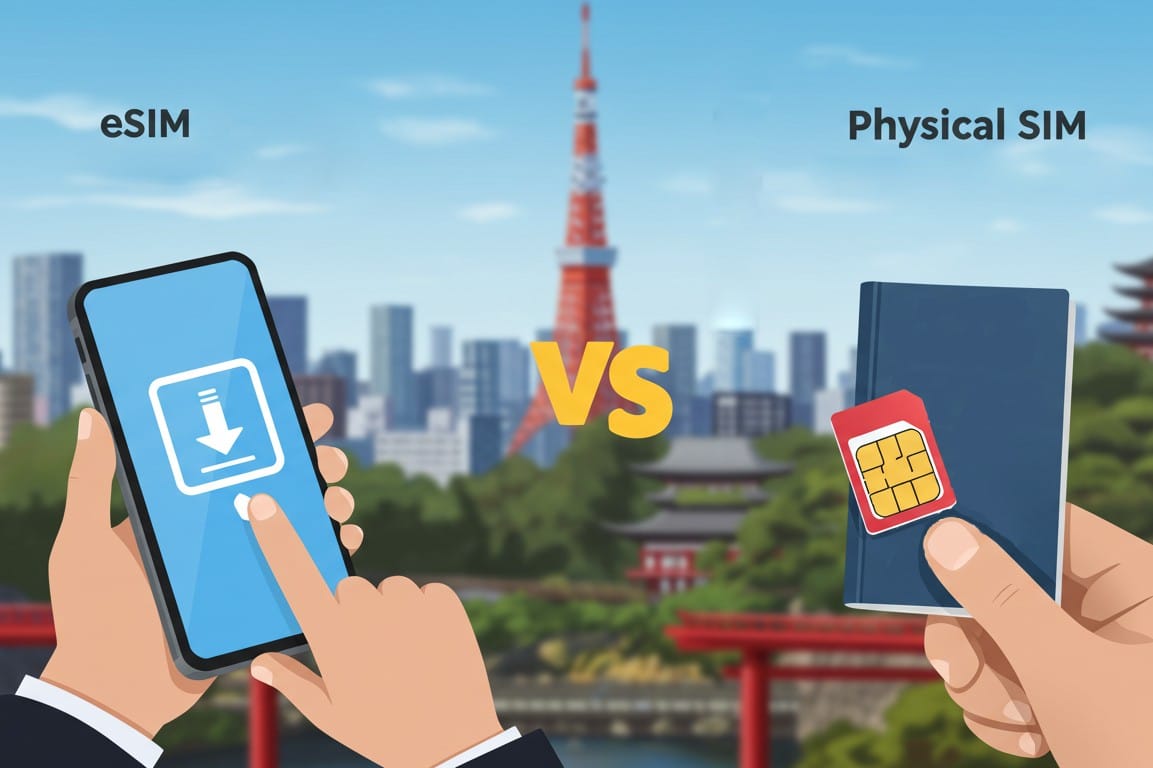
A physical SIM requires you to insert a plastic card into your device. An eSIM uses a digital profile stored on the phone.
Both can provide mobile data. The actual experience depends more on the network, plan, device, and location than on the physical or digital format.
Physical SIM: Main Advantages
Works with more devices.
Many older phones support physical SIM cards even when they do not support eSIM. This makes physical SIMs useful for travelers with older or budget devices.
Easy to share with a group.
Travel agencies can distribute physical SIM cards to clients. This can be useful when a group has many different phone models.
Simple to understand.
Some travelers prefer a physical card because they can see and handle it. This can make the setup process more familiar.
Available after arrival.
Travelers who do not purchase a SIM before departure may find physical SIM options at airports and electronics retailers.
Physical SIM: Main Disadvantages
You need to handle the card.
You must remove your existing SIM and insert the Japanese SIM. The process requires a SIM ejector tool or another suitable method.
You can lose the card.
Physical SIM cards are very small. Keep your original SIM in a secure place during the trip.
Your normal SIM may need to stay out.
If your phone does not support dual-SIM use, removing your home SIM can affect access to your normal mobile service.
Arrival can take longer.
Buying a SIM after a long flight may involve finding a suitable retailer, comparing plans, and completing the installation.
eSIM: Main Advantages

You can prepare before departure.
One of the biggest advantages of a Japan eSIM is the ability to install the plan before you travel.
You can complete the setup while you have a reliable internet connection at home.
You can keep your physical SIM.
Your home SIM can remain in the phone. On compatible devices, you can use the eSIM for mobile data while keeping your regular line available for calls or messages.
Check your carrier’s roaming charges before using your home line abroad.
There is no physical card to lose.
The eSIM profile remains stored on the device. You do not need to carry a tiny SIM card during your trip.
It works well for last-minute planning.
Travelers can purchase an eSIM online shortly before departure. This can be useful when a trip changes unexpectedly.
You can store multiple eSIM profiles.
Many compatible phones allow users to store several eSIM profiles. This can help frequent travelers who visit different countries.
eSIM: Main Disadvantages
Your phone must support eSIM.
Not every device has eSIM capability. Older phones and some regional versions of newer phones may not support it.
Always check the manufacturer’s specifications before purchasing.
You need internet access for installation.
You normally need a stable internet connection to download and install the eSIM profile.
Installing it before leaving home can help avoid problems at the airport.
Transfer options vary.
An eSIM profile does not work like a physical card that you can simply remove and place in another phone.
If you change devices, follow the provider’s transfer or replacement procedure.
eSIM vs Physical SIM: Speed and Coverage
A common question about eSIM vs physical SIM in Japan is whether one provides better speed or coverage.
In general, the SIM format itself does not determine network speed.
An eSIM and a physical SIM can connect to the same mobile network. The network operator, plan, device, location, and network conditions have a much greater effect on performance.
NTT Docomo
Docomo has extensive coverage across Japan and is a popular option for travelers visiting both cities and regional destinations.
It can be useful for itineraries that include rural areas or longer journeys outside the main urban centres.
SoftBank
SoftBank provides strong coverage across many populated areas in Japan.
It can be a suitable option for travelers whose trips focus mainly on major cities and established tourist destinations.
KDDI/au
KDDI/au also provides broad coverage across Japan.
Travelers can consider it for both urban and regional itineraries, depending on their destinations and plan.
The best network depends on where you are traveling. No carrier can guarantee identical service in every location.
When Should You Choose a Physical SIM?
A physical SIM may suit you if:
Your phone does not support eSIM.
This is the clearest reason to choose a physical SIM.
You have an older device.
Older phones may only support physical SIM cards.
You are traveling with people who prefer simple setup.
Some travelers may feel more comfortable inserting a physical card than installing a digital profile.
You manage a group with different devices.
Travel agencies may find physical SIM distribution easier when clients use many different phone models.
You want an alternative to eSIM.
A physical SIM can also serve as a backup option for travelers who prefer having a second connectivity method.
When Should You Choose an eSIM?
For travelers with compatible phones, an eSIM can offer a simpler setup.
You Want Connectivity Before Arrival
You can install the eSIM before your flight and prepare your mobile data in advance.
This means you do not need to search for a SIM retailer immediately after landing.
You Want to Keep Your Home SIM
An eSIM allows many compatible phones to use two lines.
You can keep your home SIM active while using the Japanese eSIM for mobile data.
Be careful with roaming settings. Your home carrier may charge international roaming fees.
You Want a Digital Setup
There is no physical card to carry or store.
This makes eSIMs convenient for travelers who prefer managing everything from their phones.
You Travel to Japan Often
Frequent Japan visitors may find eSIM technology convenient because they can manage digital plans without buying and handling a new physical card each time.
Japan Sim Data offers different Japan eSIM options, including Day Pass, fixed-duration plans, and Unlimited plans.
eSIM vs Physical SIM for Travel Agencies
The choice can be different for individual travelers and travel agencies.
Agencies may need to manage:
- Multiple travelers
- Different phone models
- QR code distribution
- Installation instructions
- Activation schedules
- Technical support
- Backup connectivity
Physical SIMs can simplify distribution for some groups.
eSIMs can reduce physical inventory and make digital distribution easier.
The best option depends on the group’s devices and the agency’s operational process.
Which Option Is Better for Japan?
There is no universal winner.
An eSIM is usually more convenient for travelers with compatible devices. You can prepare before departure, avoid handling a physical card, and keep your home SIM available on supported phones.
A physical SIM remains useful for travelers with incompatible devices or those who prefer traditional SIM installation.
The important factors are your device, itinerary, network, data needs, and preferred setup process.
Frequently Asked Questions
Can I use an eSIM and physical SIM at the same time in Japan?
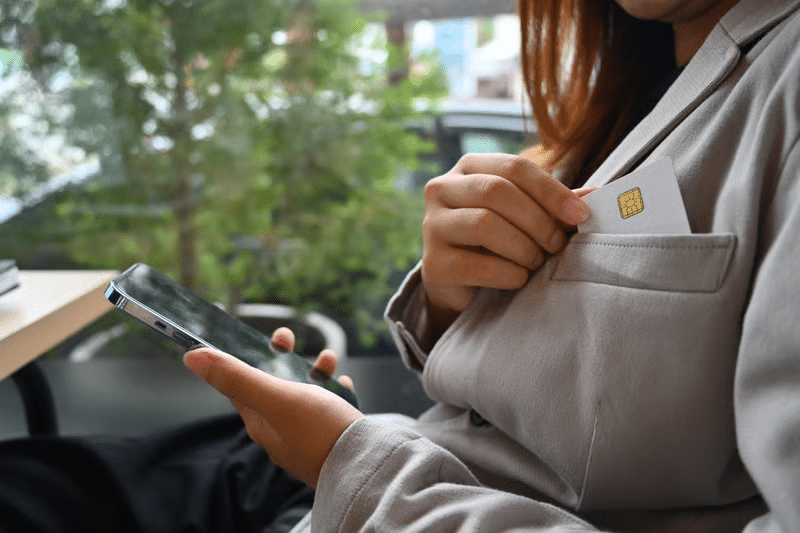
Yes, many modern phones support dual-SIM functionality.
You can keep your home SIM in the physical SIM slot and use a Japan eSIM for mobile data.
However, dual-SIM features vary by device. Check your phone’s specifications before traveling.
Are Japan eSIMs as fast as physical SIMs?
Yes, the SIM format itself does not normally determine data speed.
If an eSIM and physical SIM use the same network and compatible plans, their performance can be similar.
Location, network congestion, device capabilities, and plan restrictions have a greater effect on speed.
Where can I buy a physical SIM in Japan?
Travelers can find physical SIM options at some international airports, electronics retailers, and other authorised sales locations.
Availability varies by location and provider.
You can also arrange a physical SIM before departure through a provider that offers delivery or pickup.
What happens if I run out of eSIM data?
The result depends on your specific plan.
Some plans reduce speeds after the included allowance is reached. Others require you to purchase additional data.
Unlimited plans may avoid the need to monitor a fixed data allowance, but travelers should still check the provider’s terms.
Is an eSIM better for Japan travel in 2026?
For travelers with compatible devices, an eSIM can be the more convenient option.
It allows pre-trip installation and eliminates the need to handle a physical card.
However, physical SIMs remain a reliable choice for incompatible devices and travelers who prefer traditional SIM cards.
Conclusion: eSIM or Physical SIM for Japan?
The eSIM vs physical SIM in Japan decision depends on your device and travel needs.
If your phone supports eSIM, the digital option offers several practical advantages. You can prepare before departure, avoid airport SIM shopping, and keep your physical SIM available on compatible devices.
A physical SIM still makes sense for travelers with older phones, incompatible devices, or a preference for traditional installation.
Both options can provide mobile data through Japan’s major networks. The key is to choose the right network and plan for your itinerary.
Japan Sim Data offers Japan eSIM and physical SIM options for individual travelers, groups, and travel agencies.
Choose your connectivity option before departure so you can arrive in Japan ready to navigate, communicate, and explore.