

Rural Japan Mobile Coverage: Which Network Works Where the Cities End

Japan rewards the traveler who ventures beyond Tokyo and Osaka. The country’s most atmospheric ryokan are in mountain valleys in Nagano. Its most moving cultural landscapes are in rural Tohoku’s preserved samurai towns and Shikoku’s ancient pilgrimage routes. Some of its finest food is in fishing villages along Kyushu’s western coast and Hokkaido’s agricultural heartland. The travelers who discover these places consistently rate them among the most meaningful experiences Japan offers — and they consistently report that mobile connectivity, not tourism infrastructure, was the variable that determined how confidently they navigated.
Rural Japan mobile coverage is genuinely excellent by global standards — better than rural connectivity in most European countries, significantly better than rural United States, and remarkably consistent for a country where 70% of the landmass is mountainous and many of the most rewarding destinations are in that 70%. But “excellent by global standards” doesn’t mean “identical to Tokyo.” The three major carriers — NTT Docomo, SoftBank, and KDDI/au — perform differently in Japan’s countryside, and knowing which network suits your specific rural Japan itinerary is the difference between confident exploration and anxious signal hunting.
This guide provides the honest, region-specific picture: how each carrier performs in rural Japan, which specific regions favor which network, mountain and island coverage realities, and practical tips for travelers heading into Japan’s countryside. Read this before you buy your Japan eSIM and you’ll choose the right network for the Japan you’re actually going to visit.
The Reality of Rural Japan Coverage
Before comparing carriers, establishing what “rural Japan coverage” actually means prevents the most common traveler misconception: assuming rural Japan connectivity is poor.
What You Can Expect in Most Rural Japan Destinations
The vast majority of Japan’s rural tourist destinations — historic towns, onsen resorts, national park gateway communities, coastal fishing villages, mountain resort areas — have 4G LTE coverage from at least two of Japan’s three major carriers, and often all three. Japan’s rural coverage investment reflects a combination of commercial motivation (Japan’s rural tourism market is economically significant) and government-encouraged infrastructure policy that has pushed carriers to cover populated areas far more comprehensively than pure commercial logic would produce.
In practical terms: checking Google Maps in a historic post town on the Nakasendo highway, translating a menu in a rural ramen shop in Akita, or booking the next night’s accommodation from a viewpoint above a Kyoto mountain village — all of these work reliably on the right network across the overwhelming majority of Japan’s rural tourist destinations.
Where Coverage Genuinely Gets Challenging
The honest japan rural connectivity picture includes specific contexts where challenges arise:
- Mountain trails above 1,500–2,000 meters in Japan’s Alpine regions, particularly between huts and established viewpoints
- Uninhabited or very sparsely populated islands in Japan’s southwestern island chains
- Deep forest areas in national parks where human settlement is absent
- Tunnel-heavy road and rail sections through major mountain ranges
For these specific environments, coverage becomes variable and carrier choice matters significantly. For the 95% of rural Japan tourism that occurs in villages, towns, along coastal areas, and in accessible mountain resort zones, coverage is excellent and carrier differences are a matter of degree rather than presence vs. absence.
Docomo in Rural Japan
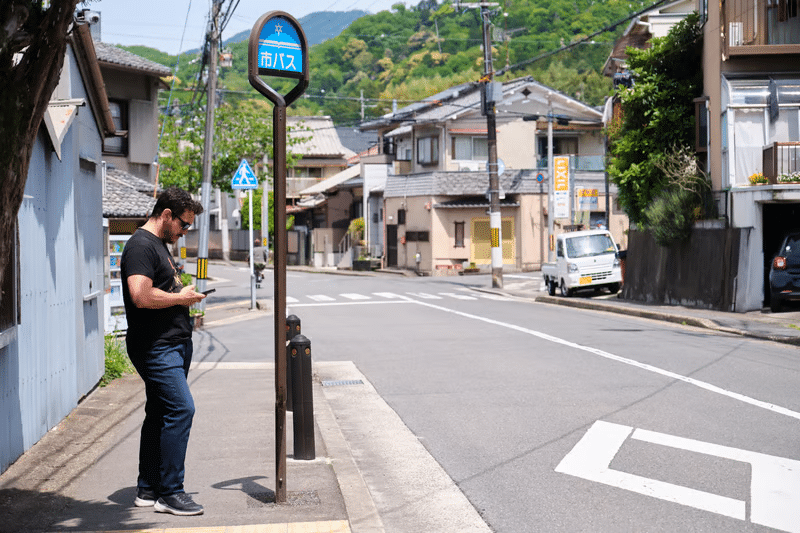
Docomo rural coverage is the starting point for any rural Japan network evaluation because it represents the deepest geographic footprint of Japan’s three major carriers.
Why Docomo Leads in Rural Areas
Docomo’s rural coverage advantage has two structural roots. First, as a former national telecommunications monopoly subsidiary, Docomo inherited an infrastructure philosophy that prioritized geographic completeness over commercial efficiency — building coverage in areas where the subscriber base was thin. Second, Docomo’s extensive Band 19 (800 MHz) LTE deployment provides the low-frequency coverage layer that reaches farther from each tower and penetrates natural obstacles more effectively than higher-frequency bands.
The combination produces a rural network that, in Japan remote esim terms, consistently outperforms competitors in three specific contexts: the distances between settled areas along rural roads, mountainous terrain above ski resort and hiking approach altitudes, and the smallest settlements — villages of a few hundred people or fewer — where competitor infrastructure investment isn’t economically justified but Docomo’s historical mandate produced towers regardless.
Docomo’s Rural Coverage in Numbers
Docomo’s 4G LTE coverage across Japan’s populated areas exceeds 99.9% — a figure that includes settlements so small they rarely appear on tourist maps. The operative word is “populated”: Docomo’s coverage prioritizes places where people live and travel, which in Japan’s rural context includes a remarkably long tail of small communities.
When Docomo Is the Clear Rural Choice
- Any itinerary with significant time in Tohoku’s countryside
- Mountain hiking routes in the Japan Alps
- Rural Hokkaido beyond major resort towns
- The Kii Peninsula’s Kumano Kodo pilgrimage route
- Small fishing villages and coastal communities anywhere in Japan
- Rural road trips on national highways through mountainous areas
SoftBank in Rural Japan
SoftBank rural coverage is the most nuanced of the three carriers to assess fairly — because SoftBank’s rural performance is adequate for mainstream rural tourist destinations while genuinely thinner in Japan’s most remote areas.
SoftBank’s Rural Reality
SoftBank’s 900 MHz Band 8 deployment provides the low-frequency rural coverage layer equivalent to Docomo’s Band 19, but with less comprehensive deployment in Japan’s most rural zones. In practice: SoftBank coverage in rural Japan tourist destinations is reliable — the onsen towns, rural historic sites, and accessible countryside areas that most tourists visit have SoftBank signal. The gap versus Docomo appears in the intermediate zones: the roads between towns, the trails between established tourist points, the agricultural land surrounding visited villages.
Where SoftBank Rural Performance Is Adequate
- Major onsen resort towns: Hakone, Kinosaki, Beppu, Yufuin, Nikko, Kusatsu
- Rural tourist sites accessible from major transport: Shirakawa-go, Miyajima, Matsushima
- Kyoto’s outer districts: Arashiyama, Kurama, Fushimi
- Rural Kyushu’s main destinations
- Okinawa’s main island rural areas
Where SoftBank Rural Coverage Thins
- Tohoku’s rural interior beyond major towns
- Hokkaido’s agricultural regions between named destinations
- Mountain trail approaches above resort zones
- Small coastal communities not on major tourist routes
- Japan’s Japan countryside esim demanding contexts where Docomo’s depth matters most
For travelers whose rural Japan itinerary stays on the beaten (if rural) path, SoftBank performs adequately. For travelers venturing genuinely off that path, Docomo’s depth becomes meaningful.
KDDI/au in Rural Japan
KDDI rural coverage occupies a distinctive middle position — not as deep as Docomo in Japan’s most remote areas, but with specific regional strengths that make it the strongest rural choice for particular itinerary types.
KDDI’s Rural Strength Profile
KDDI’s Band 18/26 (800 MHz) rural deployment produces coverage quality that is competitive with Docomo in Japan’s suburban-to-rural transitions and in specific regional contexts where KDDI’s historical infrastructure investment has been concentrated. The carrier’s Toyota-linked Chubu regional history produced particularly strong rural coverage in Aichi, Gifu, Mie, and surrounding prefectures — the rural zones surrounding Japan’s third-largest metropolitan area.
KDDI also shows competitive rural performance in Kyushu, where its historical regional carrier infrastructure (the former IDO Corporation served western Japan) produced early rural tower deployment that has been upgraded rather than built from scratch.
KDDI’s Specific Rural Strengths
- Rural and mountainous Chubu region (Gifu’s Hida region, Mie’s Ise-Shima peninsula)
- The Kumano Kodo pilgrimage route’s main sections (competing closely with Docomo)
- Rural and suburban Kyushu outside major cities
- Shikoku’s accessible rural areas and pilgrimage route towns
- Regional city surroundings across Japan where Band 18/26 suburban deployment is strong
KDDI Rural Limitations
In Tohoku’s countryside and Hokkaido’s interior, KDDI’s rural performance is comparable to SoftBank rather than matching Docomo’s depth. For travelers specifically visiting northern Honshu’s rural areas or Hokkaido beyond resort zones, Docomo remains the preferred choice over KDDI.
Specific Rural Regions: Tohoku, Shikoku, Kyushu Interior

Japan remote esim needs vary by specific region. Here’s the coverage picture for three of Japan’s most visited rural destinations among travelers seeking off-the-beaten-path experiences.
Tohoku Coverage
Japan tohoku coverage is the rural network context where Docomo’s advantage is most pronounced and most practically significant. Tohoku — the six prefectures of northeastern Honshu — contains some of Japan’s most dramatically beautiful and culturally distinctive rural landscapes: Yamagata’s Dewa Sanzan sacred mountains, Iwate’s preserved Hiraizumi (UNESCO World Heritage), Akita’s historic samurai district in Kakunodate, Aomori’s Oirase gorge and Towada lake area.
Docomo in Tohoku: Strongest rural network in the region. LTE coverage extends into small villages, along national highways between towns, and maintains signal in many mountain valley approaches. The most reliable single-network choice for comprehensive Tohoku rural coverage.
SoftBank in Tohoku: Adequate in major rural tourist destinations and larger towns. Noticeably thinner in the agricultural and forested zones between destinations. Not recommended as the sole network for Tohoku itineraries that include road trips or hiking between main towns.
KDDI in Tohoku: Similar profile to SoftBank — competitive in towns, thinning in rural transitions. Better than SoftBank in some specific Tohoku contexts but not matching Docomo’s depth in the region.
Tohoku recommendation: Docomo, clearly. For Tohoku rural travel, Docomo’s Band 19 rural investment makes it the most confident single-network choice.
Shikoku Coverage
Japan shikoku coverage presents a different carrier landscape from Tohoku. Japan’s least-visited main island by international tourists has strong coverage in its main cities (Takamatsu, Matsuyama, Kochi, Tokushima) from all three carriers, with rural coverage becoming the distinguishing factor across the island’s mountainous interior and coastal areas.
Docomo in Shikoku: Solid rural coverage including along significant portions of the 88-temple pilgrimage route — Japan’s most famous walking pilgrimage and increasingly popular with international visitors. Coverage in interior mountain areas is better than competitors.
KDDI in Shikoku: Competitive rural Shikoku performance, often comparable to Docomo along the pilgrimage route’s more accessible sections. KDDI’s Shikoku infrastructure benefits from the island’s role in its historical service territory.
SoftBank in Shikoku: Adequate in main cities and major tourist areas; rural Shikoku performance is the carrier’s weakest of the three for this specific region.
Shikoku recommendation: Either Docomo or KDDI for pilgrimage route travel and rural exploration. Both provide solid coverage across Shikoku’s main tourist regions.
Kyushu Interior Coverage
Japan kyushu coverage in rural and interior areas reflects KDDI’s historical regional infrastructure strength alongside Docomo’s national depth.
Docomo in rural Kyushu: Comprehensive across Kyushu’s accessible rural destinations — the volcanic landscapes of Aso caldera, the onsen resorts of Beppu and Yufuin, the rural coastlines of Nagasaki and Kumamoto prefectures.
KDDI in rural Kyushu: Competitive with Docomo across most of Kyushu’s rural tourist areas, and specifically strong in Oita, Kumamoto, and Kagoshima prefectures where historical infrastructure investment has been consistent. For Kyushu-specific rural itineraries, KDDI is a genuine alternative to Docomo rather than a clear second choice.
SoftBank in rural Kyushu: Good performance in major Kyushu tourist destinations; adequate in rural areas but trailing Docomo and KDDI in remote interior coverage.
Kyushu recommendation: Either Docomo or KDDI. The choice is closer in Kyushu than in Tohoku — both networks serve the island’s rural tourist destinations well.
Mountain and Island Coverage
Japan mountain coverage and japan island coverage represent the most challenging connectivity environments in the country — worth specific treatment for travelers planning activities in these contexts.
Mountain Coverage
Japan’s mountainous terrain — the Japan Alps, the Tohoku mountains, Hokkaido’s Daisetsuzan range — creates coverage patterns where signal follows valleys and established human presence upward, then thins above inhabited zones.
Japan Alps (Nagano, Gifu, Toyama): All three carriers have LTE coverage in the resort towns and established hiking access points (Matsumoto, Hakuba, Kamikochi, Shinjuku Alpico terminal). Docomo maintains signal in mountain hut zones on major hiking routes; competitors have less consistent coverage above resort altitudes.
Tohoku mountains: Docomo again has the deepest mountain coverage, particularly in the Dewa Sanzan sacred mountain area (Gassan, Yudono-san, Haguro-san) and the Hayachine mountain areas of Iwate. SoftBank and KDDI coverage thins faster with altitude in these ranges.
Practical mountain advice: Download offline maps (Google Maps or Maps.me) covering your mountain regions before departure. Offline navigation doesn’t require any signal and functions as a reliable fallback in areas where even Docomo’s signal is absent. Never rely solely on live connectivity for mountain trail navigation in Japan.
Island Coverage
Japan island coverage varies enormously by island type and location.
Okinawa main island: All three carriers have comprehensive coverage across Okinawa’s main island, including the main tourist beaches, Naha city, and the central and northern rural areas. This is not a coverage differentiation environment — all three networks serve Okinawa’s main island well.
Okinawa outer islands (Miyako, Ishigaki, Iriomote, Kume, Zamami): Docomo and KDDI have the strongest outer island coverage. Ishigaki and Miyako as the largest inhabited Okinawa outer islands have LTE from multiple carriers; smaller islands like Iriomote (famous for its jungle and wildlife) and Zamami (diving destination) have Docomo and KDDI coverage in main village areas with limited coverage in island interiors.
Izu Islands (south of Tokyo): Oshima, Niijima, Shikinejima, Mikurajima, Hachijojima — Docomo has the strongest outer island coverage across the Izu chain. Some smaller Izu islands have limited single-carrier coverage with no competitor signal.
Seto Inland Sea islands (Naoshima, Teshima, Shodoshima, Omi): Good coverage from multiple carriers on these increasingly popular art island destinations, driven by tourism investment.
Tips for Travelers Heading to Rural Japan
Practical preparation for japan rural travel connectivity goes beyond network choice.
Before You Leave
1. Choose the right network for your itinerary. The carrier choice framework from this guide applies directly: Tohoku and mountain travel → Docomo; rural Kyushu → Docomo or KDDI; rural Chubu and Shikoku → Docomo or KDDI; general rural Japan tourist destinations → any major carrier with Docomo preferred.
2. Download offline maps before departure. Google Maps allows full offline region downloads — download Tohoku, Shikoku, or whichever prefecture set your itinerary covers over WiFi before you leave your accommodation. Offline maps give you complete navigation capability with zero data consumption, eliminating the most critical rural connectivity dependency.
3. Download offline translation. Google Translate’s Japanese language pack works offline for camera and text translation. In rural Japan where English signage is minimal, this capability functions independently of connectivity. Essential for rural restaurant menus, public transport notices, and accommodation check-in information.
4. Download your accommodation and itinerary details offline. Save reservation confirmations, addresses in Japanese text (for showing to taxi drivers), and transport schedules to your device’s offline accessible notes or screenshots before entering rural areas.
During Rural Travel
5. Check coverage at each accommodation. Hotel and ryokan WiFi is almost universal in Japan — use it for data-intensive tasks (uploading photos, downloading content, video calls) and preserve your mobile data for mobility.
6. Convenience stores as connectivity lifelines. Japan’s convenience store network extends deep into rural areas — 7-Eleven, Lawson, and FamilyMart provide free WiFi through their respective apps. In areas where mobile signal is weak, a convenience store is often within a short drive.
7. Carry a power bank. Rural Japan travel often involves longer distances between charging opportunities than urban travel. Battery management is more important when your phone is working harder to maintain signal in areas with weaker coverage — the radio draws more power when searching for a distant tower.
Japan Sim Data’s Docomo, SoftBank, and KDDI eSIM plans are each available with Day Pass and longer-duration options — making it practical to choose network specifically for a rural segment of a longer Japan trip without committing to a single carrier for the entire journey.
According to the Japan Tourism Agency, the government’s regional tourism promotion strategy specifically targets increasing international visitor dispersal beyond Tokyo and Osaka — meaning rural Japan connectivity infrastructure will continue to receive investment attention as tourism policy drives more visitors to the countryside. The Japan National Tourism Organization provides destination resources for rural Japan travel planning including transportation and regional access guidance.
Conclusion

Rural Japan mobile coverage is better than most international travelers expect — and the right network choice makes it better still. Docomo’s rural depth leadership is the clearest recommendation for Tohoku exploration, mountain activities, and itineraries that venture furthest from Japan’s urban centers. KDDI is a genuine rural alternative for Kyushu, Shikoku, and the Chubu heartland, where its historical infrastructure investment produces coverage that competes closely with Docomo. SoftBank serves mainstream rural tourist destinations adequately while trailing the other two in Japan’s most remote contexts.
The japan rural 2026 connectivity picture is one of continuing improvement: all three carriers are expanding rural LTE depth and beginning rural 5G deployment through lower-frequency bands that reach farther from each tower. Japan’s countryside is becoming more connected each year — and it was already more connected than most of the world.
Japan Sim Data’s eSIM plans across Docomo, SoftBank, and KDDI networks give travelers the flexibility to match network to itinerary. For travel agencies organizing rural Japan experiences — cycling tours through Tohoku’s countryside, walking pilgrimages on Shikoku’s 88-temple route, agricultural immersion programs in rural Kyushu — Japan Sim Data’s bulk discount options for group bookings make equipping every traveler with the right network straightforward and cost-effective.
Rural Japan is extraordinary. Go there equipped to explore it confidently. Explore Japan Sim Data’s eSIM plans across all three networks and choose the coverage that fits your Japan.
Frequently Asked Questions
Q1: Which network is best for rural Japan travel? A: NTT Docomo is the recommended network for the broadest rural Japan itineraries. Its Band 19 (800 MHz) infrastructure and historical geographic coverage priority produce the deepest rural coverage of Japan’s three major carriers — particularly in Tohoku’s countryside, mountainous regions, and small coastal communities. For specific rural regions like Kyushu and Shikoku, KDDI is a competitive alternative with comparable performance on mainstream tourist routes. SoftBank covers rural Japan’s main tourist destinations adequately but trails the other two in remote area depth.
Q2: Will my Japan eSIM work in a small mountain village in Nagano? A: In most cases, yes — particularly on Docomo or KDDI. Japan’s mountain resort towns and the villages that serve hiking and onsen tourism have LTE coverage from multiple carriers. Docomo’s Band 19 infrastructure provides the most reliable coverage in mountain valley settlements and along the access roads to Japan’s alpine areas. On mountain trails above settled zones, coverage becomes variable regardless of carrier — downloading offline maps before entering mountain areas is essential preparation.
Q3: Does Docomo really cover more of rural Japan than SoftBank and KDDI? A: Yes, particularly in Tohoku’s rural interior, Hokkaido’s agricultural regions, and along mountain trail approaches in the Japan Alps. Independent coverage comparisons consistently show Docomo maintaining LTE signal in locations where SoftBank and KDDI coverage is absent or significantly weaker. The gap is most pronounced in areas with low population density where commercial investment incentives are weakest — exactly the contexts where Docomo’s public-utility heritage has produced infrastructure that competitors haven’t matched.
Q4: Can I get a Japan eSIM that works well for both Tokyo and rural travel on the same plan? A: Yes. A Docomo-based Japan eSIM plan from Japan Sim Data delivers excellent urban performance in Tokyo, Osaka, and other major cities alongside the deepest rural coverage of any Japanese carrier — on a single plan. You don’t need to purchase separate plans for urban and rural segments of your Japan trip. Docomo’s urban performance in Japan’s major cities is fully competitive, making it the natural choice for travelers whose itinerary spans both urban highlights and rural exploration.
Q5: What should I do if I lose signal completely in rural Japan? A: First, check that your Japan eSIM data line is active and data roaming is enabled in your device settings — these are the most common causes of unexpected data loss. If settings are correct and signal is genuinely absent, offline maps and downloaded translation will handle your immediate navigation and communication needs. Local accommodation and convenience store WiFi provides internet access without mobile data. For safety purposes in mountain environments, inform someone of your route and expected return time before entering areas with known coverage limitations — mobile connectivity is a valuable safety tool but should not be the sole safety plan for backcountry activities in Japan.