

Okinawa Mobile Coverage: A Complete Guide to Japan’s Southern Islands

Okinawa is a different Japan — turquoise water instead of neon, coral reefs instead of train platforms, a subtropical climate and a distinct cultural history shaped by centuries as the independent Ryukyu Kingdom before its incorporation into Japan. For travelers used to mainland Japan’s connectivity story — dense urban networks, mountain coverage depth, Shinkansen signal at 320 km/h — Okinawa presents a genuinely different geography: an archipelago stretching over 1,000 kilometers from the main island down to islands closer to Taiwan than to Tokyo.
Okinawa mobile coverage reflects that geography. The main island, anchored by the city of Naha, has connectivity that matches mainland Japan’s urban standard. The outer islands of the Yaeyama group — Ishigaki, Miyako, and their surrounding smaller islands — have good coverage in their main towns and developed resort areas, with more variable connectivity on the smallest and most remote islands in the chain. For divers, beach travelers, and island-hoppers, understanding this geography in advance shapes both eSIM network choice and realistic expectations for the most remote stops on an Okinawa itinerary.
This guide covers Naha and main Okinawa Island coverage, the Yaeyama islands of Ishigaki and Miyako, the more remote Ryukyu islands, beach and dive site connectivity, ferry and inter-island data, Naha Airport’s arrival WiFi, and the network recommendations that best serve Okinawa’s specific island travel patterns.
Naha and Main Okinawa Island Coverage
Naha, Okinawa’s capital and the gateway to the entire prefecture, anchors the main island’s connectivity — and the main island itself is large enough (roughly 1,200 km²) to contain genuinely varied coverage environments from dense urban Naha to the rural northern reaches around Cape Hedo.
Naha Esim Coverage
All three major carriers — NTT Docomo, SoftBank, and KDDI/au — provide comprehensive LTE and 5G coverage across Naha. The Kokusai-dori shopping street (Naha’s main tourist artery), the Makishi Public Market area, the monorail corridor connecting Naha Airport to Shuri Castle, and the central business districts all carry strong multi-carrier signal.
Naha esim coverage extends comfortably to the main island’s other significant population centers — Okinawa City (home to the American Village shopping and entertainment district), Urasoe, and the resort areas along the western coast around Onna and Chatan, where many of Okinawa’s larger beach resorts are concentrated.
5G on Main Okinawa Island
Naha’s central districts have Sub-6GHz 5G coverage from all three carriers. The resort corridor along the west coast — where much of Okinawa’s beach resort tourism concentrates — has growing 5G coverage from Docomo and KDDI, with SoftBank competitive in the most developed resort zones near Naha.
Northern Okinawa Island
The northern portion of Okinawa’s main island — including the Okinawa Churaumi Aquarium (one of Japan’s most visited attractions), Cape Hedo at the island’s northern tip, and the Yanbaru forest region (a UNESCO World Heritage natural area) — has more variable coverage than the Naha-centered south. Docomo provides the most consistent LTE coverage through this northern stretch, including along the Okinawa Expressway that connects Naha to the Churaumi Aquarium area (approximately 90 minutes’ drive).
The Yanbaru forest’s interior, much of which is protected national park land with minimal development, has limited coverage on all carriers — consistent with the general pattern that Japan’s forested conservation areas present coverage challenges regardless of region.
Ishigaki, Miyako, and Yaeyama Islands
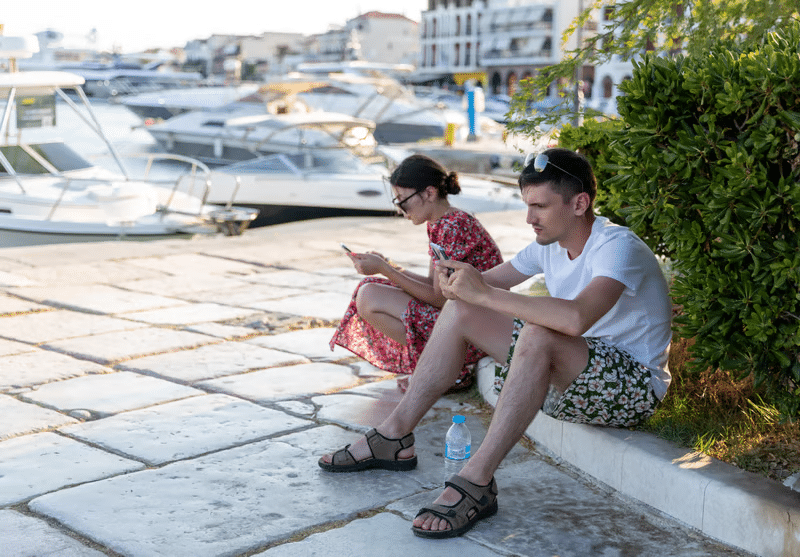
The Yaeyama island group — Okinawa Prefecture’s southernmost inhabited islands, closer to Taipei than to Naha — represents Okinawa’s most internationally popular outer island destination, particularly for diving and beach tourism.
Ishigaki Esim Coverage
Ishigaki Island is the Yaeyama group’s main hub — its airport receives direct flights from Naha and several mainland Japan cities, and Ishigaki city serves as the departure point for ferries to the smaller surrounding islands. Ishigaki esim coverage from Docomo and KDDI is strong across Ishigaki city, the main coastal roads circling the island, and the major beach resort areas including Kabira Bay (one of Japan’s most photographed beaches) and the resort concentration along the island’s northern coast.
SoftBank coverage on Ishigaki is present in the main city area and major resorts but is less consistent along the island’s rural interior roads and the less-developed eastern coastline.
Miyako Esim Coverage
Miyako Island, in the Miyako island group southwest of the Yaeyama islands, has experienced significant tourism growth in recent years, partly driven by the construction of bridges connecting Miyako to neighboring smaller islands (Irabu, Shimoji, Kurima) that were previously accessible only by boat. Miyako esim coverage from Docomo and KDDI covers Hirara (the main town), the famous Yonaha Maehama Beach (consistently ranked among Japan’s best beaches), and the bridge-connected neighboring islands.
The bridges themselves — including the Irabu Bridge, one of Japan’s longest toll-free bridges — maintain carrier coverage throughout the crossing, useful for the inevitable photography stops at the bridge’s scenic viewpoints.
Yaeyama Esim: The Smaller Islands
Beyond Ishigaki and Miyako, the Yaeyama group includes several smaller islands reachable by ferry from Ishigaki:
Taketomi Island: A short ferry ride from Ishigaki, Taketomi preserves traditional Ryukyu village architecture and is a popular day-trip destination. Yaeyama esim coverage on Taketomi from Docomo and KDDI covers the village area and main cycling routes around the island.
Iriomote Island: Japan’s second-largest subtropical island after the main Okinawa island, Iriomote is dominated by mangrove forest and jungle — home to the endangered Iriomote cat and a major destination for kayaking and jungle trekking. Coverage is concentrated in the small coastal settlements (Uehara, Ohara) where ferry terminals and most accommodations are located. The island’s jungle interior — including popular trekking destinations like the Pinaisara Falls trail — has limited to no coverage on any carrier.
Yonaguni Island: Japan’s westernmost inhabited island, closer to Taiwan (visible on clear days) than to any other part of Japan, has basic Docomo and KDDI coverage in its small settlements. Yonaguni’s main visitor draw — diving sites including the controversial “underwater ruins” — are offshore and not relevant to mobile coverage, but the island’s settlements provide adequate connectivity for the modest tourism infrastructure present.
Coverage on Remote Ryukyu Islands
Beyond the Yaeyama and Miyako groups, Okinawa Prefecture includes numerous smaller islands across the broader Ryukyu chain, each with distinct ryukyu japan connectivity characteristics.
Kerama Islands
The Kerama Islands — Zamami, Aka, and Tokashiki — are a short ferry ride from Naha (Zamami is approximately 50 minutes by high-speed ferry) and are internationally known for some of the clearest water in Japan, making them popular diving and snorkeling day trips from the main island. Coverage on Zamami’s main village is available from Docomo and KDDI; the island’s beaches and snorkeling points around the main settlement have adequate coverage, while more remote beaches accessible only by additional boat transfer have limited signal.
Kume Island
Kume Island, west of Okinawa’s main island, has Docomo coverage in its main settlements (Kanegusuku, Nakazato) with more limited coverage in its less-developed areas. The island’s main attraction — Hate no Hama, a sandbar visible from Kume reached by boat — has minimal coverage given its nature as an uninhabited sandbar.
Practical Guidance for Remote Islands
For okinawa islands data planning across the Ryukyu chain’s smaller islands, the general pattern holds: main settlements and developed beach areas have Docomo and typically KDDI coverage; remote beaches, jungle interiors, and uninhabited areas accessible only by additional boat transfers have limited to no coverage. Downloading offline maps for any remote island day trip — and confirming your accommodation’s WiFi availability before booking on the smallest islands — is sensible preparation.
Beach, Dive Site, and Resort Coverage
Okinawa’s primary tourism draw — its beaches, coral reefs, and resort properties — has connectivity characteristics specific to coastal and marine environments.
Okinawa Beach Data
Okinawa beach data coverage on the main island and Yaeyama/Miyako islands’ developed beaches is reliable from Docomo and KDDI. Popular beaches — Manza Beach and Emerald Beach on the main island, Kabira Bay on Ishigaki, Yonaha Maehama on Miyako — all have coverage extending across the beach area itself, supporting the photography and social sharing that these consistently ranked “best beaches in Japan” destinations generate.
Open water — the actual swimming and snorkeling areas just offshore — generally maintains signal close to shore, with coverage diminishing with distance from the coastline. For practical purposes, beach-based connectivity (checking weather, navigation to the beach, photo sharing from the sand) works reliably; expecting signal while actually swimming significant distances offshore is unrealistic regardless of carrier.
Okinawa Diving Data
Okinawa diving data is, by the nature of the activity, largely irrelevant during the dive itself — but coverage at dive shop locations, boat departure points, and surface intervals matters for the overall dive trip experience. Major dive operators in Naha, Ishigaki, and the Kerama Islands operate from locations with reliable Docomo and KDDI coverage, supporting dive log apps, weather checking, and the photo-sharing that underwater photography from Okinawa’s exceptional visibility waters generates once back on land.
Dive boats themselves, operating within a few kilometers of shore for most Okinawa dive sites, generally maintain some signal — though this varies by specific site distance and isn’t something divers should plan around given the activity’s inherent disconnection during the dive itself.
Okinawa Resort WiFi
Okinawa’s resort hotels — ranging from large international chain properties along the main island’s west coast to boutique resorts on Ishigaki and Miyako — universally provide guest WiFi as standard. Okinawa resort wifi quality varies by property but is generally reliable for standard guest use: browsing, video calls, streaming. For data-intensive tasks during an Okinawa stay — uploading underwater photography, video calls home, streaming entertainment in-room — resort WiFi is the practical primary connection, with mobile data handling the connectivity needs of beach days, day trips, and exploration beyond the resort property.
Ferry and Inter-Island Connectivity

Okinawa’s island-hopping travel pattern relies heavily on ferries, and okinawa ferry wifi and connectivity during inter-island transit is a relevant consideration for itineraries spanning multiple islands.
Naha to Outer Islands
Ferries from Naha to the Kerama Islands (Zamami, Tokashiki) and to Kume Island maintain mobile carrier coverage for most of the relatively short crossings (50 minutes to Zamami, approximately 3-4 hours to Kume depending on service). Signal is generally available for the portions of the journey closer to either departure or arrival ports, with some open-water sections showing reduced or absent signal depending on distance from shore.
Ishigaki to Yaeyama Outer Islands
The high-speed ferries connecting Ishigaki to Taketomi (10 minutes), Iriomote (35-45 minutes depending on port), and other Yaeyama islands are short enough that connectivity gaps, where they occur, are brief. Coverage from Docomo and KDDI is generally maintained for most of these short inter-island crossings given the relatively close proximity of the islands within the Yaeyama group.
Onboard WiFi
Most Okinawa ferry operators do not provide onboard WiFi as standard — mobile carrier signal is the primary connectivity during ferry transit. For travelers planning extensive inter-island ferry travel, treating ferry time as a connectivity-light period (good for offline reading, downloaded entertainment, or simply enjoying the views) rather than expecting continuous connectivity is the realistic approach.
Naha Airport WiFi
Naha Airport is Okinawa’s primary international and domestic gateway and the arrival point for the vast majority of visitors to the prefecture, including those continuing onward to outer islands via domestic connecting flights.
Naha Airport WiFi Access
Naha Airport provides free WiFi throughout its international and domestic terminals, available after agreeing to terms of service with no registration required. Coverage extends across arrival halls, baggage claim, and the connecting corridors between the international and domestic terminal buildings — relevant for travelers transferring to domestic flights toward Ishigaki or Miyako, which depart from the domestic terminal.
eSIM Installation at Naha
For travelers arriving without a pre-installed Japan eSIM, Naha Airport’s WiFi supports eSIM purchase and installation in the arrivals area. Given that many Okinawa itineraries involve a same-day or next-day domestic flight connection to the outer islands, completing eSIM setup at Naha — before departing for Ishigaki or Miyako — ensures connectivity is active from the moment you land on the outer islands, where carrier retail counter availability is more limited than at Naha.
Recommended approach: Pre-install your okinawa japan esim before departure using home WiFi. Use Naha Airport’s WiFi to confirm activation and, if continuing to outer islands, download offline maps for Ishigaki, Miyako, or whichever islands are on your itinerary — outer island carrier retail support is minimal compared to Naha, making pre-arrival preparation more valuable here than in mainland Japan city arrivals.
Carrier Counters at Naha
Docomo, SoftBank, and au all operate retail counters at Naha Airport for physical SIM purchases and eSIM activation assistance. These counters are not replicated at Ishigaki or Miyako airports in the same capacity, reinforcing the value of completing connectivity setup at Naha before continuing to outer island destinations.
Best Japan eSIMs for Okinawa Visitors
Network Recommendation: Docomo and KDDI
For okinawa japan 2026 travelers, Docomo and KDDI are the consistently recommended networks across Okinawa’s main island and outer island destinations. Both provide reliable coverage across Naha, the main island’s resort corridors, and the developed areas of Ishigaki and Miyako. KDDI’s historical regional infrastructure investment and Docomo’s general rural depth advantage both translate well to Okinawa’s island geography — the choice between them for most Okinawa itineraries is closer than in many mainland Japan regional comparisons.
SoftBank performs well in Naha and major resort areas but is less consistent across the outer islands’ rural and less-developed zones, making it the third-choice network specifically for itineraries that include significant time on Ishigaki, Miyako, or the smaller Yaeyama islands.
Plan Structure for Okinawa Trips
Main island only (Naha-focused): Day Pass or short multi-day plans on any of the three carriers — Naha’s connectivity quality matches mainland Japan’s major cities.
Main island plus Yaeyama/Miyako: Docomo or KDDI, providing consistent coverage across both the main island and outer island destinations on a single plan without network-switching considerations.
Extended island-hopping itineraries: Unlimited plans from Docomo or KDDI remove data management considerations across multi-island itineraries where data consumption patterns (heavy beach and underwater photography, video calls, social sharing) can be unpredictable.
For travel agencies organizing Okinawa beach and diving group trips, Japan Sim Data’s bulk discount options apply across Docomo, SoftBank, and KDDI plans — individual eSIMs per traveler are particularly valuable for island-hopping groups where members may split into different activity groups (diving, beach relaxation, cultural site visits) and need independent connectivity and navigation.
According to the Japan National Tourism Organization, Okinawa has seen substantial growth in both domestic and international visitor numbers, with the prefecture’s unique cultural heritage and marine environment representing one of Japan’s most distinctive tourism offerings. The Japan Tourism Agency includes Okinawa among the regions prioritized for continued tourism infrastructure investment, including digital connectivity improvements across the outer islands.
Conclusion

Okinawa mobile coverage delivers mainland Japan’s connectivity quality where it matters most for most visitors — Naha, the main island’s resort corridors, and the developed towns and beaches of Ishigaki and Miyako. The Ryukyu Islands’ more remote stops — jungle interiors, uninhabited sandbars, the smallest outer islands — present genuine coverage gaps that are part of what makes these destinations feel like Japan’s edge of the map, in the best sense.
The practical approach for okinawa japan visitor connectivity is straightforward: choose Docomo or KDDI for the most consistent coverage across both the main island and outer island destinations, install your eSIM before departure or at Naha Airport (where carrier support is most available), download offline maps for any remote island day trips, and treat ferry crossings and jungle treks as appropriately disconnected experiences rather than connectivity failures.
Japan Sim Data’s Docomo and KDDI eSIM plans deliver the coverage that makes Okinawa’s combination of Naha’s urban energy, the main island’s resort beaches, and the Yaeyama islands’ extraordinary diving and scenery navigable with confidence. Explore Japan Sim Data’s Okinawa-ready eSIM plans and travel connected across Japan’s southern islands.
Frequently Asked Questions
Q1: Does my Japan eSIM work on Ishigaki and Miyako, or do I need a separate plan?
A: Your Japan eSIM works on Ishigaki and Miyako without any separate plan or configuration change, provided it’s on Docomo or KDDI — both networks provide coverage across Naha and the main developed areas of these outer islands. The same eSIM that connects you in Naha continues working as you fly to Ishigaki or Miyako. SoftBank coverage on these islands is less consistent in rural areas, so Docomo or KDDI is the recommended choice for itineraries spanning both the main island and Yaeyama/Miyako destinations.
Q2: Will I have signal on Okinawa’s beaches?
A: Yes, at developed beaches. Popular beaches on the main island (Manza Beach, Emerald Beach) and on the outer islands (Kabira Bay on Ishigaki, Yonaha Maehama on Miyako) have reliable Docomo and KDDI coverage extending across the beach area, supporting navigation, weather checks, and photo sharing. Signal generally extends a reasonable distance offshore for swimming and snorkeling near shore, though it diminishes with distance from the coastline. Remote, undeveloped beaches reachable only by additional boat transfer have more limited coverage.
Q3: Is there mobile coverage in Iriomote’s jungle?
A: Limited to none in the jungle interior. Iriomote’s coastal settlements (Uehara, Ohara), where ferry terminals and most accommodations are located, have Docomo and KDDI coverage. The island’s jungle interior — including popular trekking routes to waterfalls like Pinaisara Falls and the mangrove kayaking areas along the Urauchi River — has minimal coverage on any carrier. Download offline maps before any Iriomote jungle excursion, and treat the experience as appropriately disconnected — part of what makes Iriomote one of Japan’s most genuinely wild destinations.
Q4: How do I get connected at Naha Airport, especially if I’m connecting to an outer island flight?
A: Naha Airport provides free WiFi throughout its international and domestic terminals, available immediately after accepting terms of service. If you’ve pre-installed your Japan Sim Data eSIM, use this WiFi to confirm activation before your connecting flight. If you haven’t pre-installed, complete eSIM purchase and installation at Naha — carrier retail support and connectivity infrastructure at outer island airports (Ishigaki, Miyako) is more limited, so arriving at your outer island destination already connected is significantly more convenient than trying to set up connectivity there.
Q5: Do Okinawa’s inter-island ferries have WiFi?
A: Most Okinawa ferry operators do not provide onboard WiFi as standard. Mobile carrier signal (Docomo and KDDI) is generally available for portions of short inter-island crossings — particularly the brief Ishigaki-to-Yaeyama-islands ferries — though some open-water sections may have reduced or no signal depending on distance from shore. For longer crossings or island-hopping itineraries, treat ferry time as a good opportunity for offline activities rather than expecting continuous connectivity.