


Kyoto and Nara Mobile Data: What Travelers Need to Know

Kyoto and Nara occupy a unique position in Japan travel — they are the destinations where the country’s cultural depth is most concentrated, where a UNESCO World Heritage temple sits beside a neighborhood convenience store, and where the experience of being present in a thousand-year-old landscape is continuous rather than occasional. For visitors moving between Fushimi Inari’s vermilion torii gates, Kinkaku-ji’s gold-leaf pavilion, Gion’s preserved machiya townhouses, and Nara’s ancient parkland roamed by deer, mobile connectivity is the practical layer that makes the experience navigable.
Kyoto Nara mobile data is, in one sense, an easy topic: both cities have strong coverage from Japan’s three major carriers, and the standard Japan eSIM experience works without specific preparation in most of their major tourist sites. In another sense, it rewards more careful understanding — because the specific environments where these cities are most themselves (dense forest shrine approaches, mountain temple sites, the outer precincts of large temple complexes) have coverage characteristics that differ meaningfully from the city center zones, and because cultural tourism in these cities has specific connectivity use patterns that differ from urban exploration in Tokyo or Osaka.
This guide covers network coverage across Kyoto and Nara’s major tourist sites, free WiFi at cultural destinations, train connectivity on the key Kansai corridors, practical tips for cultural tour groups, and the eSIM strategies that best serve travelers for whom Kyoto and Nara are the heart of their Japan trip.
Kyoto Network Coverage
Kyoto is Japan’s former imperial capital, a city of 1.4 million that contains over 1,600 Buddhist temples, 400 Shinto shrines, and seventeen UNESCO World Heritage sites within its metropolitan area. From a mobile network perspective, it is also a major Japanese city with competitive carrier infrastructure across its commercial core.
Three-Carrier Coverage in Kyoto
All three major carriers — NTT Docomo, SoftBank, and KDDI/au — provide comprehensive LTE and 5G coverage across Kyoto’s central commercial and tourist zones. Kyoto Station, the Kawaramachi-Shijo commercial corridor, the main hotel districts, and the bus routes connecting major tourist sites all carry reliable signal from multiple carriers.
The network differentiation in Kyoto emerges at the edges: the outer temple districts, the forest approaches to major shrines, and the mountain routes that lead to some of Kyoto’s most atmospheric sites. In these transitional zones between built city and cultural landscape, Docomo’s geographic coverage depth produces more consistent signal than SoftBank or KDDI in specific locations.
5G in Kyoto
Kyoto’s central areas — Kyoto Station environs, the Gion district, Karasuma-Oike business area — have Sub-6GHz 5G coverage from all three carriers. The outer tourist districts (Arashiyama, northern Higashiyama, the Ohara mountain villages) are primarily 4G LTE. For practical tourist use, LTE across Kyoto’s outer areas delivers fully adequate speeds for maps, translation, photography uploads, and communication.
Major Kyoto Sites: Coverage in Context
Fushimi Inari Data
Fushimi Inari Taisha — the shrine of 10,000 torii gates that climbs Mount Inari south of central Kyoto — is one of Japan’s most visited tourist sites and one of the most interesting coverage environments in Kansai. Fushimi inari data coverage follows the site’s topography: strong at the main shrine entrance and lower torii gate sections, progressively thinning as the path climbs the mountain.
The lower section (Senbon Torii — the famous dense tunnel of gates) has reliable Docomo and KDDI coverage throughout. The middle mountain sections (Yotsutsuji intersection, approximately 30 minutes up) carry Docomo signal on most exposed sections; KDDI is present but less consistent. The upper summit approaches and the quieter back routes of the mountain have variable coverage on all carriers — Docomo maintains signal in more locations than competitors but gaps exist in the deep forest sections.
Practical guidance: Download offline Fushimi Inari maps before visiting. The site has multiple trail intersections where signage is limited and navigation app support is most valuable — having offline maps eliminates dependency on live signal at the moments when you most need navigational clarity.
Peak-period Fushimi Inari crowds (particularly dawn visits that have become popular for avoiding daytime tourist density) create device concentration in the lower sections that can produce brief congestion-related speed reductions on all carriers despite the outdoor environment.
Kinkaku-ji WiFi
Kinkaku-ji — the Temple of the Golden Pavilion — is one of Japan’s most photographed sites. Kinkaku-ji wifi access within the temple grounds is not provided by the temple itself; mobile carrier signal is the primary connectivity for the millions of visitors photographing the gold-leaf pavilion reflected in the mirror pond.
All three carriers provide coverage throughout the Kinkaku-ji garden circuit. Docomo and KDDI both show strong signal at the main pavilion viewing point; SoftBank is competitive in this zone. The site’s outdoor nature and relatively open sky visibility produce good carrier signal across most of the circuit.
Connectivity tip: the best Kinkaku-ji photograph vantage (the designated viewing area on the pond’s north shore) has reliable signal from Docomo and KDDI, enabling immediate sharing from the most photographed spot in Kyoto without walking back to the entrance for better signal.
Gion Internet
Gion — Kyoto’s preserved geisha district along the Hanamikoji and Shimbashi streets — has reliable gion internet coverage from all three carriers throughout its main lanes. The preserved machiya townhouse streetscapes that make Gion visually distinctive are located in Kyoto’s central eastern districts, well within the city’s main carrier infrastructure coverage zone.
The evening atmosphere of Gion — lantern-lit lanes, occasional geiko and maiko sightings, quiet restaurants — is the context where translation apps and restaurant discovery platforms are most useful. All three carriers deliver consistent signal throughout Gion’s main streets and the connected Higashiyama district that extends northward through Ninenzaka and Sannenzaka.
Hanamikoji Street during peak tourist periods (particularly sakura and autumn foliage seasons) concentrates large numbers of devices in a narrow lane. Brief speed reductions during the most crowded moments are possible; the quiet side streets parallel to Hanamikoji have equivalent coverage with less congestion.
Arashiyama WiFi
Arashiyama — the bamboo grove and riverside temple district at Kyoto’s western edge — is one of Kyoto’s most popular tourist areas and one of its more distinctive connectivity environments. Arashiyama wifi through carrier networks is reliable in the main tourist areas (Togetsukyo Bridge approach, Tenryu-ji temple garden entrance, the bamboo grove path) but varies in the mountain temple approaches and riverside forest sections.
The bamboo grove itself — the narrow path between towering bamboo stalks that appears in virtually every Kyoto travel photograph — has carrier coverage from Docomo throughout and adequate coverage from KDDI. SoftBank coverage is present at the grove entrance and thinner within the path. The brief duration of the grove walk means connectivity for photo sharing during the walk itself is achievable on Docomo or KDDI.
Jojakko-ji and Nison-in temples in the northern Arashiyama hills have more variable coverage — forest canopy and terrain reduce signal reliability on all carriers, with Docomo maintaining the most consistent presence.
Nara Network Coverage and Key Sites
Nara — Japan’s first permanent capital, 45 minutes from both Osaka and Kyoto — offers a different connectivity profile from its larger Kansai neighbors: a smaller city with strong coverage in its tourist core and variable performance in the surrounding parkland and forest approaches to outer sites.
Nara City Coverage
All three carriers provide LTE coverage across Nara city center and the main tourist axis from Kintetsu Nara Station and JR Nara Station through the Sanjodori shopping street to Nara Park. Nara esim use functions without issues across this core tourist zone.
5G coverage in Nara is present in the city center from Docomo and KDDI; the broader Nara tourist area operates primarily on LTE. For practical nara tourist internet use — deer-park navigation, temple information, restaurant research — LTE speeds across Nara’s tourist zone are fully adequate for every standard travel application.
Nara Park Internet
Nara Park — the 660-hectare deer park that contains Todai-ji, Kasuga Taisha, Kofuku-ji, and the interconnecting paths between them — has carrier coverage across its main visitor areas. Nara park internet from Docomo and KDDI is reliable throughout the main deer-spotting areas, the approach paths to Todai-ji’s Great Buddha Hall, and the Kasuga Taisha shrine avenue.
The forested sections between major sites — the Kasugayama Primeval Forest behind Kasuga Taisha (a UNESCO protected area) and the hill approaches to less-visited outer temples — have more variable coverage. Docomo’s rural coverage depth produces the best signal in Nara Park’s forested sections; KDDI is competitive on the open parkland paths.
The deer themselves are indifferent to carrier choice but are universally photogenic — and with reliable Docomo or KDDI coverage across most of the park’s main circuit, those deer selfie uploads proceed without incident.
Free WiFi at Temples and Tourist Spots
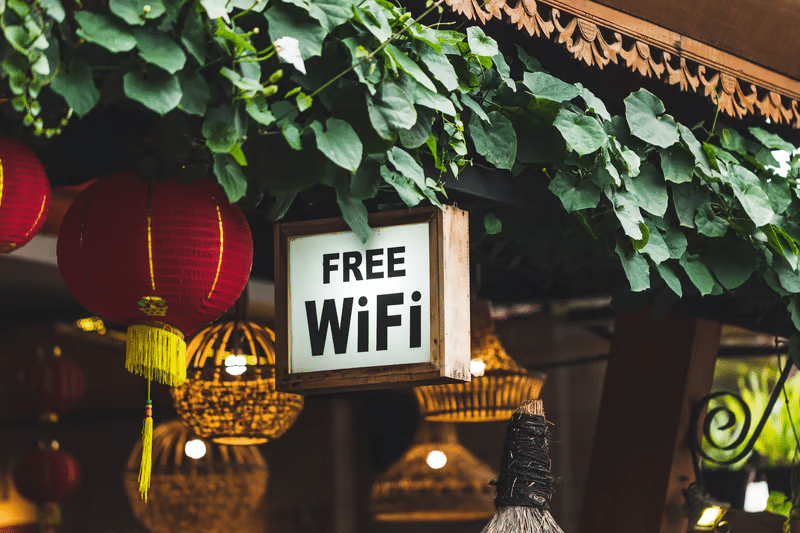
Kyoto and Nara’s temple and shrine complex WiFi situation is more limited than many visitors expect — and understanding this prevents the frustration of expecting temple-provided WiFi that isn’t there.
Temple and Shrine WiFi Reality
Most of Kyoto’s and Nara’s major temples and shrines do not provide free WiFi within their grounds as a visitor amenity. Individual temple networks that exist are typically for administrative use rather than tourist access. The main WiFi sources for temple district exploration are:
Carrier signal: Your Japan eSIM mobile data is the primary connectivity across temple grounds — and as the site-specific coverage notes above indicate, this works reliably across most major Kyoto and Nara sites on Docomo and KDDI.
Kyoto City WiFi: The Kyoto city government operates a free WiFi network called “KYOTO Wi-Fi” available across major tourist areas, bus stops, and community centers. The network requires one-time registration and provides connectivity in designated public spaces including some temple approach areas and tourist information centers. Coverage is not comprehensive across temple grounds themselves but provides useful supplementary connectivity in the spaces between sites.
Nara City WiFi: Nara city operates free WiFi around the main Nara Station area and in designated tourist information points. Coverage across Nara Park itself is limited to certain designated zones.
Convenience stores near temple districts: Convenience stores in the approach areas to Kyoto’s major temple districts — particularly along the Higashiyama walking route and in the Arashiyama commercial area — provide the most reliably available free WiFi near cultural sites. These are within a short walk from most major sites and provide stable connections for uploads and data-intensive tasks.
Train Data: Kyoto–Nara and Kyoto–Osaka
The rail corridors connecting Kyoto with its neighboring Kansai cities carry good carrier coverage throughout — enabling navigation and connectivity from the moment you board.
Kyoto–Nara (Kintetsu and JR)
The Kintetsu Nara Line from Kyoto Station (approximately 35 minutes to Kintetsu Nara Station) runs primarily above ground and through short tunnels — carrier coverage from Docomo and KDDI is maintained for most of the journey. The JR Yamatoji Line via Osaka (a longer route through Tennoji) similarly maintains coverage throughout its above-ground sections.
Kyoto–Osaka (JR and Hankyu)
The JR Biwako/Kyoto Line between Kyoto and Osaka runs on surface tracks across the Keihanshin corridor — one of Japan’s most urbanized rail routes — with consistent carrier coverage from all three networks throughout. Journey time of approximately 15 minutes (Shinkansen) to 75 minutes (local) passes through densely covered urban-suburban landscape where signal is continuous.
The Hankyu Kyoto Line between Kawaramachi (central Kyoto) and Umeda (Osaka) similarly runs above ground through the Keihanshin corridor with consistent coverage.
Kyoto to Tokyo (Tokaido Shinkansen)
For kyoto cultural tour travelers returning to Tokyo, the Tokaido Shinkansen from Kyoto Station (11 minutes from Shin-Osaka) maintains Docomo and SoftBank LTE and 5G coverage throughout most of the 2.5-hour journey to Tokyo, with brief interruptions in major tunnel sections.
Tips for Cultural Tour Groups
Kyoto and Nara are among Japan’s most popular destinations for organized cultural tour groups — and connectivity has specific implications for groups moving through dense temple circuits.
Individual eSIMs vs. Group Hotspot
For kyoto cultural tour groups, individual eSIMs per participant is the strongly recommended connectivity model. Temple districts involve frequent splitting and regrouping as group members move at different paces through large shrine or garden complexes. Individual connectivity ensures that participants who get separated can navigate independently, communicate with the group leader, and continue their visit without connectivity dependency on a single hotspot device.
Japan Sim Data’s bulk discount options for travel agencies make individual eSIM provisioning cost-effective for cultural tour groups — equipping every participant with their own Docomo, SoftBank, or KDDI plan.
Docomo Recommendation for Temple Circuit Travel
For cultural tour itineraries that include the mountain temple approaches, forest shrine circuits, and outer Arashiyama sites where carrier coverage differentiation matters, Docomo is the recommended network. Its coverage depth at Fushimi Inari’s upper mountain sections, in Arashiyama’s forested northern temples, and across Nara Park’s outer areas produces the most consistent group connectivity across a full Kyoto-Nara cultural circuit.
Photography Data Management
Kyoto and Nara are among Japan’s most photographed destinations, and cultural tour participants typically generate large photo volumes. Managing upload timing — using hotel WiFi for batch uploads of high-resolution photos rather than uploading continuously over mobile data — is the single most effective data management practice for culture-focused Japan travel. Japan Sim Data’s unlimited plans eliminate this consideration entirely for travelers who prefer not to manage data consumption during their Kyoto experience.
According to the Japan National Tourism Organization, Kyoto and Nara are among the top destinations cited in international visitor satisfaction surveys, with cultural heritage access and navigability consistently rated as key experience factors — connectivity directly supports both. Kyoto City’s official tourism WiFi information provides current registration guidance for the KYOTO Wi-Fi network available across the city’s tourist areas.
Best Japan eSIMs for Kyoto/Nara Visitors
Network Choice for Kyoto-Nara Travel
Kyoto japan esim and nara japan esim travelers benefit from a clear network recommendation: Docomo for itineraries that include temple mountain approaches, forest shrine circuits, and outer cultural sites. Docomo’s rural coverage depth — which produces better signal in Fushimi Inari’s upper sections and Arashiyama’s northern forest temples — is meaningfully relevant for cultural travelers who follow Kyoto’s full touring potential rather than staying in the commercial center.
For travelers whose Kyoto visit concentrates on the central historic districts (Gion, Higashiyama walking route, central Nishiki Market area), all three networks perform equivalently and any Japan Sim Data plan is fully adequate.
Plan Structure for Cultural Travel
Day Pass plans: Ideal for travelers visiting Kyoto and Nara as short stops within a wider Japan itinerary — buy Day Pass coverage for the specific days in the Kansai region.
Multi-day data plans: Best for travelers spending three to seven days in the Kyoto-Nara area, with a fixed data allocation that covers moderate daily usage (1–2 GB/day for standard cultural tourism without heavy video streaming).
Unlimited plans: Best for travelers who want zero data management anxiety — those whose Kyoto experience involves intensive photography, social media sharing, video calls home, and real-time research without monitoring consumption.
The kansai japan tourist traveling the full Kyoto-Osaka-Nara circuit on a single Japan Sim Data plan benefits from seamless cross-city coverage — the same eSIM active in Dotonbori works identically in Gion and Nara Park without any configuration adjustment.
Conclusion
Kyoto and Nara mobile data delivers what cultural travelers need: reliable carrier coverage across the vast majority of major sites, a strong free WiFi supplement through convenience stores and designated tourist networks, and rail corridor connectivity that keeps you navigated between the Kansai region’s extraordinary destinations.
The kyoto japan 2026 connectivity picture is clear: Docomo for the most comprehensive coverage across temple mountain approaches and forest cultural sites; any major carrier for the central tourist districts; offline map downloads for the forest sections where even Docomo’s signal is variable. Japan Sim Data’s plans on all three networks provide the coverage foundation, and the cultural depth of Kyoto and Nara provides everything else a Japan trip deserves.
For travel agencies organizing cultural Japan itineraries, Japan Sim Data’s bulk pricing for group bookings makes equipping every participant with individual eSIM connectivity straightforward — supporting the independent navigation and communication that modern cultural tour participants expect. Explore Japan Sim Data’s Kansai-ready eSIM plans and arrive in Japan’s cultural heartland connected, prepared, and ready to engage with everything these extraordinary cities offer.
Frequently Asked Questions
Q1: Which carrier works best at Fushimi Inari Taisha?
A: Docomo provides the most reliable coverage across Fushimi Inari’s full mountain circuit — from the main entrance through the upper mountain sections and back routes. KDDI is competitive in the lower and middle sections. SoftBank is reliable at the main entrance area but thins on the mountain approaches. For travelers planning to walk the full mountain circuit (approximately two to three hours), Docomo gives the most consistent signal presence throughout, including in the forest sections where other carriers drop more quickly.
Q2: Is there WiFi at Kinkaku-ji or Arashiyama?
A: The temple and shrine grounds themselves don’t provide visitor WiFi. Mobile carrier signal is the primary connectivity at both sites — Docomo and KDDI are reliable across Kinkaku-ji’s garden circuit and most of Arashiyama’s main tourist areas. Convenience stores in the Arashiyama commercial area near Togetsukyo Bridge provide free WiFi for registered users. The Kyoto City WiFi network covers some public spaces in central Kyoto but does not extend comprehensively into temple grounds or mountain approaches.
Q3: Will my Japan eSIM work in Nara Park among the deer?
A: Yes, across most of Nara Park’s main visitor circuit. Docomo and KDDI both provide reliable coverage throughout the main deer areas, the Todai-ji approach, and the Kasuga Taisha shrine avenue. Forest sections of the park — particularly behind Kasuga Taisha and on the hillside approaches to outer temples — have more variable coverage, with Docomo maintaining the best signal in forested sections. Downloading offline Nara Park maps before visiting provides navigation backup in the quieter outer areas.
Q4: How much data does a day of cultural sightseeing in Kyoto use?
A: A typical Kyoto cultural day — navigation between sites, translation at temples and restaurants, photography sharing, and research — typically uses 300 MB to 1 GB of mobile data. Kyoto’s cultural tourism pattern (moving through multiple sites rather than staying stationary) uses navigation apps more continuously than urban tourism in single-district contexts. Using hotel WiFi for large photo uploads and video calls keeps daily mobile consumption toward the lower end of this range, making a standard data plan comfortably sufficient for a week-long Kyoto stay.
Q5: Can I use the same Japan eSIM for both Kyoto and Osaka day trips?
A: Yes, seamlessly. Japan Sim Data’s eSIM plans cover the entire Kansai region — Kyoto, Osaka, Nara, Kobe, and the rail corridors between them — on the same plan with no configuration changes. The JR and Kintetsu rail connections between Kyoto and Osaka (14–75 minutes depending on service type) and Kyoto and Nara (35–45 minutes) maintain carrier coverage throughout, so you’re connected from departure station to arrival in each city. The same eSIM also covers the Shinkansen journey back to Tokyo if your itinerary continues northward.