

JR Pass 2026: What’s Changed and Who Should Still Buy It
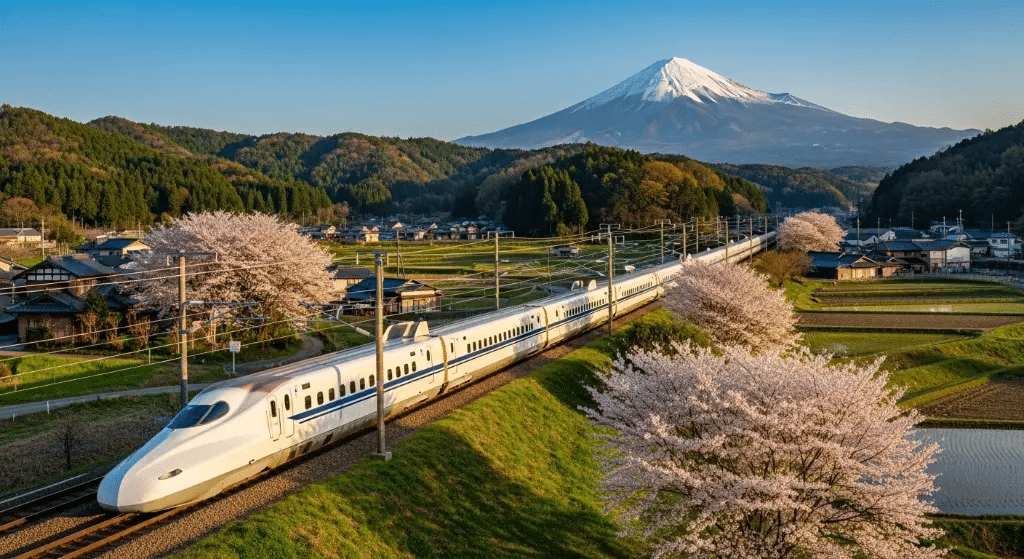
The Japan Rail Pass has been Japan’s most discussed travel planning decision since it first became available to international visitors — and the conversation has become even more active since the significant price increases that took effect in October 2023. The JR Pass remains one of the most useful rail products for specific Japan itinerary types; it is also, after the price revision, no longer the automatic purchasing decision it once was for every Japan trip.
The jr pass 2026 analysis requires travelers to do the arithmetic that many skipped in the pre-2023 era: calculate your specific rail usage, compare it to the Pass cost, and make an informed decision rather than buying the Pass on the assumption that it will certainly save money. This guide covers what changed, what the Pass includes, how to evaluate whether it makes sense for your itinerary, what regional alternatives exist, and how your Japan Sim Data eSIM supports the research and planning that leads to the right decision.
The JR Pass After the Price Hike: Context

What Changed in October 2023
In October 2023, JR Group implemented the most significant JR Pass price revision in the product’s history. The price of the 7-day ordinary JR Pass increased from approximately ¥50,000 to approximately ¥50,000 to ¥80,000 (price varies by purchase timing and currency fluctuation) — a substantial increase that fundamentally changed the value calculation for many itinerary types.
For travelers whose pre-2023 itinerary would have “obviously” justified the JR Pass, the revised pricing requires verification rather than assumption. For travelers on shorter or more concentrated Japan trips, regional passes and individual tickets may now offer better value than the national pass.
Important pricing note: JR Pass prices can change, so always check the latest prices on the official JR Pass website before you travel.Verify current pricing directly at the official JR Pass website (jrpass.com) before making a purchasing decision — this is exactly the kind of current-information check where your Japan Sim Data eSIM connection and a quick web search delivers reliable, up-to-date pricing rather than potentially outdated guide information.
What the JR Pass Includes
The Coverage Scope
The nationwide JR Pass provides unlimited travel on virtually all Japan Railways (JR) operated services during its validity period:
Included:
- All Shinkansen services on JR lines (except Nozomi and Mizuho fastest services on the Tokaido/Sanyo Shinkansen — these require individual tickets even with a Pass)
- Hikari, Kodama (Tokaido/Sanyo), Sakura, Tsubame, Hayabusa, Komachi, Kagayaki, Asama, Azusa, and other named limited express services
- JR local, rapid, and express trains throughout Japan
- JR buses on selected routes (Tokyo–Osaka highway bus, for example)
- JR Miyajima ferry (to the island with the famous floating torii gate)
- JR Seikan Tunnel and Hokuriku Tunnel connections
Not included:
- Nozomi and Mizuho Shinkansen services (the fastest Tokyo–Osaka services; Hikari and Kodama are included but slower)
- Non-JR private railways (Kintetsu, Keikyu, Odakyu, Hankyu, Nankai, Tokyu, and many others)
- Tokyo Metro and Toei Subway systems
- Most buses in Tokyo
- Narita Express (is included), but note this is a JR service
The Pass holder experience at gates: JR Pass holders do not tap IC cards at Shinkansen gates — they show the physical pass to a station attendant at the dedicated “Pass Lane” beside the automatic gates. Advance seat reservations (free for Pass holders for most services) are still recommended for popular routes at peak times.
JR Pass 2026 Value Calculation
Who the JR Pass Typically Still Works For
japan rail pass 2026 value calculation requires comparing your specific planned JR journeys against the pass cost. The Pass makes mathematical sense when your planned JR travel significantly exceeds the pass price — the threshold varies by the 7, 14, or 21-day period purchased.
Itinerary profiles where the JR Pass typically provides positive value:
Multi-city long-haul circuit travelers: Tokyo → Kyoto → Osaka → Hiroshima → Hakata → (Kyushu) → (Hokkaido) → return to Tokyo. A comprehensive Japan circuit covering the full length of Honshu plus extensions into Kyushu or Hokkaido typically exceeds the pass cost on Shinkansen tickets alone.
Tohoku and Hokkaido extension travelers: Adding the far northeast to a standard Japan trip — Tohoku’s onsen towns, Hokkaido’s skiing and nature — involves significant JR distances that contribute positively to pass value.
14 and 21-day multi-region travelers: The longer passes become proportionally more valuable as the daily trip average distance increases. A 14-day trip covering Tokyo, Japanese Alps (via Nagano), Kyoto, Hiroshima, Fukuoka, and Hokkaido typically generates pass value.
Itinerary profiles where the JR Pass typically does not provide value:
Tokyo-only or Kanto-only visitors: A week in Tokyo and its immediate surroundings uses minimal JR Shinkansen, making the national pass unjustifiable. Local Tokyo transit uses non-JR lines and is better served by an IC card.
Kyoto-Osaka-Nara triangle visitors: The Kansai area’s main tourist circuit uses a combination of JR and non-JR services. The Kansai regional pass may be appropriate; the national JR Pass typically is not.
Short-stay travelers (3–5 days): The JR Pass 7-day minimum rarely provides positive value for very short Japan visits, as the number of long-distance journeys in the validity period is limited.
Regional JR Passes as Alternatives
The Regional Pass Landscape
jr pass alternatives in the form of regional passes provide coverage for specific geographic areas at prices that often make more sense than the national pass for travelers whose Japan itinerary is geographically concentrated.
JR East Pass (Tohoku Area / Tokyo Wide Area): Covers JR East’s Shinkansen and limited express network in eastern Japan. Suitable for travelers focused on Tohoku, with Tokyo as the hub. Multiple area variants at different price points.
JR West Kansai Area Pass: Covers JR West’s services within the Kansai region — Osaka, Kyoto, Kobe, Nara, and connections toward Hiroshima and beyond depending on the pass variant. Several tiers available (Kansai only, Kansai-Hiroshima, Kansai-Wide).
JR West San’yo-San’in-Kinki Pass: Expanded western Japan coverage including Hiroshima, Tottori, and Matsue — useful for travelers doing a comprehensive western Japan itinerary.
Hokkaido Rail Pass: Covers JR Hokkaido’s entire network including the Shinkansen extension to Shin-Hakodate-Hokuto. For travelers spending significant time in Hokkaido.
JR Kyushu Rail Pass: Available as an all-Kyushu or regional variant, covering JR Kyushu’s Shinkansen and limited express network. For dedicated Kyushu itineraries.
Japan Esim Shinkansen Research for Regional Passes: Your Japan Sim Data eSIM enables the real-time research needed to compare regional pass options against individual ticket prices for your specific planned routes — a calculation that is most accurately done by pricing each journey individually before committing to a pass.
How Connectivity Helps You Plan Smarter

The Data-Enabled JR Pass Decision
The jr pass guide decision — to buy or not to buy, and which variant — is one of the Japan trip planning decisions most improved by connectivity. Specifically:
Individual ticket pricing research: The SmartEX website (for Tokaido/Sanyo Shinkansen), EKINET (for JR East routes), and hyperdia.com provide individual ticket prices for specific journeys. Summing your planned itinerary’s individual ticket prices and comparing to JR Pass cost requires researching each journey — a connectivity-dependent research task best done with a live internet connection.
Japan esim jr pass research workflow:
- Plan your Japan itinerary specifically: dates, cities, travel segments
- Look up individual ticket prices for each Shinkansen or limited express segment
- Sum the total individual ticket cost
- Compare to the applicable JR Pass price
- If the sum exceeds the Pass cost by 10% or more: buy the Pass
- If the sum is close to or below the Pass cost: consider regional passes or individual tickets
Real-time availability checking: During Japan travel with the JR Pass, checking seat reservation availability for specific Shinkansen services — particularly important during peak travel periods — requires the SmartEX or EKINET apps with live data from your Japan Sim Data eSIM.
Route planning with the Pass: Japan esim rail navigation for JR Pass holders specifically involves identifying which services are included (JR lines) versus which require separate payment (private railways, subway, Nozomi). Google Maps and NAVITIME display service operator information alongside route suggestions, helping Pass holders identify the JR-operated options that are covered.
Japan Sim Data Traveler Recommendations
eSIM for JR Pass Travelers
The japan travel jr pass traveler’s specific eSIM needs include:
SmartEX and EKINET app access: For JR Pass holders making advance seat reservations, the ability to manage reservations from anywhere during the Japan trip — over the Japan Sim Data eSIM — means never waiting at a station counter when plans change.
NAVITIME transit routing: For the Japan traveler using both JR Pass (Shinkansen between cities) and IC card (local transit within cities), real-time routing that correctly identifies which segments the Pass covers and which require the IC card requires live data from NAVITIME or Google Maps.
Docomo Jr Traveler network for long-haul routes: Japan’s Shinkansen corridors have strong coverage from all carriers. For traveler who combine Shinkansen travel with rural regional rail (JR local trains to onsen towns, limited express services through mountain valleys), Docomo’s coverage advantage in rural areas becomes relevant — the JR Pass often takes travelers off the standard tourist trail into exactly the areas where Docomo’s network breadth matters.
Plan Sizing for JR Pass Travelers
JR Pass travelers tend to be high-mileage Japan travelers — covering significant geographic distance across their itinerary. This typically means a mix of urban and rural destinations, multiple regional types of accommodation, and the kind of Japan travel pace that generates above-average data consumption from continuous navigation and frequent accommodation changes.
Recommended plan: 15–20GB for standard JR Pass itineraries with urban hotel WiFi supplement; unlimited for JR Pass itineraries including significant rural accommodation where hotel WiFi is unreliable.
According to the Japan National Tourism Organization (JNTO), the JR Pass remains one of the most inquired-about products among international Japan trip planners, with the post-2023 pricing revision significantly increasing the proportion of travelers for whom regional passes or individual tickets represent better value. JNTO recommends travelers calculate their specific itinerary costs before purchasing rather than assuming positive JR Pass value.
Conclusion: Calculate First, Buy Decided
The jr pass 2026 is still the right choice for a meaningful proportion of Japan travelers — those covering the country’s full geographic range, spending 14+ days in Japan, or building circuits that include Tohoku, Hokkaido, and Kyushu alongside the standard Kansai and Kanto highlights. For these travelers, the Pass simplifies transit management and often provides positive financial value.
For travelers with a geographically focused Japan itinerary, a regional pass or individual tickets often offer better value. The calculation is simple, but you need accurate fare information. Japan Sim Data’s eSIM lets you use tools such as SmartEX, EKINET, and HyperDia to compare fares and routes. This information helps you make an informed decision instead of guessing.
Calculate your specific itinerary. Check current JR Pass prices at jrpass.com. Make the informed decision. And whichever rail strategy you choose, the Japan Sim Data eSIM supports the app infrastructure that makes Japanese rail travel navigable throughout the journey.
Visit japansimdata.com for eSIM plans on all three Japanese carrier networks.
Frequently Asked Questions

Q1: Is the JR Pass worth buying in 2026 after the price increase?
A: It depends on your specific itinerary. The price increase made the Pass less universally worthwhile — travelers covering the full Japan circuit typically still find positive value; travelers on concentrated regional itineraries often find regional passes or individual tickets more economical.
Q2: Can I use the JR Pass for the Nozomi Shinkansen (fastest Tokyo–Osaka service)?
A: No. Nozomi and Mizuho services are explicitly excluded from the JR Pass. Pass holders must use the Hikari or Kodama services between Tokyo and Osaka — slower but still very comfortable and scenically rewarding. For most tourists, the Hikari’s additional travel time is a minor consideration.
Q3: How do I make seat reservations for Shinkansen with the JR Pass?
A: Seat reservations are made at JR Midori-no-madoguchi (green window) counters at major JR stations, or at JR Ticket Offices. Show your physical JR Pass, specify your journey details (date, train name, class), and receive printed reservation tickets. Reservations are free for Pass holders and highly recommended for peak season travel. Some stations also have dedicated JR Pass reserved seat machines.
Q4: Do I still need an IC card if I have the JR Pass?
A: Yes. The JR Pass covers JR-operated trains but does not cover Tokyo Metro, Toei Subway, and private railways — the non-JR lines that form an essential part of urban transit in Tokyo, Osaka, and Kyoto.
Q5: How does my Japan eSIM help with JR Pass research and booking?
A: Your Japan Sim Data eSIM lets you check real-time prices on SmartEX and EKINET. You can compare individual ticket costs with JR Pass prices, use route-planning apps to identify JR-operated and Pass-compatible services, and manage seat reservations through JR apps while in Japan.