
Japan Connectivity Guide for Southeast Asian Travelers: Singapore, Malaysia, Philippines, Thailand, Vietnam, and Beyond

Southeast Asia’s relationship with Japan is one of modern tourism’s great love stories. From Singapore’s meticulous planners researching every ramen shop in advance, to Malaysian families discovering Hokkaido’s powder snow for the first time, to Thai travelers filling their Instagram feeds with Kyoto temple photography, to Filipino groups exploring Osaka’s Dotonbori at midnight — Japan draws Southeast Asian visitors with a consistency and enthusiasm that few other long-haul destinations can match.
The numbers tell the story clearly. Japan inbound southeast asia arrivals from ASEAN markets have grown dramatically over the past decade, driven by expanding low-cost carrier routes, growing middle-class prosperity across the region, and Japan’s active pursuit of Southeast Asian tourism. For millions of travelers from Singapore, Kuala Lumpur, Manila, Bangkok, Ho Chi Minh City, and Jakarta, Japan has shifted from aspirational dream to annual reality.
What hasn’t shifted is the connectivity challenge. Southeast Asian travelers arriving in Japan with their home SIM cards active face the same roaming cost structures that affect travelers from every other market — and in some cases, the gap between home carrier roaming costs and a Japan eSIM Southeast Asia solution is among the most pronounced anywhere in the world. This guide covers every major Southeast Asian source market, explains the roaming reality for each, and provides practical guidance for individual travelers and the region’s thriving travel agency sector.
Singapore and Malaysia: Carriers and Japan Roaming

Singapore and Malaysia represent Southeast Asia’s most frequent and highest-spending Japan visitor segments. Both markets have sophisticated mobile infrastructure at home — making the contrast with Japan roaming costs particularly noticeable.
Singapore Carriers and Japan Roaming
Singapore’s mobile market is dominated by Singtel, StarHub, and M1, with growing competition from virtual operators. All three major carriers offer Japan roaming, typically through day-pass or data bundle add-ons.
Singtel offers Japan roaming through its “DataRoam” day pass, adding a daily charge that allows use of domestic data allowances in Japan. For a japan trip singapore traveler on a ten-day itinerary, the accumulated day-pass cost represents a meaningful premium over a Japan eSIM equivalent.
StarHub and M1 operate similar structures, with Japan-specific international day passes available through their respective apps. Singapore’s competitive domestic mobile market means relatively reasonable home plan pricing — which makes the Japan roaming markup feel especially stark by comparison.
For the japan tourist singapore segment, which tends toward longer, more detailed Japan itineraries than average, the cost differential between carrier roaming and a Japan eSIM over a twelve-day trip is substantial. Singapore travelers researching Japan to the level of detail they typically apply deserve equally careful connectivity planning.
Malaysia Carriers and Japan Roaming
Malaysia’s carrier landscape — Maxis, Celcom (now merged with Digi as CelcomDigi), and U Mobile — similarly offers Japan roaming through day-pass structures.
Maxis provides Japan roaming through its MaxisONE international roaming add-ons, with per-day charges that follow the now-familiar pattern of making short trips manageable and longer trips expensive.
CelcomDigi, formed from the merger of Celcom and Digi, offers international roaming for Japan on a consolidated basis. Malaysia’s mobile pricing is among Southeast Asia’s more competitive, but Japan roaming remains a premium add-on regardless of the home plan’s domestic value.
U Mobile similarly offers Japan day-pass roaming at rates broadly comparable to the other operators.
For the japan trip malaysia traveler — particularly those heading to Japan for ski season in Hokkaido or extended multi-city tours — a Japan eSIM consistently delivers better value from a week onward.
Philippines, Thailand, and Vietnam: Carriers and Japan Roaming
The Philippines, Thailand, and Vietnam represent three of Southeast Asia’s fastest-growing Japan tourism source markets, each with distinct carrier landscapes and traveler profiles.
Philippines
The Philippine mobile market is dominated by Globe Telecom and PLDT/Smart, with DITO Telecommunity as a newer entrant. Both Globe and Smart offer Japan international roaming, typically through “GoRoam” or equivalent day-pass products.
For the japan tourist philippines segment — which has grown dramatically thanks to low-cost carrier expansion and Japan’s visa facilitation for Philippine passport holders — roaming costs are particularly meaningful relative to average trip budgets. Philippine travelers tend to be value-conscious and highly social media-engaged, making data consumption during Japan trips higher than average. A Japan eSIM represents both a cost saving and a performance upgrade for Filipino Japan visitors.
Thailand
Thailand’s major carriers — AIS, DTAC (now merged with True as True-DTAC), and True Move — all provide Japan roaming services. AIS has historically offered some of the more competitive international roaming packages among Thai carriers, with Japan included in certain multi-destination travel SIM products.
The japan tourist thailand market is large and growing rapidly, with Bangkok a major departure hub for Japan-bound travelers across all budget segments. Thai travelers range from backpackers on tight budgets to premium travelers booking ryokan experiences — and across both segments, a Japan eSIM offers cost and performance advantages over home carrier roaming for trips of five days or more.
Vietnam
Vietnam’s carrier market features Viettel, Mobifone, and Vinaphone as the major operators, all state-affiliated or state-adjacent. Japan international roaming is available through all three, though Vietnamese carriers’ international roaming structures tend to be less flexible than their counterparts in more liberalized markets.
The japan tourist vietnam market has grown considerably, with Vietnamese travelers — particularly younger urban travelers from Ho Chi Minh City and Hanoi — increasingly choosing Japan as a first or second international destination. For this emerging traveler segment, a Japan eSIM purchased online before departure offers a straightforward, affordable connectivity solution without navigating Vietnamese carrier international roaming bureaucracy.
Indonesia and Emerging Southeast Asian Markets
Indonesia deserves specific attention as Southeast Asia’s largest population and a Japan tourism market with enormous untapped potential. Major Indonesian carriers — Telkomsel, Indosat Ooredoo Hutchison, and XL Axiata — all offer Japan roaming, but Indonesia’s mobile pricing dynamics make the roaming-to-eSIM cost differential particularly significant.
Indonesian carriers’ domestic plans are priced for one of Asia’s most price-sensitive markets, making Japan roaming day-pass charges feel especially premium by comparison. For the japan tourist indonesia traveler — a segment that has grown substantially as Indonesian middle-class travel has expanded — a Japan eSIM is frequently the more accessible option both in cost and in the simplicity of purchasing online before departure.
Other emerging Japan source markets across Southeast Asia — Cambodia, Myanmar, Laos, Brunei — each have their own carrier situations, but the pattern is consistent: Japan sits in a premium international tier for every Southeast Asian carrier’s roaming structure, and a direct Japan eSIM connection consistently undercuts that cost.
Why Japan eSIM Is Cheap Relative to Home Roaming
The explanation for the cost advantage of japan esim southeast asia solutions is structural, not incidental.
The Roaming Chain Has Multiple Cost Layers
When a Singaporean Singtel customer or a Thai AIS customer uses their phone in Japan, data travels through: the Japanese carrier’s network → an international roaming interconnect agreement → the home carrier’s international roaming infrastructure → and finally to the user’s device. Each link in that chain carries a commercial cost, and those costs are consolidated into the day-pass rate the home carrier charges.
A Japan eSIM from Japan Sim Data connects directly to NTT Docomo, SoftBank, or KDDI/au — cutting out every intermediate layer. The result is both lower cost and, in many cases, better performance, since direct network connections carry better data prioritization than roaming visitor traffic.
Fixed Cost, No Surprises
Every Southeast Asian traveler who has returned from Japan to find a larger-than-expected roaming bill knows the anxiety of variable cost roaming. A Japan eSIM eliminates this entirely: you pay a known amount before departure, and there is no subsequent billing event regardless of how much data you use within your plan.
Network Choice Matched to Itinerary
Japan Sim Data offers eSIM plans on Docomo, SoftBank, and KDDI/au — allowing SEA travelers to match their network to their specific japan asia inbound itinerary. Docomo for rural and multi-region coverage; SoftBank for urban-focused trips; KDDI for mixed regional itineraries. This level of choice is not available through home carrier roaming, which connects to whatever Japanese partner network the home carrier has arranged.
Common Southeast Asian Traveler Scenarios in Japan
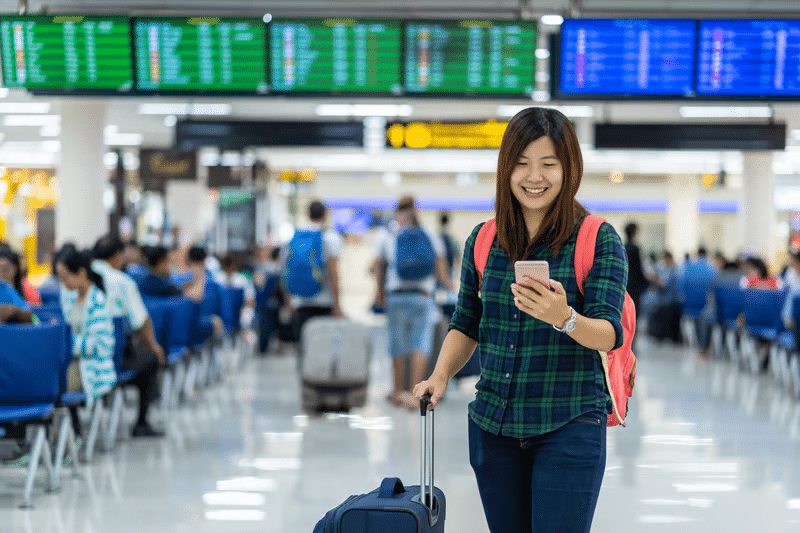
The japan asean tourist population is diverse, but several scenarios appear consistently across markets.
First-time Japan visitors from emerging SEA markets: The first Japan trip from Vietnam, the Philippines, or Indonesia is often a high-anticipation, high-documentation journey — every moment photographed, every experience shared in real time on Line, WhatsApp, TikTok, and Instagram. Data usage for first-time Japan visitors from these markets is typically high, making generous data plans essential.
Singapore and Malaysia repeat visitors: Singaporean and Malaysian Japan travelers often visit two, three, or more times, developing regional expertise and venturing beyond the Tokyo-Kyoto-Osaka corridor into rural Japan, lesser-known onsen towns, and regional cities. These travelers move quickly between locations and need reliable coverage across diverse geographies — making Docomo’s broad national coverage particularly valuable.
Japan ski tourism from Southeast Asia: Hokkaido ski tourism from SEA markets has grown into a significant seasonal phenomenon, particularly from Singapore, Malaysia, Thailand, and increasingly the Philippines. japan asean travel agency operators running Hokkaido ski programs know that resort connectivity is as important as slope access for their clients. Docomo’s mountain and rural coverage is the consistent recommendation for ski-focused SEA itineraries.
Shopping and food tourism: A significant proportion of SEA Japan travel is driven by shopping (particularly in Tokyo’s fashion districts and Osaka’s electronics stores) and food experiences. Both activities are data-intensive: price comparison apps, Google Maps for restaurant hunting, translation apps for menus, and real-time social sharing all consume data continuously. High-data plans sized generously are the right choice for this traveler profile.
Payment Options for Southeast Asian Travelers
Purchasing a Japan eSIM before departure is straightforward for Southeast Asian travelers, with major international payment methods accepted. Visa and Mastercard credit and debit cards from Singapore, Malaysia, Thailand, the Philippines, Vietnam, and Indonesia are all accepted by Japan Sim Data’s online purchase system, with QR code delivery by email and installation completed from home.
For the japan trip philippines and japan trip vietnam traveler segments in particular, where banking card access and international online payment may be less universal than in Singapore or Malaysia, it is worth noting that Japan Sim Data’s payment options are designed to be accessible across the full range of SEA market payment infrastructure — allowing travelers to confirm and install their eSIM well before departure day.
In Japan itself, Southeast Asian travelers will encounter Japan’s predominantly cash-based economy. ATMs at 7-Eleven and Japan Post branches accept most international cards, and locating them via Google Maps or the 7-Eleven ATM finder requires a working data connection — another practical reason to have an active Japan eSIM from arrival.
Tips for Southeast Asian Travel Agencies
The japan singapore tour operator, japan malaysia tour operator, japan thailand tour operator, and japan vietnam tour operator sectors are among Asia’s most experienced Japan travel specialists. Japanese tourism has been a core product category for Southeast Asian agencies for decades, and the sophistication of Japan programming across the region reflects that expertise.
Connectivity has become a product differentiator in this competitive landscape.
Include eSIM briefing in standard pre-departure documentation. SEA travelers — across all markets — benefit from a clear explanation of Japan’s connectivity options, why home carrier roaming is expensive for Japan trips of five days or more, and how to install the eSIM provided or recommended by the agency. A one-page guide reduces day-of-travel support calls significantly.
Offer bulk eSIM as a tour package inclusion. For group departures across all SEA markets, pre-distributed Japan eSIMs have become a meaningful product differentiator. Travelers who arrive in Japan already connected — without queuing at airport SIM counters or troubleshooting roaming settings — have a better arrival experience and associate that positive start with their agency. Japan Sim Data provides bulk eSIM pricing for travel agencies managing group japan asean tourist departures, with network selection tailored to the itinerary.
Match network to product type. Japan singapore tour operator and japan malaysia tour operator businesses running multi-region Japan tours should specify Docomo-network eSIMs for products that include significant rural, mountain, or regional content. Urban-focused Tokyo and Osaka products are well-served by any of the three networks.
Consider the first-timer segment’s higher data needs. Agencies building Japan entry-level products for first-time visitors from emerging SEA markets should size their eSIM recommendations generously — first-timers consistently use more data than experienced Japan travelers, given the continuous use of navigation, translation, and social sharing throughout the trip.
Plan for diverse device compatibility. Southeast Asian group travelers use a wide variety of smartphone brands and models — including significant numbers of mid-range Android devices that may or may not support eSIM. A pre-departure compatibility check in the booking confirmation materials prevents surprises on departure day and allows the small minority of travelers with non-eSIM-compatible devices to arrange a physical SIM alternative in advance.
According to the Japan National Tourism Organization (JNTO), ASEAN markets collectively represent one of Japan’s most important and fastest-growing inbound tourism segments, with visitor numbers and per-trip spending both on strong upward trajectories heading into 2026. The GSMA notes that eSIM adoption across Southeast Asia is accelerating rapidly, with smartphone upgrade cycles bringing eSIM-capable devices to an expanding proportion of the SEA traveler market.
Conclusion: Sort Your Japan Connectivity Before You Leave Southeast Asia

Japan rewards the well-prepared traveler, and the single most impactful piece of pre-trip preparation after booking your flights is sorting your connectivity before you leave home. Home carrier roaming from every Southeast Asian market is structurally more expensive than a direct Japan eSIM for trips of five days or more — and the typical SEA Japan itinerary runs well beyond that threshold.
A Japan eSIM Southeast Asia solution purchased before departure delivers full-speed data on Japan’s best networks, transparent pricing with no post-trip bill surprises, and the seamless arrival experience of being connected from the moment your plane touches Japanese soil. Whether you’re navigating Shinjuku for the first time, hunting for the best ramen shop in Sapporo, or coordinating a group of thirty travelers from Bangkok on a Kyoto temple tour — connectivity is the foundation that everything else runs on.
Japan Sim Data’s eSIM plans on Docomo, SoftBank, and KDDI networks are available for purchase online, with international payment methods accepted across all Southeast Asian markets. Install before you fly, arrive connected, and spend your first moments in Japan exactly where they should be spent — experiencing Japan, not troubleshooting your phone.
Frequently Asked Questions
Q1: Which Japanese network is best for Southeast Asian travelers doing multi-city Japan tours?
A: For itineraries covering both major cities and regional or rural destinations — the most common SEA Japan travel pattern — Docomo offers the broadest national coverage. SoftBank is an excellent choice for trips concentrated in Tokyo, Osaka, and other large cities. Japan Sim Data offers plans on all three networks, with recommendations based on your specific itinerary.
Q2: Can I use Line, WhatsApp, and social media normally in Japan?
A: Yes, completely. Japan has no internet restrictions — Line, WhatsApp, Instagram, TikTok, Facebook, and all other apps used across Southeast Asia work normally in Japan without any VPN or workaround. You simply need a stable data connection, which a Japan eSIM provides far more reliably than public WiFi.
Q3: Is a Japan eSIM significantly cheaper than home carrier roaming for a ten-day Japan trip?
A: Yes, typically significantly cheaper. Home carrier Japan roaming across all Southeast Asian markets operates on day-pass structures that accumulate quickly over a ten-day trip. A Japan eSIM covering the same period usually costs a fraction of the equivalent carrier roaming total, with more data and direct network access.
Q4: Can my Southeast Asian Android phone use a Japan eSIM?
A: Many can, but eSIM compatibility varies by device brand and model. Flagship Android devices from Samsung, Google Pixel, and other major brands generally support eSIM. Mid-range devices — which are common in Southeast Asian markets — may or may not support it depending on the specific model. Check your device’s settings for an “Add eSIM” option, or consult your manufacturer’s website before purchasing.
Q5: Can Southeast Asian travel agencies arrange bulk Japan eSIMs for group tours?
A: Yes. Japan Sim Data offers bulk eSIM packages for travel agencies across Southeast Asia, including japan singapore tour operator, japan malaysia tour operator, japan thailand tour operator, and japan vietnam tour operator businesses. Group pricing is available for departures of ten travelers or more, with network selection tailored to the itinerary and full support for the pre-departure distribution process.