
Best Japan eSIM for Foodie Travelers: Restaurant Booking and Map Data
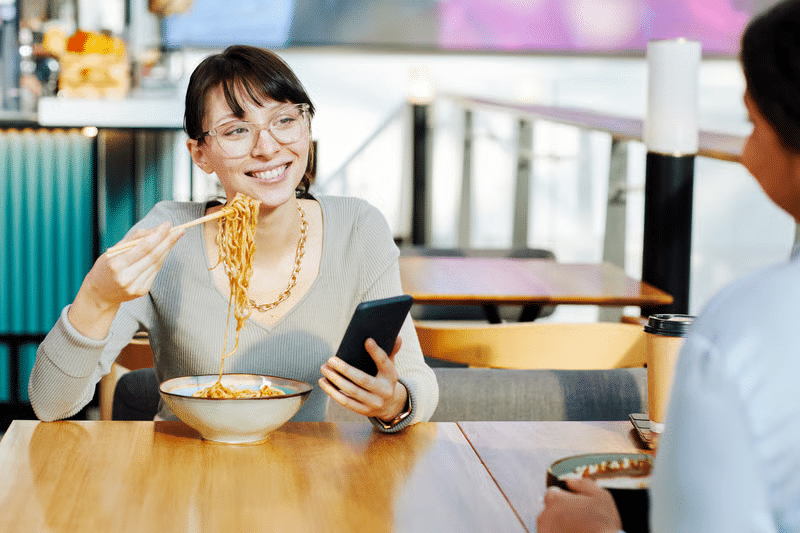
Japan’s food culture is one of the world’s great reasons to travel. The country has more Michelin-starred restaurants than any other nation on earth. Its ramen regional variations constitute an entire geography of flavor. The morning markets of Tsukiji and Nishiki, the counter omakase experiences that require booking weeks in advance, the standing sushi bars where the fish arrived from the auction two hours earlier, the izakaya where the sake list is handwritten in chalk — Japan’s food landscape rewards obsessive research, real-time discovery, and the kind of spontaneous doorway decision that requires knowing at a glance whether the restaurant you’re peering into is worth entering.
All of this is connectivity-dependent in ways that other travel styles are not. The japan foodie esim question is therefore not just about having data in Japan — it is about having reliable, continuous data for a travel style where the phone is simultaneously a research tool, a reservation platform, a translation device, a photography studio, and a social publishing channel. The foodie traveler’s phone is the most essential piece of equipment in the Japan travel kit, and its connectivity is the operational infrastructure that makes sophisticated food travel possible.
Food Travel Is Data-Heavy Travel
The Research-Intensive Nature of Japan Food Tourism
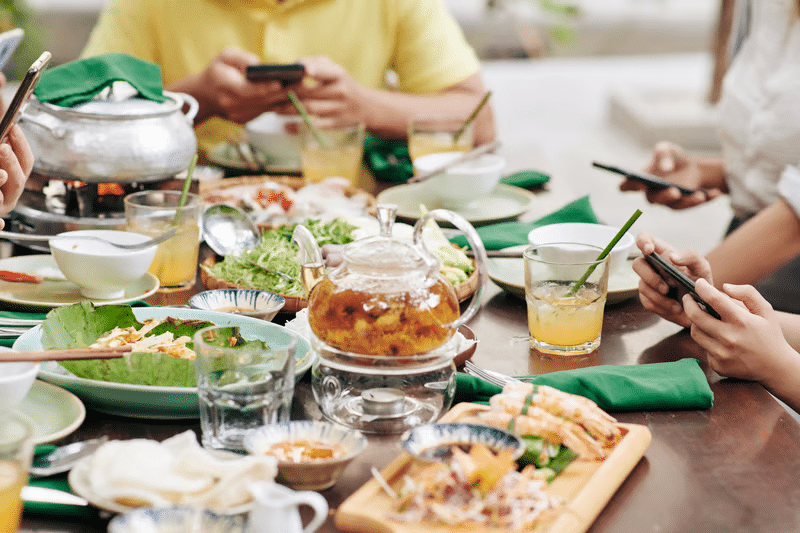
Food-focused Japan travel involves more pre-meal research than any other travel style. The Tokyo neighborhood ramen map consultation, the Tabelog deep-dive into a specific sushi restaurant’s review history, the Google Maps cross-reference with the most recent food blogger post about a specific standing bar in Osaka’s Dotonbori — each meal in a sophisticated Japan food itinerary involves research that would take a non-foodie thirty seconds and a foodie thirty minutes.
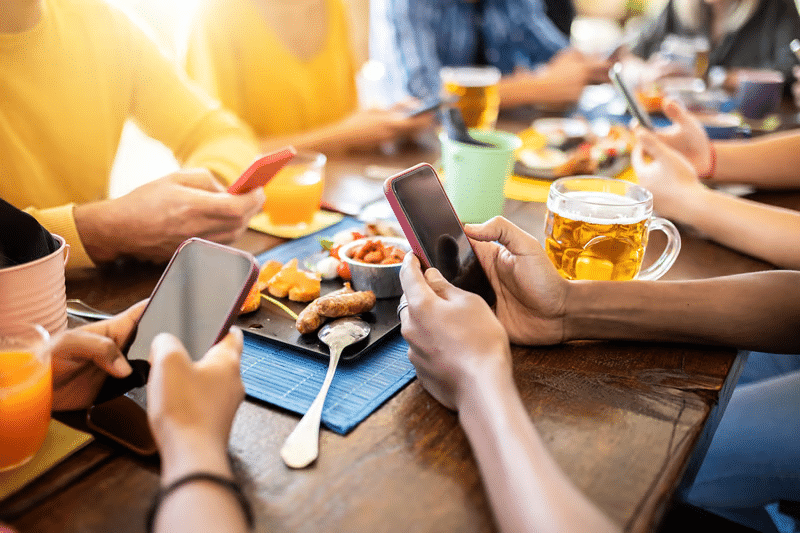
This research is predominantly mobile — conducted on the phone, in real time, while standing outside a restaurant, waiting in a queue, or sitting at a previous meal’s counter planning the next one. The japan esim food research dependency is therefore continuous throughout the day rather than concentrated in specific connectivity moments.
Data Consumption Patterns for Food Travelers
Japan foodie data consumption differs from standard tourist data consumption in several ways:
Research app usage is continuous and recurrent. Tabelog, Google Maps, Instagram, TripAdvisor Japan, and dedicated food apps are opened repeatedly throughout the day — not in one morning session but every two to three hours as meals are researched, located, and decided upon.
Location services are active throughout the day. Finding the nearest ramen shop from a current location, navigating to a specific counter restaurant down an unmarked alley, and confirming a reservation address against a physical location all require GPS and map data throughout active food hours.
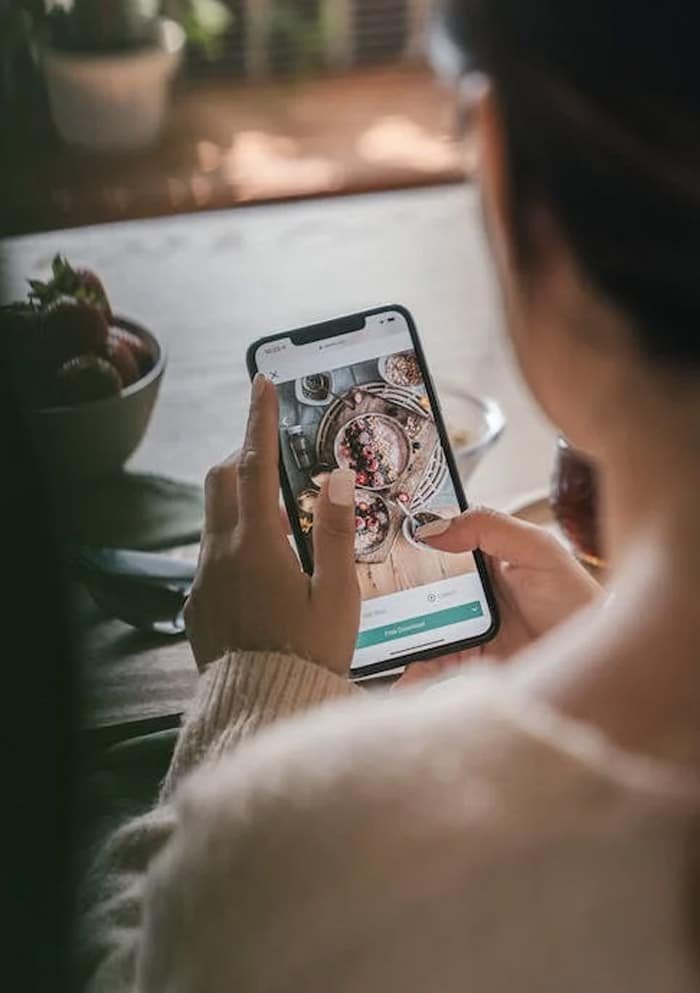
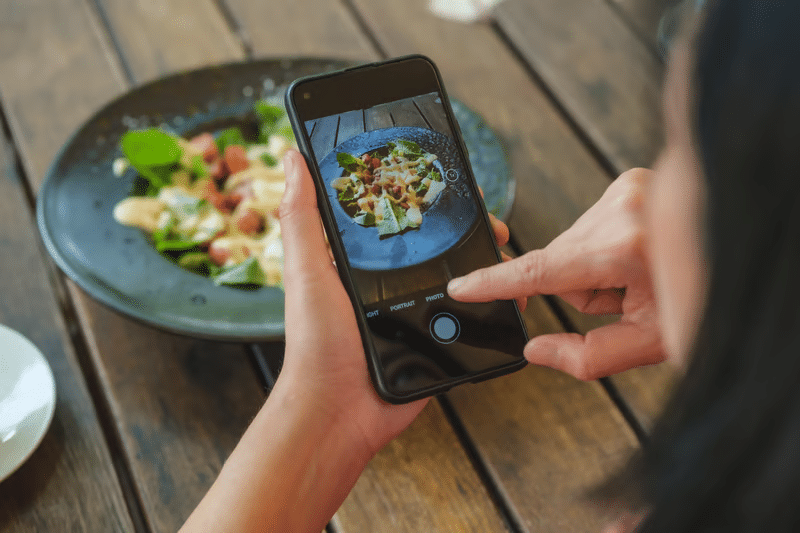
Photography is intensive and often social-media-destined. Food photography in Japan is not casual — the arrangement of dishes at a kaiseki meal, the cross-section of a perfectly cooked pork belly in a tonkotsu bowl, the glistening surface of toro tuna on a rice bed — these are photography subjects that food-focused travelers document extensively and share promptly.
Reservation Apps, Review Sites, and Map Dependencies
Tabelog: Japan’s Essential Food Platform
japan esim tabelog access is the most important single data use case for serious Japan food travelers. Tabelog — Japan’s dominant restaurant review and discovery platform — contains depth of coverage, review quality, and booking integration that no other Japan food discovery platform approaches.
Key Tabelog functions requiring continuous data access:
Search by neighborhood and cuisine: Real-time search while walking through an unfamiliar neighborhood requires live data for search results to populate.
Review reading: Individual restaurant review pages with photographs, detailed commentary, and pricing information are data-moderate but repeatedly accessed throughout the day.
Booking integration: Tabelog’s reservation system — for restaurants that accept direct online booking — requires data for the booking process itself and for confirmation receipt.
Score filtering: Using Tabelog’s scoring system to filter by rating threshold while in a specific location requires live data for filtered results.
For non-Japanese readers, Tabelog’s interface benefits from Google Translate integration — switching between Tabelog and Translate, or using Chrome’s auto-translation, adds modest additional data consumption but dramatically increases the platform’s accessibility.
Google Maps for Japan Food Discovery
japan esim reservation and discovery on Google Maps covers the second major platform in the Japan food traveler’s toolkit. Google Maps’ Japan restaurant coverage has improved significantly, with menu photos, user reviews, and opening hours available for a broad range of establishments from Michelin-starred kaiseki rooms to local standing bars.
Google Maps’ additional advantage for food travelers: real-time navigation from current location to restaurant, with walking directions that handle Japan’s complex alley-and-block addressing better than any platform available a decade ago.
Pocket Concierge and TableAll for High-End Booking
japan esim michelin and high-end restaurant booking uses platforms beyond Tabelog. Pocket Concierge and TableAll are the primary English-language platforms for booking Japan’s most sought-after restaurants — the tasting-menu omakase experiences that require advance reservations and would otherwise be inaccessible to international travelers without Japanese-language booking capability.
These platforms require data for browsing availability, completing reservation processes, and receiving confirmation documents. For the foodie traveler targeting Japan’s highest-tier dining experiences, having a reliable data connection during the booking process — whether done from Japan or before departure — is essential.
Data Usage for Food Photography and Social Sharing
The Japan Food Photography Data Profile
Japan food photography drives some of the most data-intensive social sharing in Japan travel. The reasons are straightforward: Japan’s food presentation standards are among the world’s highest, creating photography subjects that perform exceptionally well on visual platforms; the frequency of meals and food encounters throughout a food-focused travel day creates multiple daily photography and sharing events; and the food traveler’s audience on social media is typically engaged specifically with this content type, creating incentive for prompt sharing.
Estimated data consumption from food photography and social sharing:
Instagram photo sharing: 2–5MB per shared image (compressed for platform delivery from a 3–10MB original)
Instagram Stories with food video: 15–30MB per Story clip
TikTok food content: 50–150MB per posted video depending on length and quality
Twitter/X with food photos: 3–8MB per tweet with attached images
A full food day across platforms: 200–800MB from social sharing alone — more intensive than a standard tourist’s daily social use, but manageable within most fixed data plans when combined with other data use.
The japan esim eating photography data consumption becomes more significant when creators are shooting for YouTube or blog content in addition to social platforms — but for the social-media-active food traveler rather than professional creator, standard data plans can accommodate food photography sharing without unlimited plans being strictly necessary.
eSIM Tips for Food-Tour Days
The Pre-Meal Research Session
The most data-intensive single activity in a foodie Japan day is the pre-meal research session — the 15–30 minutes before each significant meal when research, confirmation, and navigation converge simultaneously.
During a pre-meal research session, the food traveler is typically: searching Tabelog or Google Maps for the specific restaurant, reading recent reviews, confirming the current day’s opening hours, navigating to the location, photographing the exterior for social sharing, and sometimes attempting a same-day reservation for a dinner option discovered while at lunch.
This convergence of research, navigation, and social functions in a brief window creates a connectivity demand spike that any Japan Sim Data plan handles without difficulty — but which is completely inaccessible without a live data connection.
Practical tip: Download Tabelog neighborhood lists and specific restaurant pages to offline reading apps before the day begins when possible. This reduces the data demand of the research phase at each meal. Use live data primarily for the navigation phase and social sharing that follows.
Navigating Japan’s Food Alleys
Japan’s most interesting food exists in environments where navigation is genuinely challenging: the underground shopping and restaurant complexes beneath major train stations, the narrow alley clusters (yokocho) of Tokyo’s Shinjuku and Yurakucho districts, the basement food halls (depachika) of Osaka’s department stores, and the unmarked side streets where local izakaya serve unmarked entrances.
japan esim food tour navigation for these environments requires live data — Google Maps specifically has embedded detailed indoor mapping for major Japan train stations and can navigate within complex food alley environments that physical signage alone cannot decode.
Translation at the Food Counter
For the food traveler eating at establishments without English menus — which is the experience that produces the most memorable Japan food encounters — Google Translate’s camera function transforms the connectivity dependency from a convenience into a practical necessity.
Pointing a phone at a Japanese ramen shop’s handwritten menu board, a kaiseki course description, or a sake selection card and receiving a real-time translation overlay requires a live data connection. This translation function is used multiple times per day across a Japan food itinerary, contributing 100–300MB of additional data consumption from camera translation requests alone.
Best Carriers for Foodie Itineraries
Japan’s Food Geography and Network Selection
Japan’s most significant food destinations track closely with its urban network coverage — Tokyo’s ramen geography, Osaka’s street food culture, Kyoto’s kaiseki tradition, Fukuoka’s hakata ramen, and Sapporo’s miso ramen are all in major cities where all three carriers provide excellent connectivity.
docomo food travel: The carrier of choice for food travelers whose itineraries extend beyond major cities — the rural ryokan dinner, the local fish market in a Tohoku fishing village, the mountain onsen town with a single outstanding restaurant. Docomo’s rural coverage ensures food discovery tools function throughout Japan’s food geography, not just in the urban centers.
softbank foodie: Excellent for food travelers concentrating in Tokyo, Osaka, and Fukuoka — the three cities with Japan’s highest food destination density and SoftBank’s strongest urban performance.
kddi foodie japan: Appropriate for mixed itineraries covering regional cities alongside urban food destinations. Kanazawa’s Omicho fish market, Matsuyama’s local cuisine, and Nagasaki’s champon noodle culture are all within KDDI’s regional coverage.
The japan foodie connectivity recommendation: Docomo for food travelers whose itinerary follows Japan’s cuisine geography beyond the main cities; SoftBank for Tokyo-Osaka-Fukuoka concentrated food tourism.
Best Japan Sim Data Plans for Foodie Travel
Plan Sizing for Food-Focused Travel
The japan foodie data plan sizing decision is more nuanced than the creator’s plan (always unlimited) or the tourist’s plan (standard fixed data). The food traveler’s data consumption sits between these poles — higher than standard tourist use from research app intensity and food photography, but typically lower than creator consumption from the absence of professional video production.
Standard food-focused Japan trip (7–10 days, urban focused): 15GB covers the combination of Tabelog research, Google Maps navigation, food photography social sharing, and translation throughout a moderately intensive food itinerary. This assumes hotel WiFi for any large downloads and no intensive video content production.
Intensive food tourism (2 weeks, multi-city, active social media): 20GB for the food traveler actively sharing on multiple platforms, conducting extensive Tabelog research at each meal, and navigating unfamiliar food districts throughout the day.
Food creator or blogger (any duration with professional content production): Unlimited on Docomo. The combination of professional food photography backup, video content production, and multi-platform publishing requires unlimited for the reasons outlined in the content creator guide.
Rural food tourism (onsen town cuisine, regional specialty dining): Docomo regardless of plan size, for the coverage continuity that ensures food discovery tools work at the regional and rural food destinations that often produce the most distinctive dining experiences.
The Michelin-Chasing Data Budget
The esim for foodie japan traveler specifically targeting Tokyo’s Michelin-starred restaurant concentration should consider that the advance reservation process for top-tier establishments typically happens before departure (Pocket Concierge, TableAll, email reservations) rather than requiring day-of data access. Once in Japan, navigating to confirmed reservations and discovering complementary food experiences around them is the primary data use — covered by standard 15–20GB plans without unlimited requirements.
According to the Japan National Tourism Organization (JNTO), food and gastronomy tourism is consistently among the top three motivators for international visits to Japan, with the depth of Japan’s food culture across all price points cited as a primary driver of high traveler satisfaction scores. The GSMA, notes that restaurant discovery and booking app data consumption accounts for an increasingly significant proportion of tourist eSIM data use globally, with Japan’s food-oriented tourism identified as a leading example of data-intensive food travel.
Conclusion: Japan’s Food Culture Deserves Continuous Connectivity
Japan’s food landscape is among the world’s most rewarding travel subjects — a geography of regional variation, technique obsession, ingredient quality, and hospitality that sustains year after year of enthusiastic food travel. Navigating that landscape with confidence requires the data connectivity that makes Tabelog research possible at every decision point, that translates every handwritten menu board in real time, that navigates every unmarked alley to the counter that makes the effort worthwhile.
Japan Sim Data’s eSIM plans on Docomo (for the full Japan food geography) and SoftBank (for urban food concentration) provide the continuous connectivity that Japan food travel demands. Size your plan to your social sharing intensity — 15GB for the selective sharer, 20GB for the active multi-platform poster, unlimited for the professional food creator — and let Japan’s extraordinary food culture deliver what it always delivers to the well-prepared, well-connected food traveler.
Visit wordpress-1493298-6069223.cloudwaysapps.com for the plan that matches your Japan food itinerary.
Frequently Asked Questions
Q1: Is Tabelog accessible in English with a Japan eSIM?
A: Tabelog’s primary interface is Japanese, but it is accessible via Chrome’s auto-translation function or Google Translate integration. The English-language version of Tabelog (tabelog.com/en) exists but has less comprehensive content than the Japanese version. Using Chrome’s real-time page translation on the full Japanese Tabelog site, powered by your Japan Sim Data eSIM connection, provides the most complete access to Japan’s most important restaurant review platform.
Q2: How much data does a typical Japan foodie trip use per day?
A: A food-focused Japan traveler using Tabelog research, Google Maps navigation, camera translation at restaurants, and active social media sharing typically uses 2–4GB per day. Active multi-platform social media creators sharing food content across Instagram, TikTok, and Twitter may reach 4–6GB. Professional food creators with video workflows should plan for unlimited plans.
Q3: Can I book Michelin-starred restaurants in Japan from a Japan eSIM?
A: Yes. Pocket Concierge, TableAll, and direct restaurant websites all function normally on Japan Sim Data eSIM connections. Note that the most sought-after restaurants — tasting menu omakase experiences with very limited seats — are often fully booked weeks or months in advance. The eSIM assists with booking research and day-of navigation but cannot substitute for advance reservation planning.
Q4: Does Google Maps reliably cover Japan’s food alleys and underground restaurant complexes?
A: Google Maps has significantly improved Japan coverage, including indoor mapping for major train stations and some underground complexes. For complex food alley navigation (Shinjuku’s Memory Lane, Yurakucho’s under-track izakaya row), Google Maps provides accurate outdoor navigation to the entrance; internal navigation within the complexes benefits from Tabelog’s more specific location data and user-submitted photographs.
Q5: Which Japan Sim Data plan is best for a two-week food-focused Japan trip?
A: 20GB on Docomo for a food traveler covering both urban and regional Japanese food destinations — the combination of Tabelog research, Google Maps navigation, camera translation, and active social sharing across two weeks typically stays within 20GB with occasional hotel WiFi supplement. For content creators producing professional food content throughout the trip, unlimited on Docomo is the appropriate specification.