
Trade Shows in Japan: Connectivity Planning for International Exhibitors
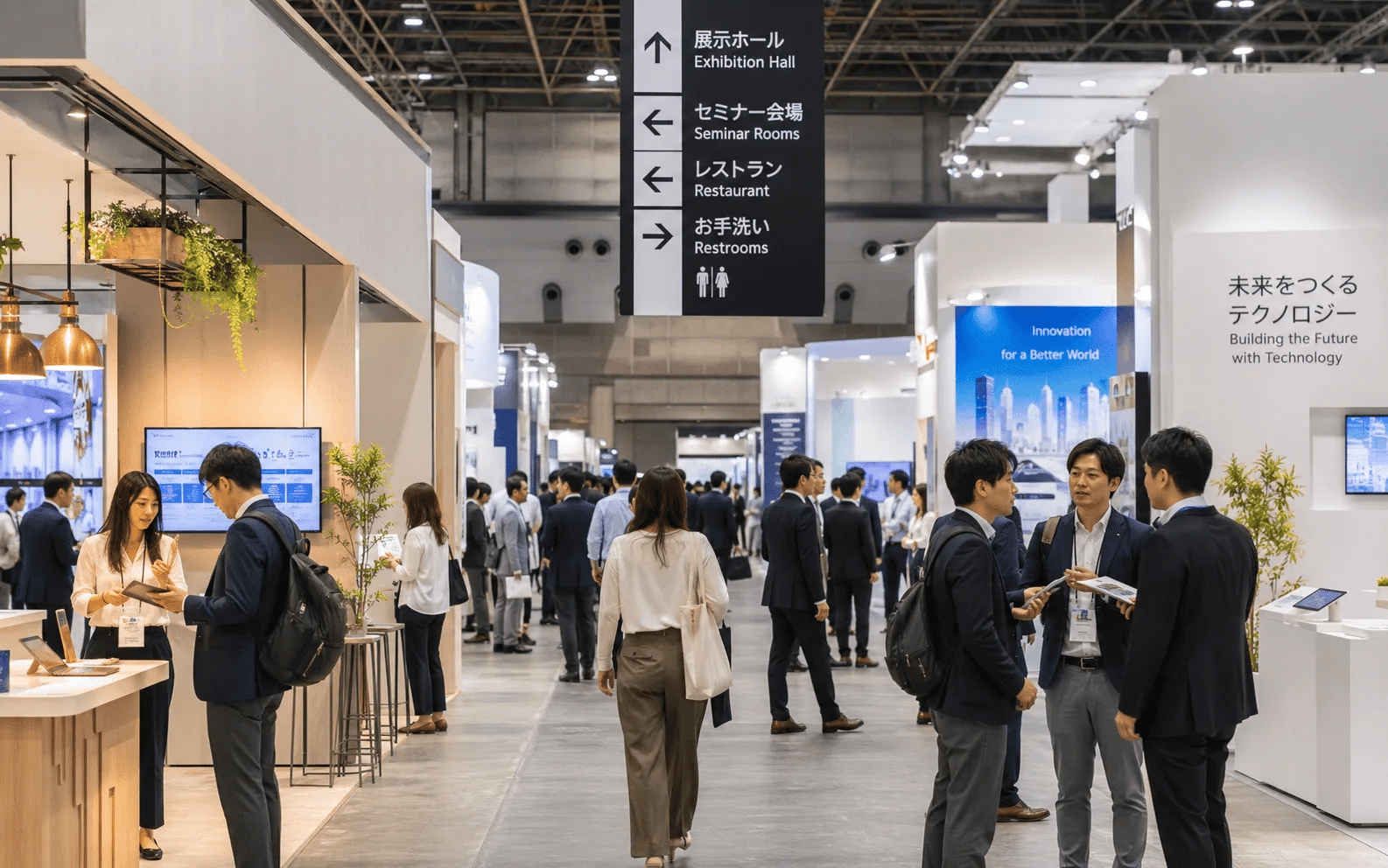
An international exhibitor arriving in Japan for a trade show faces a connectivity situation that is more operationally important than a typical leisure trip. Whether the event takes place at Tokyo Big Sight, Makuhari Messe, Intex Osaka, or another major exhibition venue, the booth functions as a business operation throughout the show.
The CRM running on team devices manages leads. Product demonstrations may depend on cloud services and reliable internet access. Translation tools support conversations with Japanese visitors. Staff need navigation for travel between airports, hotels, exhibition centers, restaurants, and client meetings. A connectivity failure can therefore disrupt more than personal communication.
The Japan trade show eSIM planning challenge is that exhibition connectivity requires more than basic internet access. International exhibitors need reliable mobile connectivity for specific business functions throughout a multi-day event, from booth setup and opening through show close and evening client meetings.
Trade Show Connectivity Realities
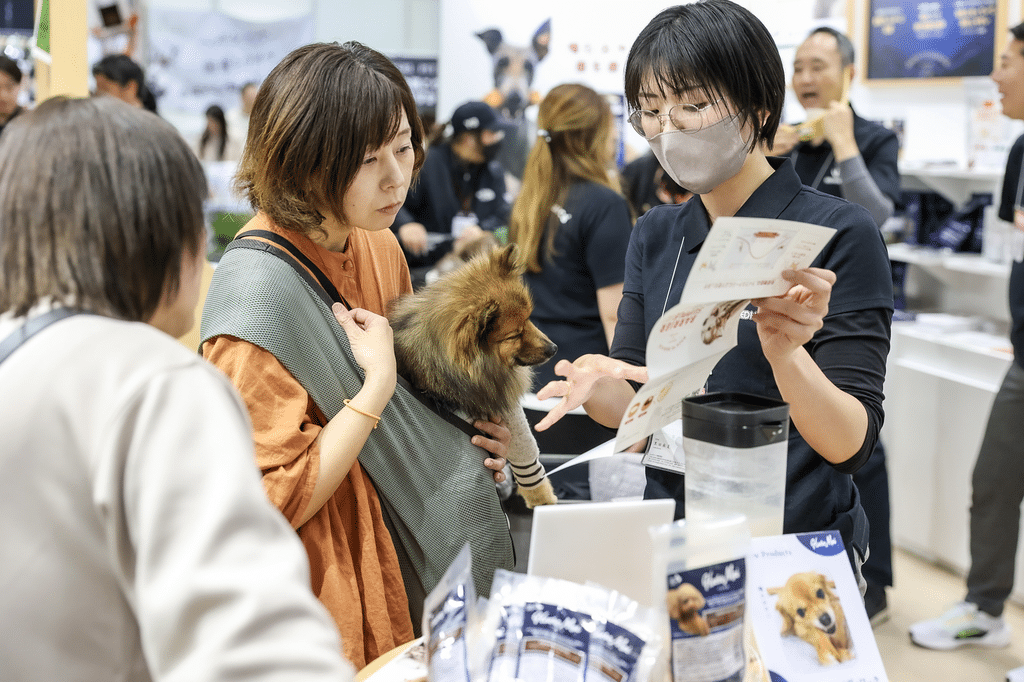
The Exhibition Center Wi-Fi Challenge
Major Japanese exhibition venues, including Tokyo Big Sight, Makuhari Messe, Intex Osaka, and Pacifico Yokohama, provide Wi-Fi services for exhibitors and visitors. However, shared exhibition Wi-Fi can behave differently from the connection available in a hotel or office.
Peak-hour congestion: The show floor can become extremely busy when thousands of exhibitors and visitors connect simultaneously. Network demand can increase significantly during opening hours and major presentation periods.
Demonstration requirements: Product demonstrations that depend on video streaming, cloud services, or real-time data may require more consistent connectivity than shared Wi-Fi can provide. An individual mobile connection can serve as a useful backup when the venue network becomes unavailable or unreliable.
Large-venue coverage: Exhibition centers cover large areas, and the connectivity experience can vary between halls, meeting areas, entrances, and surrounding facilities. Exhibitors should consider mobile connectivity for movement around and outside the venue.
Security considerations: Exhibitors may access CRM systems, corporate accounts, VPN services, and client information during the event. Using a dedicated mobile connection can reduce reliance on shared public networks, although normal corporate security practices should still apply.
Individual eSIM as an Exhibition Backup
Japan Sim Data’s eSIM plans using the Docomo network can provide individual connectivity for booth staff as an alternative or backup to exhibition Wi-Fi.
Coverage throughout the business day: Staff can use mobile data during booth setup, show hours, lunch breaks, evening client meetings, and travel between the venue and hotel.
CRM and demonstration backup: If exhibition Wi-Fi becomes unavailable, an individual eSIM can provide an alternative connection for CRM access, communication, and selected product demonstrations.
Connectivity outside the venue: Exhibitors often have client dinners, factory visits, business meetings, and other activities away from the exhibition center. Mobile eSIM connectivity continues to work during these activities.
Major Japan Exhibition Venues and Their Connectivity Profiles
Tokyo Big Sight (東京ビッグサイト)
Tokyo Big Sight in Ariake, Koto City, is one of Japan’s major international exhibition venues. It hosts large technology, mobility, retail, and industry events throughout the year.
Access from central Tokyo: Visitors can reach the venue using the Yurikamome and Rinkai lines. Navigation and transit apps are useful when traveling from hotels or meeting locations in central Tokyo.
Japan trade show eSIM coverage: The Ariake and Odaiba area is a developed urban environment with mobile coverage from Japan’s major networks. A Docomo-based eSIM can provide connectivity during travel around Tokyo and when moving between business locations.
Exhibition Wi-Fi: Exhibitor and venue Wi-Fi services are available, with additional connectivity options depending on the event and booth requirements. Exhibitors with bandwidth-intensive operations should confirm the available service directly with their event organizer.
Network consideration: A mobile eSIM is particularly useful for exhibitors whose schedules extend beyond Tokyo Big Sight to client meetings, restaurants, hotels, or other business locations.
Makuhari Messe (幕張メッセ)
Makuhari Messe in Chiba is a major convention and exhibition center that hosts technology, gaming, automotive, manufacturing, and other large-scale events.
Access from Tokyo: JR services connect Tokyo with Kaihin-Makuhari Station, which is close to the exhibition center. Navigation and transit apps can help visitors manage connections and event-day travel.
Japan trade show eSIM coverage: The Makuhari business district has extensive mobile infrastructure. A Docomo-based eSIM can support exhibitors traveling between the exhibition center, Tokyo, hotels, restaurants, and other business locations.
Exhibition Wi-Fi: Wi-Fi availability and performance depend on the event and service arranged by the organizer or exhibitor. Teams should confirm their booth’s specific connectivity requirements before the event.
Network consideration: Exhibitors combining the show with meetings elsewhere in Chiba or Tokyo can benefit from having individual mobile connectivity throughout the trip.
Intex Osaka (インテックス大阪)
Intex Osaka is a major exhibition center in Osaka’s Nanko area and hosts international trade shows, industrial exhibitions, medical events, and other large-scale business events.
Access from central Osaka: Visitors can use Osaka’s public transport network to reach the venue from areas such as Namba and Umeda. Navigation connectivity is particularly useful when combining the exhibition with meetings elsewhere in Osaka.
Coverage: A Docomo-based eSIM can provide mobile connectivity throughout Osaka and during travel between the exhibition center, hotel, restaurants, and meeting locations.
Exhibition Wi-Fi: Wi-Fi services depend on the event and the connectivity package arranged for the exhibition. Exhibitors with demanding applications should confirm bandwidth and service conditions in advance.
Network consideration: A mobile eSIM becomes especially useful when an Osaka exhibition forms part of a wider Kansai business itinerary.
Booth Staff, Translators, and Visiting Executives
The Booth Team Connectivity Profile
A typical international trade show team can have different connectivity requirements depending on each person’s role.
Booth manager or team leader:
Data requirements include CRM access, team coordination, scheduling, navigation, messaging, and communication with clients.
Plan consideration: An unlimited Docomo plan can be suitable when the booth manager needs frequent connectivity throughout the event and does not want to monitor data consumption.
Sales and technical staff:
Sales and technical employees may use CRM applications, product materials, communication tools, navigation, and demonstration backups throughout the day.
Plan consideration: A 15–20GB Docomo plan can suit a 5–7 day show when venue Wi-Fi remains the primary connection. Staff running data-intensive demonstrations may require an unlimited plan instead.
Interpreters and translators:
Interpreters and bilingual staff may use translation applications, email, messaging platforms, digital business card tools, appointment confirmations, and navigation.
Plan consideration: A 15GB Docomo plan can provide a practical starting point for translators whose main requirement is communication, navigation, and professional applications.
Visiting executives:
Executives attending a show for one or two days typically need navigation, messaging, email, business applications, and access to meeting information.
Plan consideration: A Day Pass eSIM can be appropriate for short visits when the validity period matches the executive’s actual attendance.
Connectivity for Visiting Clients
International clients visiting an exhibitor’s booth may also need mobile connectivity while traveling around Japan. Some exhibitors may choose to arrange eSIMs for selected VIP guests as part of their event hospitality.
For example, an exhibitor could purchase a small batch of plans and provide selected guests with activation instructions before their arrival. This can simplify travel between the airport, hotel, exhibition venue, and client meetings.
This should be treated as an exhibitor-managed hospitality arrangement rather than a standard requirement for every trade show. The exhibitor should also confirm the applicable terms and distribution conditions before providing plans to third parties.
Data Usage for Demonstrations, Streaming, and CRM
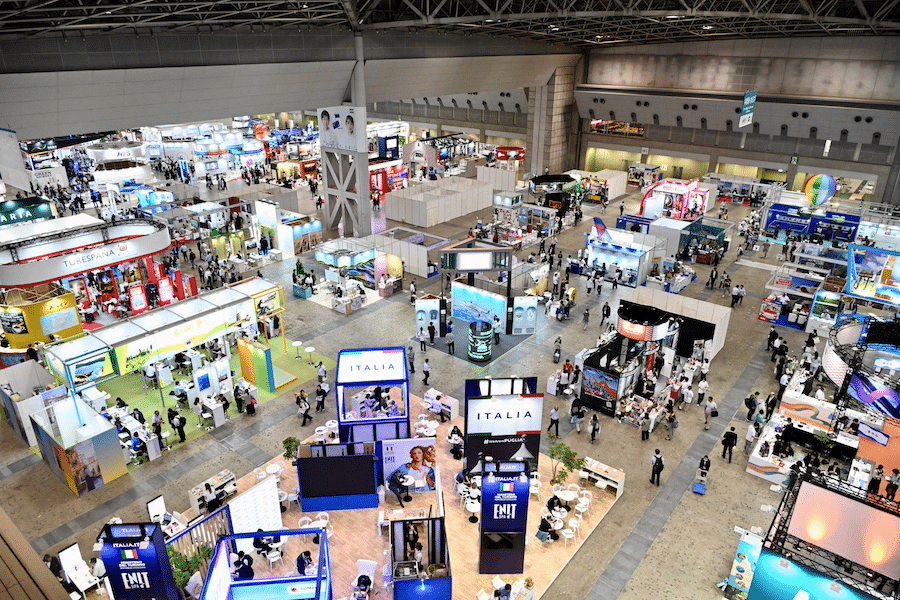
The Trade Show Data Profile
Trade show connectivity can generate different data patterns from ordinary business travel.
Product demonstrations:
Live demonstrations that access cloud platforms, stream video, or use real-time APIs can consume substantial amounts of data. Usage depends heavily on the application, video quality, and demonstration frequency.
If an eSIM serves as the primary connection for a data-intensive demonstration, an unlimited plan provides more flexibility than a fixed-data plan. If the eSIM is only a backup for venue Wi-Fi, a 15–20GB plan may provide sufficient capacity for many teams.
CRM and lead management:
Applications such as Salesforce, HubSpot, and event-specific lead capture systems typically use relatively little data per transaction. However, the connection needs to remain available throughout the show for lead entry, business-card scanning, appointment scheduling, and team communication.
Actual consumption varies according to the applications used, attachments uploaded, photographs captured, and synchronization settings.
Social media and content:
Show-day content creation can use significantly more data than CRM applications. Uploading photographs, short videos, Stories, and other high-resolution content can increase consumption quickly.
Teams with active social media programs should estimate their expected daily upload volume and select their plans accordingly.
Evening business activities:
Trade shows often include client dinners and networking events. Staff may need maps, restaurant information, messaging, ride services, and transit applications after leaving the venue.
A mobile eSIM therefore provides value beyond the exhibition floor by keeping the team connected throughout the full business day.
Bulk Pricing and Pre-Arrival Delivery
Exhibitor Bulk Order Structure
A Japan trade show eSIM order for an exhibitor team can be organized as a batch, with individual plans assigned to specific team members.
A typical batch can include:
- Unlimited plans for high-usage staff
- 15–20GB plans for general booth staff
- Day Pass plans for short-term executive visitors
- Appropriate validity periods for the full Japan itinerary
- Individual QR codes and installation instructions
Pre-Arrival Installation
QR codes can be distributed to team members before departure so they can install the eSIM at home. Activation should follow the plan’s specific instructions and timing requirements.
Pre-installation reduces the number of setup tasks the team needs to complete after landing in Japan. By the time staff travel from the airport to the exhibition venue, their mobile connectivity can already be ready for use.
Last-Minute Team Members
Exhibitors sometimes add staff after the original team has been confirmed. In these cases, additional eSIM plans can be ordered separately where available.
Airport installation using airport Wi-Fi is another option, although pre-arrival installation generally gives teams more time to confirm that the eSIM has been installed correctly.
Validity Period
Plan validity should cover the actual Japan itinerary rather than only the exhibition dates.
For example, an exhibitor arriving one day before booth setup and leaving one day after the exhibition should consider connectivity for the entire period. This provides coverage for airport transfers, setup, client meetings, and post-show travel.
Japan Sim Data Exhibitor Support
Exhibitor Account Planning
Japan Sim Data can structure eSIM requirements around the different roles within an international exhibition team.
Mixed plan configurations: A single order can be organized around different usage requirements, such as unlimited plans for high-usage staff, 15–20GB plans for general staff, and Day Pass options for short-term visitors.
Recurring trade shows: Companies attending Japanese exhibitions regularly can plan future orders around their expected annual travel schedule.
Event planning: Exhibitors can prepare connectivity requirements alongside booth logistics, accommodation, transportation, and staffing arrangements.
Post-show review: Teams can review actual usage after the event and use that information to improve plan selection for future exhibitions.
Conclusion: eSIM as Exhibition Connectivity Backup
For international exhibitors, the practical role of a Japan trade show eSIM is to provide individual mobile connectivity alongside venue Wi-Fi.
Exhibition Wi-Fi can remain useful for booth operations, but an individual eSIM extends connectivity beyond the booth and provides an alternative when shared Wi-Fi is unavailable or unsuitable for a particular task.
Consider installing the eSIM before departure. Match the plan to each team member’s role and expected data usage. Unlimited plans can suit staff with intensive or unpredictable data requirements, while 15–20GB plans can work for general business use when venue Wi-Fi is available. Short-term executives can use plans that match their attendance period.
For companies attending multiple Japanese trade shows, organizing connectivity as part of the overall event plan can simplify preparation and reduce last-minute setup.
Visit https://japansimdata.com/ to review Japan eSIM options for your next trade show.
Frequently Asked Questions
Q1: Is an individual eSIM necessary if the exhibition venue provides Wi-Fi?
A: Not necessarily, but it can provide a useful backup and keep staff connected outside the exhibition venue. Individual mobile connectivity is particularly useful for transit, client meetings, evening events, navigation, and situations where shared venue Wi-Fi becomes congested.
Q2: Which plan should a booth manager have compared with general booth staff?
A: The choice depends on expected usage. A booth manager with unpredictable or intensive data requirements may benefit from an unlimited Docomo plan. General booth staff may use 15–20GB plans for a 5–7 day event when venue Wi-Fi is available. Executives attending for one or two days can consider a Day Pass that matches their visit.
Q3: How much data does a product demonstration consume?
A: There is no single figure because consumption depends on the demonstration. Video streaming generally uses considerably more data than ordinary CRM activity, while cloud applications vary according to how much content they transfer. If the eSIM will serve as the primary connection for a data-intensive demo, an unlimited plan provides more flexibility.
Q4: Can Japan Sim Data eSIM plans be provided to VIP clients?
A: An exhibitor may choose to purchase additional plans for selected visitors or clients, subject to the applicable service terms. This can be used as part of an exhibitor’s hospitality arrangements, with activation instructions provided to the guests.
Q5: How far in advance should an exhibitor order Japan eSIM plans?
A: Ordering several weeks before departure gives the team time to confirm headcount, select appropriate plans, distribute QR codes, and complete installation before traveling. Companies with changing team numbers should allow additional time for late additions and plan adjustments.