

Osaka Expo eSIM Guide: Connectivity for Post-Expo 2025 Trips

Expo 2025 Osaka, Kansai closed its gates on Yumeshima island in October 2025 after welcoming roughly 28 million visitors from more than 160 participating countries and organizations. But the story of Yumeshima — and of Osaka as a global travel destination — didn’t end when the pavilions came down. If you’re planning a trip to Osaka now, an Osaka Expo eSIM is one of the simplest ways to make sure you can navigate the city’s post-Expo landscape, from the legacy sites still standing on the bay to the wider Kansai region beyond it.
This guide walks through what’s happening on Yumeshima today, how mobile coverage holds up across Osaka and its neighboring cities, practical tips for staying connected in large event zones, and how to combine Expo legacy sites with a broader Kansai itinerary. Along the way, we’ll point out which Japan Sim Data plans make the most sense for travelers exploring Osaka’s post-Expo era. Whether you’re the type of traveler who researches every stop in advance or prefers to wander and see what’s changed, a solid osaka travel esim takes one variable — connectivity — completely off your list of things to worry about.
According to the Japan National Tourism Organization, Osaka remains one of the country’s most-visited prefectures, and Expo 2025’s legacy is expected to keep drawing curious travelers well beyond the event’s official run. That steady interest is exactly why an up-to-date connectivity plan for the area still matters.
Osaka’s Post-Expo Tourism Landscape
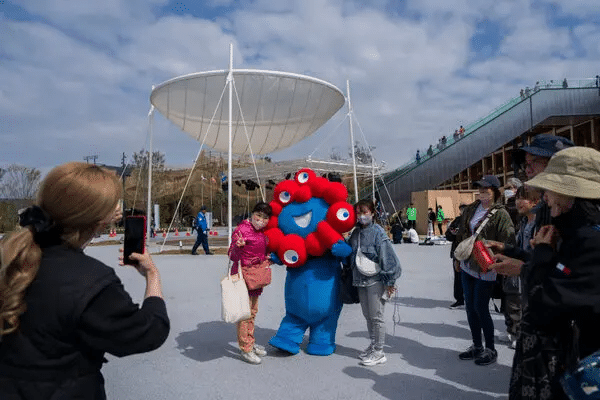
Expo 2025 was never meant to be a one-off. Osaka Prefecture and the national government built the event around a “legacy first” philosophy, meaning much of the site’s infrastructure — new bridges, an extended subway line, and even part of the Expo’s centerpiece wooden structure — was designed to outlive the exhibition itself. That approach has turned Yumeshima into an active, evolving destination rather than an emptied-out fairground, and it’s why demand for a reliable japan expo esim solution hasn’t faded just because the Expo has.
Travelers today fall into a few groups: those revisiting Osaka for the first time since the Expo, first-timers curious about what remains, and business travelers tracking the island’s next phase of development. All three groups share the same practical need — solid, no-hassle mobile data the moment they land, without hunting for a local SIM counter or relying on patchy public Wi-Fi.
Yumeshima and Its Ongoing Developments
Yumeshima itself is now in transition. The site’s Grand Ring, the Guinness World Record-holding circular wooden structure designed by architect Sou Fujimoto, proved so popular during the Expo that officials reversed an earlier plan to dismantle it entirely, agreeing instead to preserve a portion of the structure at meaningful cost over the coming decade. Around it, Osaka authorities have been finalizing the Yumeshima Second Area Master Plan, with a newer version formalized in 2026, covering how the remaining Expo land will be redeveloped into a mixed-use hub of tourism, business, and entertainment facilities.
The headline project is an integrated resort anchored by a joint venture between an international casino operator and a Japanese developer, expected to open toward the end of the decade. Around that anchor project, the plan calls for exhibition halls, hotels, retail, and MICE (meetings, incentives, conferences, exhibitions) space, plus a reserved zone for a planned Expo memorial park and healthcare-themed legacy pavilion.
None of this is complete yet, and construction zones, temporary road closures, and shifting shuttle schedules are common on and around the island right now. This is exactly the kind of environment where yumeshima mobile data matters most — official maps and signage can lag behind real-world changes, so having live data for maps, translation, and transit apps is far more dependable than relying on printed guides.
Coverage Across Osaka and Neighboring Cities
Mobile coverage across Osaka City itself is excellent, and that hasn’t changed post-Expo. All three of Japan’s major carrier networks — docomo osaka expo infrastructure, softbank expo infrastructure, and kddi osaka infrastructure — were reinforced ahead of the 2025 event to handle huge crowd surges, and much of that capacity upgrade remains in place. That means dense 4G and 5G coverage throughout central Osaka, including Umeda, Namba, Tennoji, and the waterfront districts closest to Yumeshima.
Coverage extends comfortably into neighboring cities too. Sakai to the south, Amagasaki and Nishinomiya toward Kobe, and the Keihanshin corridor connecting Osaka, Kyoto, and Kobe all sit within the same well-built network footprint. Travelers doing day trips from Osaka rarely need to think twice about signal strength, whether they’re riding a local train, a shinkansen, or a rental car through the Kansai countryside.
Where coverage does get more variable is on the artificial islands themselves — Yumeshima, Maishima, and Sakishima — where ongoing construction can temporarily affect specific cell sectors near active building sites. An eSIM that automatically connects to the strongest of Japan’s three networks, rather than locking you to a single carrier, is the safest way to avoid dead spots while redevelopment continues.
It’s worth noting that mobile data osaka expo upgrades weren’t a temporary, event-only investment. Carriers added permanent base stations, new fiber backhaul, and additional spectrum capacity around Yumeshima specifically because the island was always planned to remain in active use after the Expo closed. That’s good news for anyone visiting now: the network you’ll use today is largely the same reinforced infrastructure that handled Expo-era crowds, not a scaled-back, post-event version of it.
eSIM Tips for Large-Scale Event Zones
Yumeshima may no longer be hosting a global expo, but Osaka’s calendar of large-scale events hasn’t slowed down, and the same connectivity lessons apply whether you’re at a trade show, a sporting event, or a seasonal festival. A few practical tips for any japan esim large event situation:
- Install and activate before you land. Setting up your esim for expo-style travel ahead of arrival means you’re online the moment you land at Kansai International Airport, without needing airport Wi-Fi to download a profile.
- Choose a plan with headroom, not just a bare minimum. Event zones mean more map-checking, more translation, more photo-and-video sharing than an average travel day, so a slightly larger data allowance goes a long way.
- Keep a backup activation code saved offline. If you’re moving between crowded pavilion-style zones or dense exhibition halls, having your QR code saved as a screenshot avoids relying on email access if signal briefly dips.
- Check network status directly in dense crowds. In any osaka event esim scenario, extremely high foot traffic can occasionally slow data speeds during peak hours, even on strong networks, so patience during the busiest midday windows helps.
These same habits served Expo visitors well in 2025, and they’re just as useful for the concerts, sumo tournaments, and trade fairs that continue to fill Osaka’s event calendar today.
Osaka’s Ongoing Mega-Event Calendar
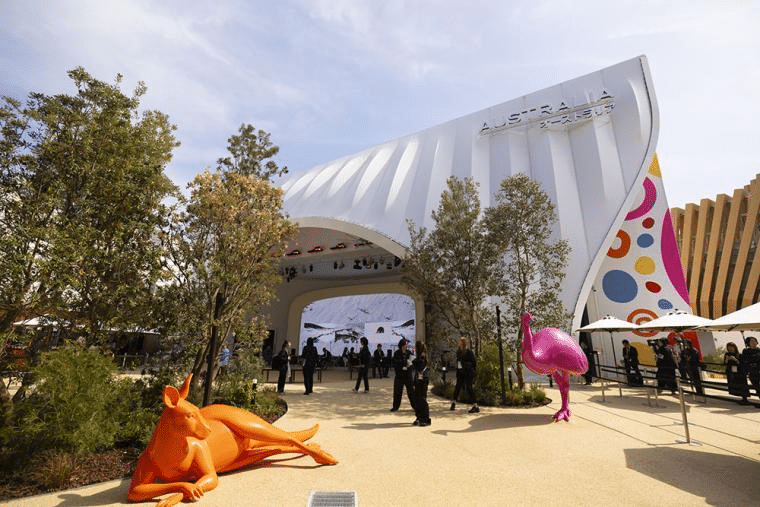
Expo 2025 was the largest recent test of Osaka’s expo connectivity, but it’s far from the only mega-event the city hosts. Osaka regularly draws huge crowds for sumo tournaments, international trade fairs, marathons, and seasonal festivals like Tenjin Matsuri, one of Japan’s three largest festivals. Each of these events puts a similar strain on local networks as the Expo did, just on a smaller scale and for a shorter window.
If you’re the kind of traveler who plans trips around japan esim mega event dates — a major trade show, a championship match, or a national holiday weekend — the same principles from the Expo era still apply: activate your eSIM before arrival, choose a plan with enough data headroom for heavier map and translation use, and expect brief slowdowns during the most crowded midday and evening hours rather than a total loss of signal.
This is also where planning ahead pays off most. An expo japan travel esim mindset — treating connectivity as part of your itinerary planning rather than an afterthought at the airport — saves time whenever Osaka’s calendar lines up with a festival, conference, or sporting event during your visit.
Combining Expo Legacy Sites with Kansai Itineraries
One of the best ways to experience post-Expo Osaka is to treat Yumeshima as one stop within a wider Kansai loop rather than a standalone half-day trip. A typical osaka expo itinerary esim plan might pair a morning on Yumeshima — viewing the retained portion of the Grand Ring and any open legacy exhibits — with an afternoon in central Osaka for Dotonbori, Osaka Castle, or the Umeda Sky Building.
From there, Kansai’s classic circuit is easy to fold in. Kyoto is roughly 30 minutes away by train, offering temples, gardens, and the Fushimi Inari shrine trail. Kobe adds beef, harbor views, and Mount Rokko. Nara’s deer park and Todai-ji temple round out a well-balanced week. Because eSIM coverage holds steady across this entire corridor, travelers can move between Expo legacy sites and traditional Kansai landmarks on the same data plan, without swapping SIM cards or hunting for regional top-ups.
For travelers building a longer Japan trip around this itinerary, an eSIM also smooths out cross-region travel — if your route continues on to Tokyo, Hiroshima, or beyond, the same profile keeps working rather than requiring a new local purchase in each city.
Getting between these stops is straightforward, but it does rely on live data more than most travelers expect. Train transfer apps, real-time platform numbers, and shuttle schedules to and from Yumeshima all update frequently, especially while construction continues on parts of the island’s transit links. According to GSMA, eSIM adoption among international travelers has grown steadily worldwide precisely because it removes the friction of finding a local SIM vendor mid-trip — a benefit that matters just as much on a packed Kansai itinerary as it did during the Expo’s six-month run.
A loose three-day framework works well for most first-time visitors: one day around Yumeshima and central Osaka, one day in Kyoto, and one day split between Nara and Kobe (or a slower second day back in Osaka for neighborhoods like Shinsekai or Tennoji). Adjust the pace up or down depending on how much of the island’s ongoing redevelopment you want to see up close versus how much time you’d rather spend on classic Kansai sightseeing.
Best Japan Sim Data Plans for Osaka Expo-Era Travelers
Japan Sim Data offers eSIM options across all three of Japan’s major networks, so travelers heading to Osaka’s post-Expo sites can pick a plan around how they’ll actually use data rather than which carrier happens to have the strongest signal on a given island. For a short Osaka-and-Kansai loop, a multi-day Day Pass is often enough to cover navigation, translation, and social sharing across Yumeshima, central Osaka, and a Kyoto or Kobe day trip. For a longer, slower trip that includes extended time exploring Expo legacy developments as they continue to open in phases, one of the higher-tier Plan or Unlimited options avoids any need to monitor a data cap.
Group travelers deserve a special mention here. Tour operators and travel agencies organizing Osaka Expo-legacy tours, corporate incentive trips tied to MICE events on Yumeshima, or general Kansai group tours can access bulk pricing on eSIM plans, making it simple to hand every traveler in a group a working expo osaka data plan before they even board their flight.
Whichever plan you choose, activation takes only a few minutes, and because these are eSIMs rather than physical SIM cards, there’s no need to swap anything out of your phone or worry about losing a tiny plastic chip during a long day of sightseeing between Yumeshima and downtown Osaka.
Frequently Asked Questions
Q1: Is Yumeshima still open to visitors after Expo 2025?
A: Parts of the site remain accessible, including the retained portion of the Grand Ring, though large sections are active construction zones tied to the island’s next redevelopment phase. Always check current access details before visiting, since hours and open areas continue to shift.
Q2: Do I still need an eSIM if Expo 2025 has already ended?
A: Yes. An expo 2025 esim habit is worth keeping even post-Expo, since Osaka’s mobile networks, event calendar, and Yumeshima construction zones all benefit from having reliable, on-arrival data for maps, translation, and transit planning.
Q3: Which Japanese carrier has the best coverage around Yumeshima?
A: Docomo, SoftBank, and KDDI/au all maintain strong coverage across Osaka, including the artificial islands, though signal strength near active construction sites can vary block by block. An eSIM that isn’t locked to a single network offers the most consistent experience.
Q4: Can I use one eSIM for both Osaka and the rest of my Japan trip?
A: Yes. A japan tourist sim expo-style eSIM plan typically works nationwide, so the same profile that covers your time around Yumeshima and central Osaka will keep working if your itinerary continues on to Kyoto, Kobe, Tokyo, or beyond.
Q5: Are there eSIM options for large groups visiting Osaka’s Expo legacy sites?
A: Yes. Bulk and group pricing is available for travel agencies and tour operators bringing groups to Osaka, which is useful for anyone organizing tours around Yumeshima’s ongoing redevelopment or Kansai’s wider attractions.
Conclusion
Expo 2025 may have closed its gates, but Osaka’s post-Expo chapter is still being written on Yumeshima, and travelers exploring it need connectivity that keeps pace with a site that’s changing month to month. A dependable japan esim expo legacy setup — one that draws on Docomo, SoftBank, and KDDI coverage rather than betting on a single network — keeps your maps, translation apps, and transit tickets working smoothly whether you’re standing under the retained Grand Ring or riding the train on to Kyoto.
For anyone planning an Osaka trip built around the Expo’s legacy sites, a broader Kansai loop, or a full first-time visit to see what Yumeshima has become, Japan Sim Data’s Docomo, SoftBank, and KDDI eSIM plans offer flexible coverage for exactly this kind of trip — including bulk options for tour groups and travel agencies bringing visitors to Osaka’s evolving waterfront. Whether this is your first stop in Japan or a return visit to see how the island has changed, getting your japan esim world expo legacy plan sorted before you land means one less thing to think about once you’re exploring.