

Mount Fuji eSIM Guide: Coverage & Traveler Tips for Fujigoko

Few sights define a Japan trip like the first glimpse of Mount Fuji rising over the horizon. Whether you’re climbing the summit trails, circling the Fuji Five Lakes, or watching the mountain from a bullet train window, staying connected shapes how smoothly your trip goes. A reliable Mount Fuji eSIM means you can pull up trail maps, check weather changes on the mountain, translate a menu in Kawaguchiko, or share a lakeside sunset the moment it happens.
Connectivity around Fuji works differently than in central Tokyo. Coverage thins out on the higher slopes, mountain huts rarely offer Wi-Fi, and the Fuji Five Lakes region spreads visitors across small towns rather than one dense city center. This guide walks through what to expect from mobile networks on and around the mountain, how climbing season affects your signal, and which eSIM setup makes the most sense for a Fujigoko itinerary — including day trips that combine Hakone with Fuji views.
By the end, you’ll know exactly where a fuji esim performs well, where it doesn’t, and how to plan your data around both towns and trails so nothing catches you off guard.
Why Connectivity Matters Around Mount Fuji
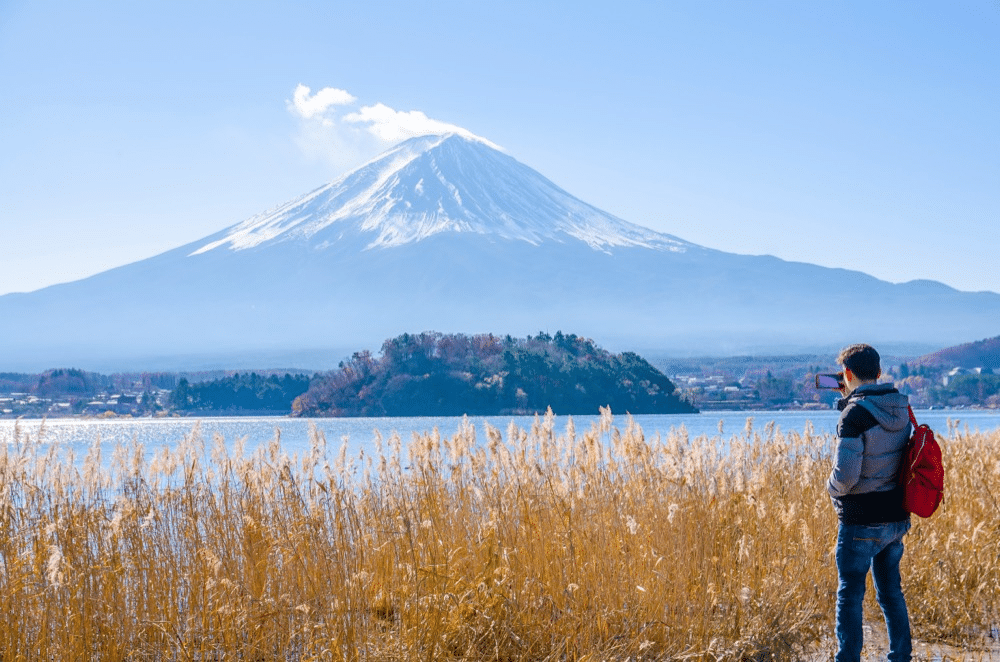
Mount Fuji sits roughly 100 kilometers from central Tokyo, straddling Yamanashi and Shizuoka prefectures. Unlike a compact city itinerary, a Fuji trip usually means moving between small lakeside towns, mountain trailheads, and scenic viewpoints where the nearest convenience store might be a bus ride away. That spread makes mobile data more useful here than almost anywhere else in Japan.
A dependable fuji travel esim helps with the basics that keep a mountain trip stress-free:
- Checking real-time bus and train schedules between Kawaguchiko, Fujiyoshida, and Tokyo
- Confirming weather conditions before a climb, since Fuji’s summit weather can shift within hours
- Navigating rural roads and trailheads where English signage is limited
- Booking or reconfirming lodging in small ryokan and mountain huts with limited front-desk hours
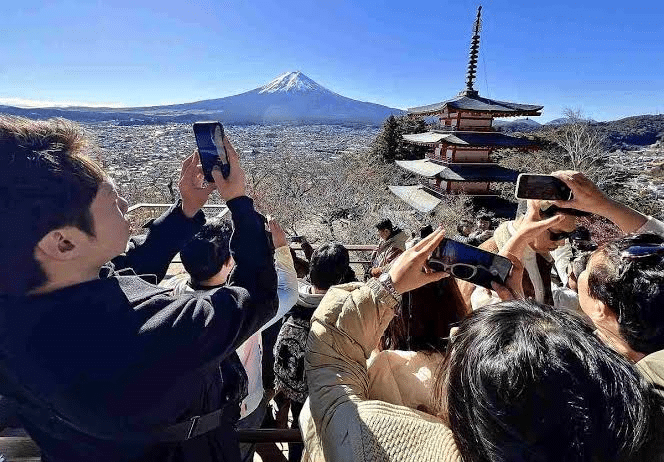
- Sharing photos of the Chureito Pagoda or Lake Kawaguchiko views in real time
- Translating menus and museum placards in towns that see fewer international visitors than Tokyo or Kyoto
Because so much of the Fuji experience happens outdoors and off the beaten path, arriving with a working japan esim mountain setup already installed saves time compared to hunting for a local SIM counter once you’re already in Fujigoko. Many travelers only think about data once they land at Narita or Haneda, but for a Fuji-focused trip, it’s worth activating your eSIM before you even board the bus toward Kawaguchiko, since some rural roads offer limited chances to stop and troubleshoot a signup process.
This matters just as much for shorter visits as it does for multi-day stays. A traveler stopping at the Kawaguchiko fifth station lookout for an afternoon has just as much need for working data as someone spending a week circling all five lakes, since even a brief stop benefits from checking bus times, confirming a restaurant is open, or looking up the next viewpoint on a tight schedule.
Mobile Network Coverage On and Around Fuji
Japan’s three major carriers — NTT Docomo, SoftBank, and KDDI (au) — all maintain coverage around the Mount Fuji region, though performance varies by location and altitude. Understanding the general pattern for each network helps set realistic expectations before you arrive.
Docomo Fuji Coverage
Docomo fuji coverage is generally regarded as the most consistent across the wider Fujigoko area, including the lakeside towns and lower climbing trails. Docomo’s network reach in rural Japan tends to be broad, which matters when your itinerary includes smaller villages around Yamanakako or Motosuko, or backroads that skirt the northern shore of Saiko.
SoftBank Fuji Coverage
Softbank fuji signal is solid in the main tourist towns like Kawaguchiko and Fujiyoshida, with reasonable coverage along the main climbing routes up to around the fifth station. Above that point, like all carriers, SoftBank’s signal becomes patchier as trails climb toward the crater rim and towers become sparser.
KDDI (au) Fuji Coverage
Kddi fuji service performs comparably well in populated areas and along major roads circling the lakes. As with the other two networks, coverage naturally weakens on the exposed upper slopes, where there are fewer towers and more rock and open sky between you and the nearest base station.
What This Means for Travelers
For most visitors, the practical takeaway is that any of the three networks will comfortably handle mobile data fuji needs in towns, train stations, and lower trail sections. An eSIM that can access multiple networks, rather than locking you to a single weak signal in a specific pocket of the mountain, gives you the best odds of staying connected as you move around. This matters especially if your itinerary bounces between a Kawaguchiko hotel, a Fujiyoshida shrine visit, and a fifth-station bus ride all in the same day, since each stop can sit in a slightly different coverage pocket.
Climbing Season Connectivity Realities
Mount Fuji’s official climbing season typically runs from early July through early September, when mountain huts are staffed, trail markers are maintained, and rescue infrastructure is in place. Outside this window, climbing is strongly discouraged due to closed facilities, ice, and hazardous conditions, so most of the guidance below relates to that summer window.
What to Expect on the Trail
Climbing fuji connectivity is generally reliable up to the fifth station on each of the four main trails — Yoshida, Subashiri, Gotemba, and Fujinomiya — where parking lots, rest stations, and tour buses concentrate. Above the fifth station, coverage becomes intermittent:
- Signal often persists in short bursts near mountain huts, where equipment and antennas are more common.
- Exposed switchback sections can lose signal entirely, especially on the Gotemba and Fujinomiya routes, which have fewer huts than the popular Yoshida trail.
- Near the summit crater, coverage typically returns intermittently, letting many climbers send a message or photo from the top before it drops again on the descent.
Because this is an active japan esim volcano climb with real elevation and weather risk, connectivity should be treated as a bonus, not a safety plan. Carry a paper map or offline map download, tell your accommodation your rough schedule, and pack a power bank, since repeatedly checking a weak signal drains batteries fast in cold mountain temperatures. Climbers attempting an overnight ascent to catch sunrise, known locally as goraiko, should expect the least reliable signal of the whole trip, simply because they’re moving through the darkest, most exposed stretches of trail.
Data Use Before and After the Climb
Most climbers get the most practical use out of their fuji data plan before starting and after descending — downloading offline maps, checking the latest trail and weather bulletins from the Japan Tourism Agency, and confirming bus times back to Kawaguchiko or Gotemba stations. It’s also worth checking mountain hut reservation confirmations one last time before you lose steady signal, since huts along all four trails require advance booking during peak weekends.
Fuji Five Lakes (Fujigoko) eSIM Tips
The Fuji Five Lakes — Kawaguchiko, Yamanakako, Saiko, Shojiko, and Motosuko — form the classic base for viewing Fuji without climbing it. Each town has its own rhythm, and a bit of planning around fujigoko internet access makes the region far easier to explore.
Kawaguchiko
As the most visited of the five lakes, kawaguchiko esim coverage is dependable in the town center, around the retro bus terminal, and near popular photo spots like the Chureito Pagoda and the lake’s northern shore. This is the easiest lake town to navigate with data, since most attractions sit within a short bus or bike ride of each other, and the Fujikyu Railway station area has particularly strong signal from all three carriers.
Yamanakako
The largest of the five lakes, Yamanakako sees fewer crowds and slightly more spread-out attractions. Yamanakako mobile data works well for checking swan boat schedules or nearby onsen opening times, though signal can dip slightly in areas further from the main road loop, particularly on the quieter eastern shore.
Saiko, Shojiko, and Motosuko
These three quieter lakes are popular for camping, the Aokigahara forest edge trails, and the Narusawa ice cave. A working fuji five lakes esim is especially useful here, since English signage is thinner and mobile translation apps do a lot of the heavy lifting for menus, campsite instructions, and trail information around the forest boundary.
Building a Fujigoko Data Habit
- Download offline maps for each lake town before setting out, since some rural stretches have thinner coverage between towns.
- Use data to confirm the Fujikyu bus schedule, since services run less frequently than in central Tokyo, especially on weekday mornings.
- A dependable fuji tourist sim setup also helps with quick currency conversion at local shops and ryokan that may not take cards, along with checking same-day availability for popular ropeway and cruise attractions.
Hakone and Shared Itineraries
Many travelers pair Fuji with Hakone, since the two regions sit close together and both offer classic Fuji viewpoints, from Lake Ashi cruises to the Hakone Ropeway. If your trip includes both stops, having consistent data across the switch matters more than in a single-destination visit, since bus and train transfers between the two areas can involve several changes.
Hakone esim coverage is generally strong given how established Hakone is as a tourist destination, with good signal around Hakone-Yumoto, Gora, and most ropeway stations. An esim for hakone paired with your Fuji leg means one continuous connection rather than juggling separate local SIM cards for each stop, which is especially convenient if you’re navigating the Hakone Freepass transport network with its mix of trains, buses, cable cars, and boats.
This combination also suits a japan esim day trip structure well. Many visitors base themselves in Tokyo and take a single day out to Hakone or Fujigoko, in which case a flexible data plan that covers both regions removes the guesswork from planning a same-day return, letting you check the last train back to Tokyo without hunting for a Wi-Fi hotspot at a train station.
Recommended Japan Sim Data Plans for Fuji Trips
Japan Sim Data offers eSIM options across Docomo, SoftBank, and KDDI networks, which suits the mixed coverage patterns found around Fuji and its surrounding towns. Depending on your itinerary, a few approaches tend to work best:
- Day Pass plans suit a single japan esim day trip out to Kawaguchiko, Hakone, or the fifth station, giving you data for the hours you actually need it without paying for a longer window.
- Standard data plans fit a multi-day Fujigoko itinerary, covering lake-hopping between Kawaguchiko and Yamanakako without worrying about running low mid-trip.
- Unlimited plans work well for longer stays that combine climbing prep, lakeside sightseeing, and a Hakone side trip in one continuous fuji itinerary esim setup, so you’re not tracking a data cap while checking trail conditions each morning.
Travel agencies organizing group Fuji tours or climbing packages can also access bulk discounts through Japan Sim Data, which simplifies distributing a working mount fuji esim to every traveler in a tour group before departure, rather than coordinating individual SIM purchases on arrival. For general background on how eSIM technology works across carriers, the GSMA’s eSIM overview is a useful reference for first-time users.
Getting Your eSIM Set Up Before You Reach Fuji

Because so much of a Fuji trip happens in small towns and along quiet mountain roads, it’s worth handling the setup steps before you leave home rather than troubleshooting once you’re already on a bus toward Kawaguchiko.
Activate Before You Travel
Most eSIMs can be installed on your phone while you still have home Wi-Fi, with the profile simply switched on once you land in Japan. This means your mount fuji esim is ready the moment you touch down at Narita or Haneda, rather than requiring a fresh setup once you’re already deep into a Fujigoko itinerary with patchy hotel Wi-Fi.
Check Device Compatibility
Most recent iPhone and Android flagship models support eSIM, but it’s worth confirming compatibility and that your device is carrier-unlocked before your trip. This is a five-minute check that saves a frustrating troubleshooting session once you’ve already reached Yamanakako or a quiet ryokan near Motosuko with limited front-desk English support.
Plan Around Your Itinerary Shape
If your trip is a single japan esim day trip out to Hakone or the Fuji fifth station, a short Day Pass is usually the most economical option. If you’re spending several days circling the Fuji Five Lakes, tackling a climb, and adding a Hakone stop, a longer standard or Unlimited plan avoids the hassle of topping up mid-trip when you’re standing outside a quiet lakeside station with a train arriving in ten minutes.
Keep a Backup Plan for the Mountain
Even with a solid fuji esim, it’s worth downloading offline maps of the Fujigoko region and the climbing trail you plan to use before you lose reliable signal above the fifth station. Offline maps combined with a physical trail map handed out at the trailhead give you a fallback that doesn’t depend on connectivity at all, which matters most on the exposed switchbacks above the tree line where towers are sparse.
A Note for Group Travel
If you’re traveling with a tour group, a language school trip, or a family split across a rental van and a train car, coordinating individual data plans can get complicated fast. Distributing a single type of fuji tourist sim setup to everyone in the group, ideally activated before departure, keeps everyone reachable on the same networks without mismatched coverage between members.
Frequently Asked Questions
Q1: Does an eSIM work all the way up Mount Fuji?
A: Coverage from all three carriers is reliable up to around the fifth station, then becomes intermittent higher up, with some signal returning near huts and the summit. Treat data as a convenience above the fifth station, not a guaranteed safety tool.
Q2: Which carrier has the best signal around the Fuji Five Lakes?
A: Docomo, SoftBank, and KDDI all cover the main Fujigoko towns well, with Docomo often noted for slightly broader rural reach. An eSIM that isn’t locked to one weak local pocket generally performs best across the whole region.
Q3: Can I use the same eSIM for both Mount Fuji and Hakone?
A: Yes. A single eSIM covering the major carriers works across both regions, which is convenient for the common Fuji-Hakone combined itinerary many travelers follow.
Q4: Is a day pass enough for a Fuji day trip from Tokyo?
A: For most single-day visits to Kawaguchiko, the fifth station, or Hakone, a day pass provides enough data for navigation, translation, and photo sharing without needing a longer plan.
Q5: Do I need data for climbing Mount Fuji, or just for the towns below?
A: Most practical data use happens before and after the climb — checking weather, trail conditions, and transport — since signal above the fifth station is inconsistent and shouldn’t be relied on mid-climb.
Conclusion
Mount Fuji and its surrounding Fujigoko towns offer a different connectivity picture than central Tokyo, with strong coverage in the lake towns, patchier signal on the higher climbing trails, and generally dependable service across Docomo, SoftBank, and KDDI in populated areas. Understanding where coverage is strong, and where it naturally thins out above the fifth station, helps you plan around it rather than be surprised by it mid-trip.
Whether your trip centers on circling Kawaguchiko and Yamanakako, tackling the summit trails in climbing season, or combining Fuji with a Hakone day out, having the right data plan in hand before you arrive makes the logistics far simpler. Japan Sim Data’s Docomo, SoftBank, and KDDI eSIM options, including Day Pass, standard, and Unlimited plans, cover the range of Fuji-area itineraries travelers typically build. Browse Japan Sim Data’s eSIM plans before your trip to make sure you’re connected from the moment you step off the bus in Fujigoko.