

Japan Day Trip eSIM: Best Plans for Nikko, Kamakura & Yokohama
Tokyo makes an excellent base precisely because so much sits within easy reach of it. A shrine complex in the mountains at Nikko, the seaside temples of Kamakura, the harbor views of Yokohama, and the sandy stretch of Enoshima are all doable in a single day, often without ever checking into a second hotel. A reliable Japan day trip eSIM is what makes that kind of hopping around actually work, letting you check train times, translate a shrine’s history plaque, or confirm a restaurant’s hours without losing momentum mid-trip, all while keeping the return leg of your journey firmly on schedule.
Day trips have a different rhythm than a multi-day city stay. You’re moving fast, covering more ground per hour, and often relying on data more heavily in a single day than someone settled into one city for a week. This guide covers what to expect from mobile coverage across the most popular day-trip destinations from Tokyo, how to think about data usage for train navigation, and which Japan Sim Data plan fits a day-trip-heavy itinerary best, whether you’re planning a single carefully timed excursion or stacking several across a longer Tokyo stay.
By the end, you’ll know exactly how a japan esim day trip setup should look, whether you’re taking one excursion or stacking several across a longer stay, and which of Nikko, Kamakura, Yokohama, Enoshima, or Odawara deserves the most planning attention beforehand.
Day Trips and Short-Range Data Needs

Tokyo’s rail network puts an unusual number of worthwhile destinations within a one- to two-hour ride, which is part of why day trips are such a popular way to structure a Japan itinerary. Unlike a multi-day stay in one city, a day trip compresses a full day of navigation, translation, and schedule-checking into a much shorter window, which makes reliable data arguably more valuable per hour than during a slower city stay.
A dependable eSIM setup helps with the specific pressures of a day trip:
- Checking real-time train schedules for both the outbound trip and, more importantly, the last train back to Tokyo
- Confirming opening hours for temples, shrines, and attractions that may differ from a slower travel day where you have flexibility to return tomorrow
- Translating menus and signage in smaller towns that see less English signage than central Tokyo
- Looking up transfer stations, since several popular day trips involve at least one train change
- Tracking weather changes, since a day trip to the coast or mountains can be affected by conditions that don’t matter as much in central Tokyo
- Confirming coin locker availability at the departure station for anyone carrying luggage before an onward journey
A working japan esim short trip setup matters because day trips leave far less room for error than a longer stay. Missing a train transfer or losing track of a shrine’s closing time can meaningfully shrink your day, in a way that’s easier to recover from when you have several more days in the same city rather than a single fixed window to see everything you’d planned.
Coverage for Nikko, Kamakura, Yokohama, Enoshima, and Odawara
Japan’s three major carriers — NTT Docomo, SoftBank, and KDDI (au) — all maintain strong coverage across the greater Tokyo and Kanto region, though the pattern shifts slightly as you move from dense urban centers toward smaller towns and mountain areas.
Nikko Coverage
Nikko esim coverage is generally reliable around the town center, the main shrine complex including Toshogu, and the approach roads connecting them. As with other mountain-adjacent destinations in Japan, signal can thin out slightly around Lake Chuzenji and the higher elevation areas further from the town center, though the core temple district stays well covered. An esim for nikko that draws on multiple carriers helps bridge the gap between the well-covered town center and the quieter approach roads toward the lake.
Kamakura Coverage
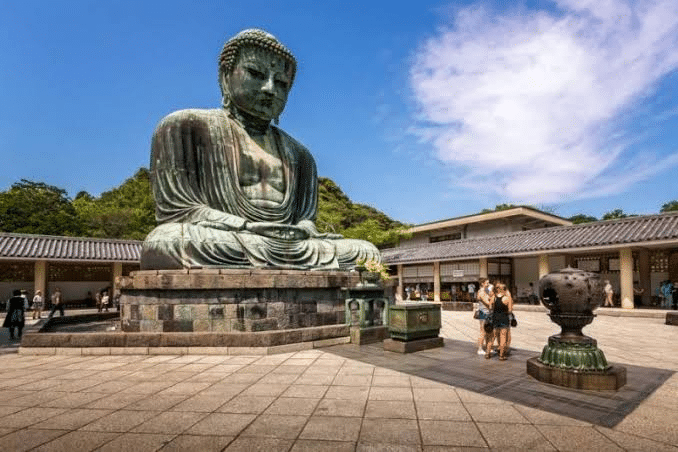
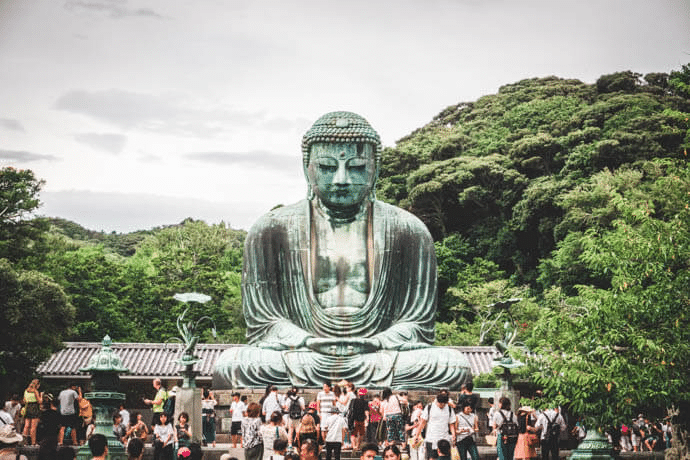
Kamakura esim signal is dependable throughout the town, including the Great Buddha, Hase-dera, and the busy approach to Tsurugaoka Hachimangu shrine. Kamakura’s compact size and status as a well-established tourist destination mean coverage holds up consistently even in its hillside hiking trails connecting different temple areas. Steady kamakura connectivity across these trails is especially useful for the popular Daibutsu Hiking Course, which links several temples without a direct road route between them.
Yokohama Coverage
Yokohama esim coverage is strong throughout this major port city, including Minato Mirai, Chinatown, and the waterfront areas. As Japan’s second-most populous city, Yokohama’s urban infrastructure supports dense, reliable coverage comparable to central Tokyo, making it one of the most consistently connected day-trip destinations on this list regardless of which carrier you’re using.
Enoshima Coverage
Enoshima mobile data holds up well around the island’s main shopping streets and the shrine complex, with a slight dip in signal density near the sea cave areas at the island’s far end, similar to coastal patterns seen elsewhere in Japan.
Odawara Coverage
Odawara internet access is solid around the station area and Odawara Castle, this town’s role as a transit hub for onward travel toward Hakone means coverage here matters mostly for confirming train and bus connections rather than extended sightseeing. Many day-trippers pass through Odawara quickly, using it primarily to transfer toward the Hakone Tozan line or an onward bus, so quick, reliable signal for checking connection times matters more here than at a standalone destination.
Docomo, SoftBank, and KDDI Across the Region
Docomo greater tokyo coverage tends to be the most consistently broad across these day-trip destinations, given Docomo’s typically strong rural and suburban reach. Softbank kanto performance is solid across the main tourist areas and train corridors, while kddi kanto service compares similarly in populated town centers, with the usual gradual thinning as you move toward quieter mountain or coastal edges.
Data Usage for Train Navigation and Translation
Day trips from Tokyo lean heavily on train navigation, and mobile data plays an outsized role in keeping a tightly packed day on schedule. Unlike a slower city stay where a delayed connection is a minor inconvenience, a day trip’s return window is often fixed, which raises the stakes on getting transfers right the first time.
Japan tourist sim day trip usage tends to concentrate around a few recurring needs:
- Real-time platform and transfer information, since several day trips involve changing between JR lines and private railways like the Odakyu or Enoden lines
- Confirming the last train back to Tokyo, which matters more on a day trip than during a multi-day stay where a missed connection simply means an extra night
- Translating station signage and ticket machine instructions in smaller stations that see less English support than central Tokyo hubs
- Checking IC card balance and top-up locations before boarding, particularly at smaller stations with fewer staffed counters
This pattern makes mobile data nikko, Kamakura, and similar destinations noticeably more data-dependent per hour than a relaxed day wandering central Tokyo, simply because the itinerary moves faster and involves more transfers, leaving less slack to absorb a wrong turn or a missed connection along the way.
Choosing Between Day Pass and Fixed-Data Plans
Day trips raise a genuinely practical question: does a short trip call for a Day Pass, or does a standard multi-day plan make more sense? The answer usually comes down to how many separate excursions you’re planning across your overall stay.
When a Day Pass Makes Sense
A day pass japan esim suits travelers taking a single, isolated day trip during an otherwise Tokyo-based stay, since it provides focused coverage for the hours you’re actually out exploring Nikko or Kamakura without paying for data on days you’re not using much.
When a Fixed-Data Plan Makes Sense
If your trip involves several day trips spread across a week — say, Nikko one day, Kamakura and Enoshima the next, then Yokohama later in the stay — a standard fixed-data plan usually works out more efficiently than purchasing multiple individual Day Passes, since you’re using data across most days of your trip rather than in isolated bursts.
A Simple Way to Decide
- One or two planned excursions during a longer Tokyo stay: Day Pass plans for those specific days
- Three or more day trips spread across your visit: a standard multi-day plan
- Uncertain plans that might expand: an Unlimited plan removes the need to calculate usage in advance
- Traveling with a group whose itinerary might split apart mid-trip: a shared plan type across everyone’s device simplifies regrouping later
eSIM Tips for Combining Multiple Day Trips
Stacking several day trips across one stay is common, and a bit of planning makes the transitions between them smoother. Many travelers base themselves in Tokyo for a week or more and treat day trips as flexible add-ons around a looser core itinerary, which changes how consistently data gets used across the whole stay rather than in isolated bursts.
A working japan esim excursion setup benefits from a few habits:
- Download offline maps for each planned destination the night before, since some smaller towns have thinner coverage in specific pockets.
- Group day trips by direction where possible, since Kamakura and Enoshima sit along the same line, while Nikko requires a separate northbound route.
- Check weather for each destination separately, since Nikko’s mountain weather can differ significantly from Kamakura’s coastal conditions on the same day.
- Keep your eSIM active throughout your stay rather than reactivating it for each individual trip, since day-trip plans benefit from continuous access to maps and translation tools even on days you’re based in central Tokyo.
This approach suits a broader japan esim weekend or short-stay itinerary, where travelers often build a loose schedule of excursions around a central Tokyo base rather than committing to a single fixed day-trip plan in advance, adjusting the specific destinations day by day based on weather or how the previous excursion went.
Recommended Japan Sim Data Plans
Japan Sim Data offers eSIM options across Docomo, SoftBank, and KDDI networks, suited to the mix of urban and rural coverage patterns found across popular day-trip destinations from Tokyo. Matching plan type to how many excursions you’re planning across your stay makes the biggest difference in value here.
- Day Pass plans work well for a single japan esim outing, such as one dedicated day to Nikko or a combined Kamakura and Enoshima trip.
- Standard data plans suit travelers stacking several day trips across a week-long Tokyo stay, covering Nikko, Kamakura, Yokohama, and Enoshima without tracking data closely between excursions.
- Unlimited plans fit longer stays with flexible, evolving plans, where the exact number of day trips isn’t decided in advance.
Travel agencies organizing multi-destination Kanto region tours can also access bulk discounts through Japan Sim Data, simplifying day trip data plan japan distribution across an entire group before departure. For live train schedule information across these routes, Japan Railways’ official site is a useful planning reference alongside your data setup.
Setting Up Your eSIM Before Your First Day Trip
Because day trips often start early to make the most of a tight schedule, it’s worth handling eSIM setup before your Tokyo stay begins rather than troubleshooting activation on the morning of your first excursion.
Activate Before You Land
Most eSIMs install on your phone while you still have home Wi-Fi, with the profile switched on once you land in Japan. This means your japan day trip esim is ready from your very first morning in Tokyo, rather than requiring a fresh setup on the day you’d planned to catch an early train to Nikko.
Check Device Compatibility
Most recent iPhone and Android flagship models support eSIM, but confirming compatibility and that your device is carrier-unlocked before departure is a quick check worth doing at home. It saves a frustrating troubleshooting session on a station platform when you’re trying to catch a specific limited express train to Nikko or Odawara.
Think About Your Whole Stay, Not Just One Trip
It’s easy to plan data around a single upcoming excursion and forget that the same eSIM should support your time in central Tokyo too. Travelers often find it simpler to choose one plan type covering their entire stay rather than switching plans specifically for day-trip days, since the same maps and translation tools get used throughout a Tokyo-based visit regardless of which direction the day’s train happens to go.
Keep a Light Backup for Remote Stretches
Even with generally strong coverage, it’s worth downloading offline maps for higher-elevation areas like Nikko’s Lake Chuzenji or Enoshima’s sea cave paths before setting out, since these pockets see the lightest signal of the destinations covered here. A downloaded map combined with a station’s printed timetable gives you a simple fallback that doesn’t depend on connectivity at all.
A Note for Group Day Trips
Families or friend groups splitting up temporarily during a day trip — one subgroup visiting a museum while another explores a shopping street — benefit from a shared, reliable data setup to coordinate a meeting point later. Distributing the same eSIM type to everyone in the group before the trip begins keeps this coordination simple regardless of which destination you’ve chosen for the day.
Frequently Asked Questions

Q1: Do I need a separate eSIM for each day trip from Tokyo?
A: No, a single eSIM covering the major carriers works across Nikko, Kamakura, Yokohama, Enoshima, and Odawara, so there’s no need to switch plans between destinations.
Q2: Is coverage reliable on Kamakura’s hillside hiking trails?
A: Yes, coverage in Kamakura is generally consistent even on the hiking trails connecting different temple areas, given the town’s compact size and established tourism infrastructure.
Q3: Should I get a Day Pass or a standard plan for multiple day trips?
A: It depends on how many trips you’re planning. A Day Pass suits one or two isolated excursions, while a standard multi-day plan is usually more efficient for three or more day trips spread across a longer stay.
Q4: Does Nikko have weaker coverage than Kamakura or Yokohama?
A: Nikko’s town center and main shrine complex stay well covered, though signal can thin slightly in higher elevation areas like Lake Chuzenji, more than in the flatter, more urban Kamakura or Yokohama.
Q5: What’s the most data-intensive part of a typical day trip?
A: Train navigation and transfer checking tend to use the most attention, particularly confirming the last train back to Tokyo, since missing it can significantly disrupt a tightly scheduled day.
Conclusion
Tokyo’s day-trip destinations each have their own coverage pattern, but Docomo, SoftBank, and KDDI all handle the core towns and shrine complexes at Nikko, Kamakura, Yokohama, Enoshima, and Odawara well, with only minor thinning in higher elevation or more remote coastal pockets. Because day trips compress a full day of navigation and translation into a shorter window, reliable data arguably matters more per hour here than during a slower, single-city stay, especially when the entire plan hinges on catching one specific train back to Tokyo.
Whether you’re planning one carefully timed excursion or stacking several across a longer Tokyo stay, having the right eSIM in place beforehand keeps the fast-paced logistics manageable. Japan Sim Data’s Docomo, SoftBank, and KDDI eSIM options, including Day Pass, standard, and Unlimited plans, cover the range of day-trip itineraries travelers typically build, whether your stay includes a single excursion or a rotating schedule of destinations across the wider Kanto region. Browse Japan Sim Data’s eSIM plans before your trip so you’re ready for whichever direction the next train takes you.