
How Tour Operators and DMCs Can Buy Japan eSIMs in Bulk: Group Provisioning, Invoicing and Reseller Terms Explained
Sourcing connectivity for a Japan-bound group is not the same problem a solo traveller solves by downloading an eSIM from a retail marketplace. For tour operators, destination management companies, and MICE planners, the operational questions are different: How is pricing structured at volume? How are individual QR codes delivered to dozens of participants? Who handles billing in a currency your accounts team can actually process? And if something goes wrong on the ground in Japan, who picks up the phone?
This guide is written specifically for inbound travel trade buyers navigating those questions. It covers how Japan wholesale suppliers differ from general eSIM platforms, what a trade-specific procurement workflow actually looks like, and how Japan Sim Data addresses the operational gaps that generic comparison tools consistently overlook.
You will find a full breakdown of group provisioning from quote to QR-code delivery, invoicing options in JPY and USD, reseller and white-label terms, device compatibility communications, and a procurement checklist for evaluating any Japan eSIM supplier. If your role involves sourcing connectivity for groups rather than individuals, this is the operational reference you have been looking for.
Why Trade Buyers Need a Different Approach to Japan Connectivity
Most eSIM platforms are built for a single buyer completing a single transaction. Their checkout flows, pricing structures, and support models reflect that assumption. For a procurement coordinator provisioning connectivity for 40 conference delegates or a DMC managing a 120-person incentive programme across Japan, that architecture creates operational problems that a consumer checkout cannot resolve.
Tour operators and DMCs face constraints that general platforms do not account for. Provisioning must be completed before departure, often across dozens or hundreds of individual participants. Billing must produce a formal invoice suitable for programme cost reporting, not a series of per-card credit transactions. And when a connectivity failure occurs mid-programme in Kyoto or Sapporo, the buyer is accountable to their client, not the end-traveller.
Legacy solutions created their own overhead. Pocket WiFi rental required device collection at Japanese airports, loss liability clauses, and returns logistics at programme end. Physical SIM distribution meant sourcing, shipping, and on-site handling. eSIM provisioning by QR code eliminates all of that: no hardware, no airport coordination, no returns. A 10-day Japan eSIM plan can be distributed to a participant’s inbox before they board their flight.
Timezone alignment is a practical operational requirement, not a preference. If a participant cannot activate their eSIM on arrival in Tokyo at 8:00 a.m. JST, the relevant support team must be reachable at that hour. A supplier operating from a distant timezone introduces a response gap precisely when live-programme incidents are most likely.
This guide is written for procurement coordinators, operations managers, and agency principals at tour operators, DMCs, MICE firms, study-abroad programmes, and event organisations. It addresses the mechanics of bulk Japan eSIM procurement from quote to QR-code delivery.
Wholesale vs. Reseller: What the Distinction Means for eSIM Supply
Before evaluating any Japan eSIM supplier’s trade terms, it is worth establishing what the wholesale and reseller distinction actually means in this category, because the terminology is borrowed from physical goods distribution and does not map perfectly onto digital provisioning.
In conventional supply chains, the wholesale and reseller difference is structural: a wholesale supplier sells in volume at a margin below retail, and the reseller purchases that stock independently, sets its own end-customer pricing, and assumes inventory risk. Both models are well understood by DMC procurement teams and tour operator operations managers who source physical goods for their programmes.
In the eSIM category, the same structural distinction applies, but the mechanics differ materially. There is no physical inventory to hold, warehouse, or ship. “Bulk” purchasing means volume-committed acquisition of activation credits or plan licences, not pallets of hardware. A wholesale arrangement in eSIM supply typically means a volume pricing tier unlocked by committing to a minimum order quantity, with the buyer drawing down individual plan activations against a pre-purchased credit pool as participants are provisioned.
A reseller arrangement is operationally distinct. It typically involves access to an eSIM reseller panel: a dedicated dashboard through which the reseller manages plan assignments, monitors activation status, and delivers QR codes to end users. Some reseller agreements extend to white-label fulfilment, allowing the DMC or tour operator to present the eSIM as part of its own service package.
Japan wholesale suppliers and Japan wholesale distributors operating in the eSIM category represent a narrow group. Most global eSIM platforms are architected for B2C retail volume; their pricing structures, checkout flows, and account models are not designed for formal trade relationships. Japan-specialist suppliers with documented wholesale and reseller terms occupy a materially different position.
Trade buyers should verify this distinction explicitly. A referral code or affiliate discount is not a B2B commercial relationship. Formal trade supply requires documented volume pricing, invoicing capability, and a defined provisioning workflow, not a percentage reduction applied at a consumer checkout.
What Japan Sim Data Offers Trade Buyers That General Platforms Do Not
Once the wholesale-versus-reseller distinction is clear, the practical question becomes which suppliers in the Japan eSIM category can actually meet trade-account requirements. Japan Sim Data is operated by COMFYS JAPAN LLC, a licensed Japanese company based in Chiba and Tokyo. Fulfilment, billing, and support are conducted from within Japan, not routed through an overseas regional hub, which matters operationally when a live programme encounters a connectivity issue during Japanese business hours.
Three capabilities separate the Japan Sim Data trade offering from general eSIM platforms:
- Volume pricing with formal invoicing in JPY or USD, structured as a trade billing cycle rather than a consumer checkout transaction
- Per-participant QR-code provisioning at group scale, so each participant receives an individual activation code tied to their own plan
- A Japan-resident support team operating on Japanese business hours, providing a local escalation path during live programmes in Japan
Plans run on NTT Docomo, SoftBank, and KDDI/au, giving participants multi-network access across Shinkansen routes, metropolitan areas, and rural regions including Hokkaido, Tohoku, the Japanese Alps, and Okinawa.
The catalogue spans a wide range of SKUs covering single-day and multi-day day passes, fixed-data plans, and unlimited-data plans of varying durations. A trade buyer can match plan type to programme itinerary rather than applying a single configuration across a diverse group. A 13-day SoftBank plan with 2 GB of daily high-speed data, for example, suits a structured mid-length tour with predictable daily data needs.
Two limitations apply across all plans and must be communicated clearly in pre-departure materials. First, all eSIMs are data-only: no Japanese phone number, no voice calls, no SMS. Participants cannot receive SMS verification codes for LINE, banking applications, or app sign-up. Second, unlimited plans are subject to fair-use and speed-management conditions at defined thresholds. Trade buyers planning data-intensive programme activities should factor these conditions into connectivity expectations from the outset.
The Group Provisioning Workflow: From Quote Request to QR-Code Delivery
With the catalogue and trade terms established, the practical question for most procurement coordinators is: what does the actual ordering process look like?
The workflow runs in six stages.
Stage 1: Quote request. The trade buyer submits group size, travel dates, itinerary regions, and preferred plan type to Japan Sim Data via the bulk and agency enquiry channel at japansimdata.com. Japan Sim Data returns confirmed volume pricing, applicable terms, and an estimated provisioning timeline based on that specific order profile.
Stage 2: Plan selection. The buyer selects the appropriate SKU from the catalogue. Day-pass structures are well suited to short city-based programmes; fixed-data or unlimited plans serve multi-city or multi-week itineraries where daily usage is harder to predict. For example, a 9-day Japan eSIM with 2 GB of daily high-speed data on the SoftBank network illustrates the kind of structured day-pass option available for mid-length programmes.
Stage 3: Invoice and payment. Japan Sim Data issues a formal invoice in JPY or USD. Provisioning does not begin until payment is confirmed. This is a trade billing cycle, not a consumer card transaction.
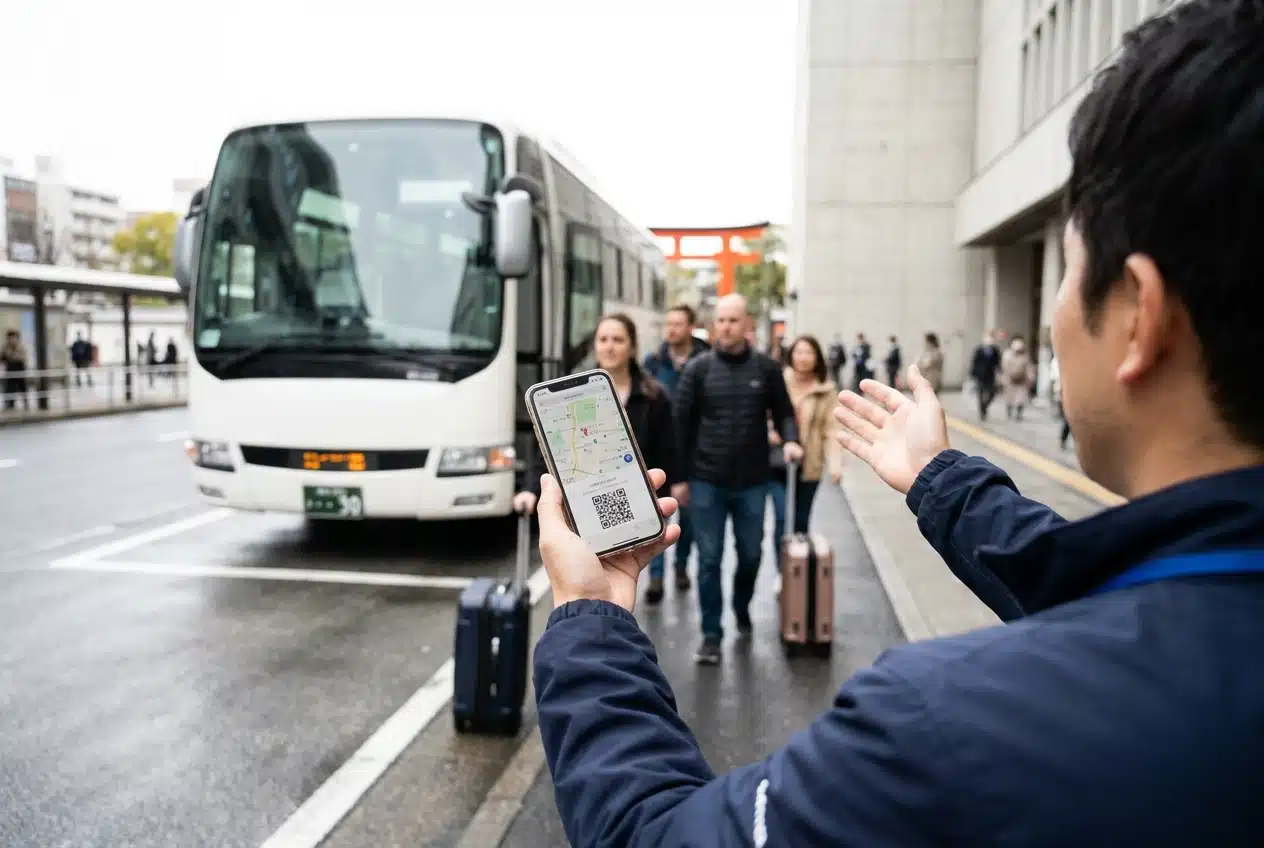
Stage 4: Per-participant QR-code generation. A unique QR code is generated for each participant, tied to a single eSIM activation. Bulk delivery is coordinated so the buyer can distribute codes through whichever channel fits their programme workflow: individual email, a document pack, or a pre-departure briefing pack.
Stage 5: Pre-departure installation. Participants install the eSIM on their eSIM-capable, carrier-unlocked devices before travel. Japan Sim Data supplies installation guides in multiple languages, reducing the on-programme support burden carried by the tour operator or DMC.
Stage 6: In-Japan support escalation. During the programme, the Japan-resident support team is available during Japanese business hours to assist with activation failures, connectivity queries, or provisioning errors, providing a local escalation path that an offshore support centre cannot replicate.
Invoicing and Billing for Trade Accounts: JPY, USD and Per-Participant Cost Tracking
Once the provisioning workflow is complete and QR codes are in hand, the billing structure that supported that process becomes the operational record for programme cost management.
Trade accounts at Japan Sim Data are invoiced in either JPY or USD. This currency flexibility allows DMCs and tour operators to align supplier billing directly with their own programme accounting currency, reducing conversion overhead in cost-of-sales reporting and simplifying client invoicing.
Per-participant cost visibility is a direct consequence of the provisioning structure. Because each QR code corresponds to exactly one participant activation, every line item on the invoice maps to an individual. Cost per head is transparent and auditable without requiring manual allocation across a shared data pool. For programme budgeting and post-trip client reporting, this is a material operational advantage.
Net payment terms and invoice format are discussed at the trade account onboarding stage. This process differs materially from the retail checkout on japansimdata.com, which is designed for individual travellers to Japan and does not produce trade-format documentation.
For MICE organisers and corporate travel managers provisioning connectivity for programmes of 50 to 500 participants, a single invoiced transaction replaces hundreds of individual card payments. The result is a single reconcilable line item in supplier accounts rather than a fragmented transaction history that burdens both procurement and finance teams.
Study-abroad programmes and relocation firms with recurring Japan intake cohorts benefit from an additional structural advantage: established trade accounts support multi-trip reorder workflows, allowing buyers to reorder against agreed terms rather than re-initiating procurement from scratch with each new cohort.
Trade buyers should retain all invoice documentation for tax and compliance purposes. As a licensed Japanese company, COMFYS JAPAN LLC issues documentation consistent with Japanese business invoicing practice, including the requirements of Japan’s Qualified Invoice System (Invoice Seido), which took effect in October 2023 and applies to all qualifying commercial transactions conducted by registered suppliers in Japan.
Reseller Terms and White-Label Supply: What Trade Buyers Should Ask For
Beyond invoicing, trade buyers who intend to resell or co-brand Japan connectivity services need to understand the structural difference between wholesale access and a formal reseller arrangement before approaching any supplier.
Wholesale versus reseller: the commercial distinction
As established above, a wholesale arrangement transfers margin ownership to the buyer, while a reseller arrangement grants panel access for managing assignments and QR-code distribution. The supplier may also set parameters on end-customer pricing as part of the formal reseller agreement. These are meaningfully different commercial structures, and a trade buyer should confirm which model a supplier offers before assuming margin freedom.
White-label supply
White-label arrangements go a step further. They allow a DMC or tour operator to present the eSIM as a component of their own service package without exposing the upstream supplier. This requires a formal reseller agreement; it is not an extension of a trade discount and cannot be assumed from volume pricing alone.
What to request in writing
Trade buyers evaluating Japan wholesale suppliers or Japan wholesale distributors for eSIM supply should request written confirmation of the following before committing: minimum order quantities, provisioning lead times, QR-code expiry windows, the process for recovering or replacing a duplicate or failed provisioning, and the escalation path for in-Japan connectivity incidents during live programmes.
Japan Sim Data reseller terms
Reseller terms at Japan Sim Data are available to qualifying trade accounts. Prospective resellers should initiate contact through the bulk and agency enquiry channel at japansimdata.com, not the retail storefront. For reference, the catalogue includes plans such as the 11-day 2 GB per day plan on the SoftBank network, which illustrates the itinerary-matched plan structures available for reseller packaging. Agency terms are written for Japanese inbound trade practice, reflecting the operational and invoicing conventions of the Japan inbound market rather than generic global reseller templates.
Device Compatibility and Participant Readiness: What Trade Buyers Must Communicate
Once reseller and white-label terms are in place, the operational focus shifts to the participants themselves. No commercial arrangement eliminates the risk of connectivity failures caused by incompatible or locked devices, and that risk falls on the trade buyer to manage proactively.
Every participant’s device must meet two conditions: it must be eSIM-capable, and it must be carrier-unlocked. A device tied to a home-country carrier will reject a third-party eSIM regardless of the plan purchased or the network it runs on. These are hardware and account-level constraints that Japan Sim Data cannot override after purchase.
Trade buyers should embed a device compatibility check into their standard pre-departure communications. Japan Sim Data provides installation guides in several languages that can be incorporated directly into participant briefing packs. A 14-day Japan eSIM plan running on the SoftBank network is one example where clear installation instructions materially reduce participant confusion at setup.
Install before departure. A participant who arrives in Japan without a working connection and attempts to install an eSIM profile faces a circular dependency: installation requires connectivity, but connectivity requires a completed installation. Instruct participants to install and verify the eSIM profile before boarding.
As noted above, these are data-only plans, no Japanese number, voice, or SMS. Most will run a dual-SIM configuration, retaining their home SIM for calls and SMS while the Japan eSIM handles data. This should be explained explicitly to participants who have not used dual-SIM before.
Refunds are not available after activation. Trade buyers should schedule QR-code distribution close to the intended activation window and communicate clearly that scanning the code initiates an irreversible process.
For groups with mixed device types and varying technical confidence, a short pre-departure virtual briefing or written FAQ consistently reduces the volume of in-Japan activation incidents.
How to Evaluate Japan eSIM Suppliers as a Trade Buyer: A Procurement Checklist
With participant readiness addressed, the next step is evaluating whether a prospective Japan eSIM supplier can meet trade-buyer operational requirements before any commitment is made. The following checklist covers the criteria that distinguish a capable trade supplier from a consumer-grade platform with a discount code.
1. Ground operations and support jurisdiction Confirm that the supplier is Japan-resident, with a support team operating on Japanese business hours. An offshore support centre creates a time-zone gap precisely when live-programme incidents occur in Japan.
2. Network access and disclosure Confirm which of Japan’s three national networks (NTT Docomo, SoftBank, KDDI/au) the plan runs on, and that the host network is stated explicitly in trade documentation rather than described in generic terms such as “major Japanese carrier.”
3. Billing and invoicing Confirm that the supplier issues formal invoices in JPY or USD. A discount code applied at a consumer checkout does not constitute a B2B billing arrangement and will not satisfy programme cost-tracking or tax documentation requirements.
4. Provisioning mechanics Confirm that the supplier can generate individual QR codes per participant at the scale your programme requires, and that provisioning lead times are stated in writing at the quote stage. For a multi-day fixed-data plan such as a 12-day Japan eSIM on the SoftBank network, confirm the delivery method and expiry window before finalising your pre-departure schedule.
5. Reseller and wholesale terms Confirm that volume pricing tiers, minimum order quantities, and reseller margin structures are documented and available for review prior to commitment. Verbal assurances are not a substitute for written terms.
6. Plan suitability for Japan itineraries Confirm that the catalogue includes options suited to both short city-based programmes and extended multi-region itineraries. Rural coverage areas including Hokkaido, Tohoku, and Okinawa place different demands on a plan than a four-night Tokyo conference.
7. Fair-use and data-only disclosure Confirm that fair-use conditions on unlimited plans are explicitly stated, and that the data-only nature of the eSIM is documented clearly. Participants will have no Japanese number, voice capability, or SMS (see Device Compatibility section); communicate this in pre-departure materials.
Trade Account Supply vs. Retail Purchase: A Structured Comparison
The checklist in the preceding section identifies what to verify in a supplier evaluation. The table below translates those criteria into a direct side-by-side comparison, so procurement teams can map their programme requirements to the appropriate channel before initiating contact.
| Criterion | Retail Purchase | Trade Account Supply |
|---|---|---|
| Purchasing mechanism | Individual checkout per participant | Bulk provisioning under a single commercial order |
| Billing format | Per-card transaction; no formal invoice | Formal invoice in JPY or USD |
| Pricing | Standard retail rate | Volume pricing discussed at enquiry stage |
| QR-code delivery | One code per individual checkout | Per-participant QR codes generated at group scale |
| Support model | B2C email or chat | Japan-resident B2B support on Japanese business hours |
| Suitable for | Individual travellers to Japan; small informal groups | Tour operators, DMCs, MICE firms, study-abroad programmes |
Retail checkout at japansimdata.com remains the appropriate route for individual travellers to Japan and for small informal groups where a formal invoice is not operationally required. The trade account channel is designed for buyers provisioning multiple participants under a single commercial relationship; it is not a group discount applied to a consumer transaction.
A further distinction separates general eSIM marketplace platforms from a Japan-specialist trade supplier. General platforms carry multi-country catalogues optimised for B2C checkout; they typically lack formal trade billing infrastructure, Japan-resident operations, or per-participant provisioning at group scale. Japan Sim Data, as a Japan-specialist supplier, fits this profile. Buyers requiring a structured multi-day plan, such as a 15-day fixed-data option on the SoftBank network, can review catalogue options before enquiring about trade terms.
Neither model is universally superior. The appropriate channel depends on group size, billing requirements, programme operational complexity, and the need for local support during live Japan programmes.
Frequently Asked Questions: Bulk Japan eSIM Procurement for Trade Buyers
The questions below address the operational details that trade buyers most commonly raise when evaluating bulk Japan eSIM procurement for the first time.
What is the minimum group size to access trade account pricing? Minimum order quantities and volume pricing tiers are confirmed at the trade enquiry stage. Contact Japan Sim Data through the bulk and agency page at japansimdata.com to receive terms applicable to your organisation.
How long does QR-code provisioning take for a group of 50 or more participants? Provisioning timelines vary by group size and plan type. Lead times are confirmed at the quote stage. Trade buyers should plan for provisioning to be finalised before the pre-departure participant communication deadline, not at the point of departure.
Do QR codes expire if not activated immediately? Expiry windows are confirmed at the provisioning stage. Distribute codes to participants close to the intended activation date to avoid codes expiring before arrival in Japan.
What happens if a participant’s QR code fails to activate? Japan-resident support staff are available during Japanese business hours to assist with activation failures. Include the Japan Sim Data support contact in your programme operations pack so on-ground staff can escalate without delay.
Can participants use their Japan eSIM for tethering or as a mobile hotspot? Tethering availability depends on the specific plan selected. Confirm this at the plan selection stage and state it clearly in pre-departure participant materials.
Are Japan Sim Data eSIMs suitable for participants staying in Japan for extended periods, such as students, interns, or new residents? The catalogue includes long-stay options designed for students, interns, and new residents. These are available through both the retail channel and trade account procurement, depending on group requirements. Note that all plans are data-only with no Japanese number, voice, or SMS.
Can a tour operator white-label Japan Sim Data eSIMs as part of their own product offering? White-label supply is available under formal reseller terms. Initiate contact through the bulk and agency enquiry channel at japansimdata.com rather than the retail storefront.
Getting Started: How to Open a Trade Account with Japan Sim Data
Once the FAQ answers above have addressed your immediate operational questions, the logical next step is to open a trade account and initiate formal procurement.
All trade account enquiries are handled through the bulk and agency page at japansimdata.com, not through the retail storefront. This distinction matters: the retail checkout is designed for individual travellers to Japan and processes orders on a per-card basis. The trade channel is where volume pricing, formal invoicing, and reseller terms are discussed and confirmed.
What to Include in Your Initial Enquiry
To receive applicable terms promptly, prepare the following before making contact:
- Organisation name and type: tour operator, DMC, MICE firm, study-abroad programme, relocation firm, or other
- Estimated group sizes and frequency: single programme or recurring calendar
- Travel dates or programme schedule: specific dates or a rolling annual timeline
- Preferred plan types: day-pass, fixed-data, unlimited, or long-stay
- Billing currency preference: JPY or USD
Following your initial submission, Japan Sim Data will confirm volume pricing, provisioning lead times, invoice format, and applicable wholesale or reseller terms based on your operational profile.
Recurring Programmes
Recurring programme buyers should raise multi-trip reorder workflows at setup, as outlined in the Invoicing section above.
Japan Sim Data’s operations are based in Chiba and Tokyo. Trade account management, billing, and provisioning support are conducted entirely by Japan-resident staff, aligned with the business-hours expectations the Japanese inbound travel trade requires from its connectivity suppliers.
Conclusion: Three Operational Capabilities That Matter for Japan Group Connectivity
For trade buyers who have completed the account-opening process, Japan Sim Data’s three differentiators, invoiced billing, per-participant QR provisioning, and Japan-resident support, are covered in full above.
The wholesale and reseller distinction carries practical weight in eSIM procurement. Before committing to any Japan connectivity supplier, trade buyers should verify billing, provisioning, and support arrangements independently. The Procurement Checklist above provides the full supplier evaluation framework. These are not equivalent options for groups running active itineraries in Japan.
Trade buyers seeking a quote, reseller terms, or a trade account with Japan Sim Data should initiate contact through the bulk and agency page at japansimdata.com. That channel handles volume enquiries, provisioning planning, and formal commercial arrangements for tour operators, DMCs, MICE organisers, study-abroad programmes, and relocation firms.
Individual travellers to Japan, and small informal groups that do not require invoiced billing, can purchase directly through the standard retail checkout at japansimdata.com without opening a trade account.