

Free Airport WiFi vs Japan eSIM: What Travelers Actually Need
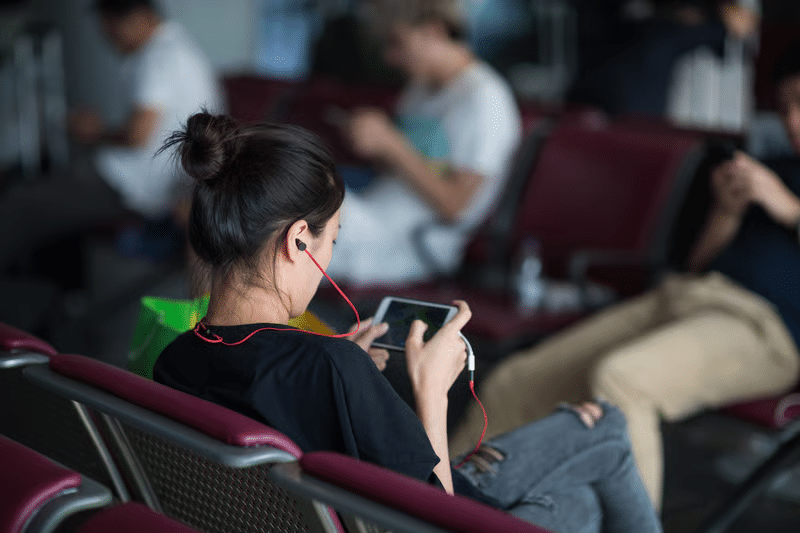
Every year, a meaningful number of Japan-bound travelers make the same calculation: Japan has free WiFi at airports, train stations, temples, and convenience stores, so maybe a dedicated data plan isn’t necessary. They arrive at Narita or Haneda, connect to the airport WiFi, and feel justified in their decision. Then they board the Narita Express, lose the WiFi connection, and spend the next 60 minutes unable to navigate, message, or research where they’re going.
The japan airport wifi vs esim question is not really a comparison between two equivalent options. It is a comparison between one option (free WiFi) that works in specific fixed locations under specific conditions, and another option (Japan eSIM) that works continuously everywhere your phone travels. Understanding the practical difference — what free WiFi actually provides versus what it leaves uncovered — is the analysis that turns an assumption into an informed decision.
This guide covers Japan’s free WiFi landscape honestly, identifies specifically what travelers lose without mobile data, and explains why Japan Sim Data’s eSIM plans represent a low-cost solution to a problem that free WiFi cannot solve.
The Free WiFi Assumption

The assumption that Japan’s free WiFi infrastructure is sufficient for travel connectivity comes from accurate information — Japan does have extensive free WiFi at many tourist-relevant locations — combined with an incomplete picture of when and where connectivity actually matters during travel.
Japan’s investment in free WiFi for foreign visitors accelerated significantly in the years leading up to major international events, and the infrastructure that was developed has been maintained and expanded since. Free WiFi genuinely exists at Japan’s major airports, at many Shinkansen stations, at convenience stores throughout the country, and at a growing number of tourist sites and public areas in major cities.
The problem is not the absence of free WiFi — it is that free WiFi is a fixed-location resource in a travel experience defined by movement. The moments when a Japan traveler most needs connectivity are almost never the moments when they are stationary at a WiFi hotspot.
Where Free WiFi Actually Exists in Japan
Airport WiFi
Japan’s major international airports — Narita, Haneda, Kansai, New Chitose — provide free WiFi throughout their terminal areas. The signal is generally reliable within the terminal, the registration process is simple (connect to the network, accept terms), and the connection adequately supports messaging, email, and light browsing.
The airport WiFi coverage ends at the terminal boundary. The moment a traveler boards the Narita Express, a highway bus, a taxi, or any transport to the city, they leave the airport WiFi entirely. For many travelers, this transition happens within the first 30–60 minutes of arriving in Japan — precisely the moment when navigation to an unfamiliar accommodation is most needed.
Train Station and Platform WiFi
JR East, JR West, and major private railways provide WiFi at major stations — Tokyo, Shinagawa, Shin-Yokohama, Kyoto, Osaka, and other large hub stations have WiFi in the station concourse areas. This coverage covers the station but not the journey between stations. Most Japan train journeys involve spending the majority of time in transit rather than stationary at a station.
Some Shinkansen services provide onboard WiFi — JR East’s Tohoku and Hokuriku Shinkansen services have introduced onboard connectivity — but this is not universal across all Shinkansen lines and the quality varies.
Convenience Store WiFi
7-Eleven, FamilyMart, and Lawson provide free WiFi at their stores. Japan’s convenience store density means this coverage is available frequently in urban and suburban areas, and this is genuinely useful for travelers with a WiFi-supplement strategy — stopping at a kombini for a download or upload is a practical approach to managing limited data.
However, convenience store WiFi is a fixed-location resource that requires a store visit to access. It does not provide coverage while walking between the store and the next destination.
Tourist Site and Hotel WiFi
Many Japanese hotels, ryokan, museums, and tourist facilities provide WiFi. Hotel WiFi at accommodation is the most reliable and useful component of Japan’s free WiFi infrastructure for travelers — it provides a nightly reset opportunity for large downloads and uploads that reduces overall eSIM data dependency.
The limitation: hotel WiFi covers the hotel. Navigation to the next day’s destinations, real-time transit routing during the day, and communication during active sightseeing hours all happen away from the hotel WiFi environment.
Speed, Security, and Reliability Issues
Speed Limitations
Japan’s public free WiFi speed varies enormously. Airport WiFi is generally adequate for messaging and light browsing. Convenience store WiFi is functional but often congested during busy periods. Tourist site WiFi can range from excellent to barely functional depending on the number of simultaneous users.
The japan wifi coverage quality question reveals a further limitation: even where free WiFi exists, it doesn’t always perform well enough for the data-intensive tasks that modern Japan travel requires. Real-time map tile loading, camera-function translation that sends images to a processing server, and video calls home all require throughput and latency that public free WiFi inconsistently provides.
Security Considerations
japan wifi security is a legitimate concern for travelers using open public networks. Free public WiFi — whether at airports, stations, or convenience stores — is typically unencrypted or uses basic shared encryption that doesn’t protect individual data streams. Sensitive activities like banking app access, email with business information, and social media login credentials are technically exposed on public WiFi networks.
For travelers who access banking, work email, or other sensitive services during Japan travel — which increasingly includes the majority of international travelers — the security limitation of public WiFi is a genuine consideration. A Japan eSIM connection routes data through the Japanese carrier network under the same security model as the traveler’s home mobile connection, without the shared public network exposure of free WiFi.
Session Limits and Registration Requirements
Japan’s public WiFi typically requires registration or periodic re-registration. Airport WiFi sessions may have time limits. Convenience store WiFi requires a new registration each visit. Tourist site WiFi varies in its session structure.
These friction points are minor individually but accumulate across a day of Japan tourism into a pattern of repeated connection attempts, registration screens, and session resets that interrupt the flow of travel. A Japan eSIM connected continuously to a Japanese carrier network has no session limit, no registration renewal, and no friction between the traveler and their data connection.
What You Lose Without Mobile Data

Navigation in Transit
The most significant practical cost of relying on free WiFi is losing navigation during transit — precisely the period when navigation is most needed.
A Japan traveler moves between sites by train, subway, bus, taxi, and on foot. Each of these transit modes involves: confirming the right platform or exit, monitoring the route for the correct stop, navigating unfamiliar streets from the station to the destination, and making real-time decisions when plans change. All of these require a live data connection.
Between WiFi hotspots — which is most of the travel day — a traveler without mobile data is navigating by memory, by physical signage, or by stopping to ask for directions. Japan’s physical signage in major tourist areas is genuinely good, but it doesn’t cover every exit decision, every street turn, or every circumstance where plans change mid-transit.
Real-Time Translation
Google Translate’s camera function — one of the most practically valuable tools for Japan travelers navigating restaurant menus, shrine information boards, product labels, and public notices — requires a live data connection for full capability. The offline Japanese language pack enables basic text translation without data, but the camera-function real-time overlay requires server-side processing that needs connectivity.
Without mobile data, a traveler who encounters a Japanese-only menu in a restaurant outside a tourist area is guessing at the options. With a Japan eSIM providing live data, the camera translates the menu in real time.
Emergency and Disruption Response
Emergency scenarios — a missed train connection, a typhoon warning requiring accommodation changes, a medical situation requiring urgent translation — are the moments when connectivity transitions from convenience to necessity. Free WiFi is not available in the middle of a disrupted train journey or in the street outside a closed venue.
The japan esim decision becomes most clearly correct when considered through the lens of the emergency or disruption scenario: the traveler with a Japan eSIM can respond to unexpected situations with immediate access to information, booking apps, and communication. The traveler depending on the nearest WiFi hotspot must find a WiFi connection before they can act.
Messaging and Communication Continuity
Travel companions, family back home, hotel staff, tour guides, and transportation providers all communicate through messaging apps that require data. Continuous messaging connectivity — not spotty WiFi-dependent connectivity — is the baseline expectation of modern international travel. Without mobile data, a traveler is reachable only when stationary at a hotspot.
eSIM as a Low-Cost Alternative
The Cost Reality
The japan esim vs free wifi cost comparison is often framed incorrectly: free WiFi is positioned as zero-cost versus eSIM’s price. The actual comparison is between free WiFi’s zero financial cost plus significant connectivity limitation, versus Japan Sim Data eSIM’s modest plan cost and continuous connectivity.
When the cost of Japan eSIM plans is expressed per day — a 10GB plan for a ten-day Japan trip divides to a per-day cost that is typically modest — the question becomes: what does each day of Japan travel cost in aggregate (flights, accommodation, food, activities), and how much is continuous connectivity worth as a fraction of that total?
For most international Japan travelers, the daily eSIM cost represents a small percentage of the day’s total travel expenditure. The connectivity it provides — navigation, translation, communication, emergency response — underpins the quality and safety of the entire day’s experience.
Japan Sim Data Plans for the Free WiFi Traveler
For travelers who want to maximize the value of Japan’s free WiFi infrastructure while maintaining mobile data for the gaps, Japan Sim Data’s plan range includes options that accommodate this strategy:
10GB fixed plans: Sized for travelers who use accommodation WiFi each evening and convenience store WiFi for large downloads, relying on eSIM primarily for in-transit navigation, real-time translation, and messaging. This is the WiFi-supplement strategy that maximizes cost efficiency.
Day Pass plans: For travelers making discrete Japan day trips from a base location with good WiFi coverage, Day Pass activations provide data only on the days it’s needed.
The japan free wifi guide recommendation for travelers committed to maximizing free WiFi: a 10GB Japan Sim Data plan provides the mobile data layer that fills the gaps in Japan’s free WiFi coverage while keeping the total plan cost modest.
According to the GSMA, survey data consistently shows that travelers who rely on public WiFi as their primary Japan connectivity solution report lower satisfaction with their navigation and communication experiences than those with dedicated mobile data plans. The Japan National Tourism Organization (JNTO) recommends that international visitors arrange mobile data connectivity before arrival specifically because of the gap between Japan’s free WiFi availability and the connectivity needs of active tourism.
Conclusion: Free WiFi Is a Supplement, Not a Solution
Japan’s free public WiFi is a genuine and useful travel resource. Hotel WiFi at the end of the day is the most valuable component for downloading offline maps and uploading the day’s photography. Convenience store WiFi provides a practical mid-day data top-up for time-sensitive tasks. Airport WiFi eases the transition on arrival.
None of these cover the transit periods, the street navigation moments, the real-time translation needs, or the emergency communication scenarios that constitute a meaningful portion of any Japan trip. Japan airport wifi vs esim is therefore not a competition between equivalents — it is a comparison between a useful supplement and a comprehensive solution.
Japan Sim Data’s eSIM plans provide the comprehensive solution: continuous connectivity from arrival to departure, on Japan’s own carrier networks, at a cost that represents modest value relative to the total investment in a Japan trip.
Use Japan’s free WiFi for what it’s good for. Use a Japan Sim Data eSIM for everything else — which is most of what matters. Visit wordpress-1493298-6069223.cloudwaysapps.com to find the right plan for your Japan trip.
Frequently Asked Questions

Q1: Is Japan’s free public WiFi reliable enough for navigation?
A: For stationary use at WiFi hotspot locations, Japan’s public WiFi is adequate for light navigation tasks. During transit — on trains, buses, walking between sites — public WiFi is unavailable. Since most Japan travel navigation happens during transit rather than at fixed WiFi locations, public WiFi cannot serve as a primary navigation resource.
Q2: How much does a Japan eSIM cost compared to relying on free WiFi?
A: Japan Sim Data’s eSIM plans start at modest prices for shorter trips. The daily cost of a typical Japan eSIM plan is a small fraction of total daily Japan travel expenditure. The connectivity a Japan eSIM provides throughout the day — navigation, translation, communication — underpins the quality and safety of the entire travel experience in a way that free WiFi cannot replicate.
Q3: Is public WiFi in Japan safe to use?
A: Japan’s public WiFi is generally trustworthy in terms of being legitimate networks rather than malicious hotspots. However, open public WiFi networks provide less data security than encrypted mobile connections. For travelers accessing banking apps, work email, or other sensitive services, a Japan eSIM’s carrier-encrypted mobile connection is the more secure option.
Q4: Can I use a combination of free WiFi and a small Japan eSIM plan?
A: Yes, and this is a practical strategy for cost-conscious travelers. A modest Japan Sim Data plan (10GB) supplements free WiFi by covering in-transit navigation, real-time translation, and messaging throughout the day, while hotel and convenience store WiFi handles large downloads and uploads. This hybrid approach provides continuous connectivity at a lower plan cost than unlimited.
Q5: Does Japan’s Shinkansen have WiFi?
A: Some Shinkansen services — particularly JR East’s Tohoku and Hokuriku Shinkansen — provide onboard WiFi, but this is not universal across all lines and services. Coverage quality varies. For consistent connectivity during Shinkansen journeys, a Japan eSIM provides reliable data regardless of whether the specific train service includes WiFi.