
Film and Production Crews: Japan eSIMs for Location Shoots
Japan is one of the world’s most sought-after location shooting destinations. Its visual range is extraordinary. You can film the urban density of Shinjuku at night, the Shinto gate corridors of Fushimi Inari, the snow-covered farmhouses of Shirakawa-go, the industrial coastline of Kitakyushu, or the bamboo groves of Arashiyama. As a result, commercial shoots, documentaries, travel content, corporate video, fashion editorial, and major international films all use Japan as a backdrop.
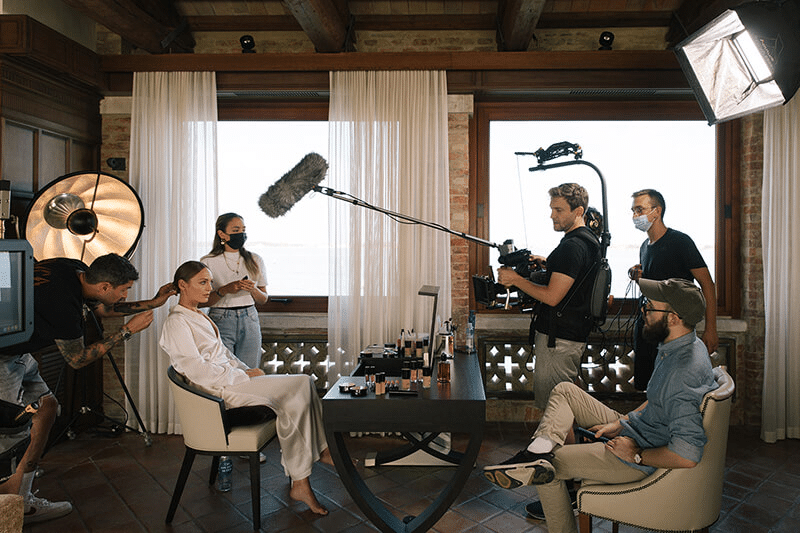
The film crew Japan eSIM question is more complex than most business travel connectivity questions. Production crews have several connectivity needs at the same time. The director manages the shoot from the monitor tent. The line producer coordinates logistics with the local production company. The DIT uploads footage to the cloud mid-shoot. Meanwhile, the talent checks schedules and script updates.
Each role has its own data profile. Together, they make production crews one of the highest data-consuming B2B eSIM use cases in Japan.
This guide covers the complete production connectivity framework:
- Location coverage for urban and remote shoots
- Data planning for cloud upload workflows
- Crew plan specifications by role
- Fixer and local producer coordination
- The Japan Sim Data production support program
Why Production Connectivity Is Operationally Critical
Film and video production creates connectivity dependencies that standard business travel doesn’t. Four of them matter most.
Time-zone coordination
International productions work with home-country producers, clients, and post-production teams. These teams are often 8–17 hours behind Japan Standard Time. Therefore, data demand continues outside Japan’s working hours. Examples include an executive review call at Japan midnight, a client approval needed before a morning shoot, and overnight edit notes.
Cloud workflow continuity
Modern workflows move footage from camera to cloud continuously. The DIT’s workstation uploads proxies and transcodes from each location to a shared platform. Remote editorial teams then access them. This workflow needs sustained connectivity throughout the shoot day.
Real-time direction from remote stakeholders
Brand clients and remote directors increasingly join shoots by video call. They watch camera feeds, review playback, and direct in real time. Consequently, peak data demand falls during active shoot hours.
Multi-location shooting days
A Tokyo commercial may start in Shibuya, move to a Shinjuku studio, and finish in a Harajuku retail space. For this reason, connectivity that depends on fixed venues cannot serve a mobile production.
Coverage for Urban and Remote Shoot Locations
Urban shoot locations
Most Japan shoots take place in cities such as Tokyo, Kyoto, Osaka, and Fukuoka. Coverage there is strong on Docomo, SoftBank, and KDDI. All three support multi-camera monitoring, cloud upload, and production communication.
However, some urban locations need extra care:
- Basements and underground spaces: Underground izakaya, subway platforms, and basement retail can have weaker signal. Docomo’s dense Tokyo infrastructure gives the most reliable underground coverage.
- High-rise interiors: Office towers and high-floor hotel suites may have poor signal penetration. Shooting near a window improves signal quality.
- Narrow urban streets: Yanaka, Gion’s machiya corridors, and similar areas can suffer from signal reflections. Docomo is again the most consistent option.
Our recommendation: Choose Docomo for urban shoots in Tokyo, Kyoto, and Osaka. It performs best across every type of urban location. SoftBank is an adequate alternative for shoots in open areas only. Avoid it if the schedule includes basements, underground spaces, or dense urban canyons.
Remote and rural shoot locations
Japan location shoot eSIM planning for remote areas requires an honest coverage assessment. The most striking locations often have the weakest coverage.
- Shirakawa-go (Gifu): This UNESCO World Heritage village of thatched farmhouses has Docomo coverage. Coordination stays connected. However, cloud uploads work best over the accommodation WiFi during the day.
- Yakushima (Kagoshima): This ancient cedar forest inspired the forest imagery in Princess Mononoke. Docomo covers the main town and the lower trails. In contrast, deep forest areas may have gaps on every carrier. Continuous connectivity there requires portable Starlink units.
- Hokkaido plains (Biei, Furano): These patchwork farmland landscapes are popular for commercial and travel shoots. Docomo covers the towns and main roads. Nevertheless, elevated viewpoints and specific fields may have variable coverage.
- Japan Alps (Kamikochi, Oku-Hida, Tateyama): Docomo works in approach areas and accessible zones. Coverage is unreliable or absent in high mountain terrain.
- Coastal and island locations: Docomo’s coastal investment helps shoots in Okinawa, the San’in coast, and the Pacific coastline. Inhabited islands such as Miyakojima and Iriomote are covered. Uninhabited coastlines, however, may need a satellite supplement.
Data-Heavy Uploads and Cloud Workflows
The production data profile
A professional crew’s Japan eSIM data use is the highest of any B2B use case, apart from video-call-heavy digital nomads. Proxy uploads are the main driver.
Most workflows upload H.264 or H.265 proxy files from each camera during the day. Thirty minutes of 4K footage produces roughly 5–15GB of proxies, depending on codec settings. A multi-camera shoot with three hours of daily footage can therefore need 50–150GB of proxy upload per day. No fixed mobile data plan covers that.
Where to route the upload
For bulk uploads, use location WiFi or a dedicated production hotspot. Individual Japan Sim Data unlimited eSIMs are better suited to crew communication, monitoring, and coordination.
Smaller productions are the exception. Travel, documentary, and branded content shoots often use only one or two cameras. They can upload proxies over an unlimited eSIM during lunch, transit, or setup changes. For example, a documentary day with 100GB of raw footage and 15GB of proxies is manageable this way.
Real-time playback sharing
Directors often share playback clips with remote clients during the shoot. Each significant clip consumes 500MB–2GB over mobile data. If clients review footage actively, give the director and line producer unlimited plans.
Bulk Plans for Crews, Cast, and Vendors
Plan specification by role
| Role | Recommended plan |
|---|---|
| Director and Director of Photography | Unlimited Docomo |
| Line Producer and Production Coordinator | Unlimited Docomo |
| DIT (Digital Imaging Technician) | Unlimited Docomo |
| Camera operators and focus pullers | 15–20GB Docomo |
| Cast and talent | Day Pass or 10–15GB |
| Local vendors and fixers | See the fixer section below |
Each unlimited role has a clear reason:
- Director and DP: They need continuous connectivity for creative direction, client communication, and cloud review. Their data peaks are unpredictable.
- Line producer and coordinator: They are the operational backbone. They handle fixer communication, vendor management, and schedule coordination. They also bridge time zones with home-country clients late into the Japan night.
- DIT: This role has one of the highest data loads on set. Even with a production hotspot for bulk uploads, the DIT needs a personal unlimited eSIM for coordination and supplementary uploads.
- Camera team: Their needs are mostly coordination and personal use. On remote shoots without accommodation WiFi, however, unlimited plans may help crew wellbeing.
- Talent: Their needs are personal. They use data for navigation, messaging, and streaming between setups.
The unlimited rule for key roles
Apply unlimited plans conservatively. Give them to the five to eight roles where data use is operationally critical. Give fixed-data plans to the wider crew. This approach protects the budget. It also avoids data anxiety where it would have real consequences.
Coordinating With Fixers and Local Producers
The role of the fixer
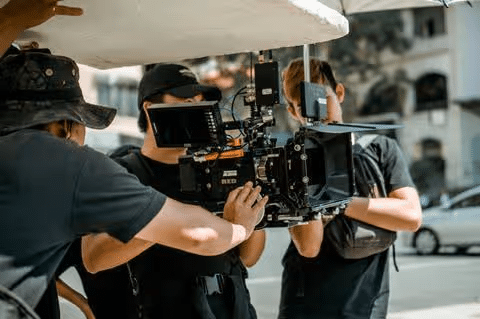
Japan-based fixers and local production companies (LPs) are the key coordination layer for international shoots. They handle permits, location access, vendor management, and talent coordination. They also provide Japanese-language support and market knowledge.
Discuss connectivity with your fixer or LP during pre-production.
If the LP provides connectivity: Some LPs include crew connectivity in their service package. This may be an eSIM or a pocket WiFi unit. Confirm the provider, network, and data plan before arrival. It may need supplementing with Japan Sim Data plans for data-intensive roles.
If the LP does not provide connectivity: Arrange it through the Japan Sim Data production account. The LP then receives a plan alongside the international crew. This keeps the coordination channel reliable throughout the shoot.
Why the fixer’s connection matters most
The fixer’s connectivity is the most critical dependency on an international shoot. They contact vendors, open permits on their phone, and navigate between locations. Above all, they must always be able to reach the production team. If the LP has no unlimited Docomo plan, add LP coordinator plans to your batch order.
Japan Sim Data Production Support
Japan Sim Data offers a production account program for film and production clients. It includes five main services.
- Production batch ordering: Order for the whole crew in one batch. It combines unlimited plans for key roles, fixed data for the wider crew, and Day Passes for short-term talent. Every plan runs on Docomo.
- Extended validity: Japan shoots often last 2–6 weeks. That is longer than standard tourist plans. Production accounts can therefore configure extended validity or renewable 30-day plans without gaps.
- Remote upload guidance: The team advises on upload protocols that work well over mobile. They also explain when to use location WiFi instead of eSIM. In addition, they help you schedule proxy uploads to avoid peak congestion.
- Satellite supplement guidance: For genuinely remote shoots, such as Yakushima, Hokkaido backcountry, or remote Okinawa islands, the team advises on Starlink portable rental. Japan-based AV suppliers offer these units. Terrestrial eSIM and satellite connectivity complement each other.
- Post-production consultation: Productions returning for re-shoots or pickup shots can reuse their account. Known crew profiles speed up the next batch order.
According to the GSMA, media and production crews are among the highest data-consuming eSIM user segments worldwide. Cloud-based workflows are the main reason. Japan is also a leading Asia-Pacific destination for international commercial, documentary, and branded production.
Conclusion: Docomo Unlimited for Key Roles, Location Research First
A successful film crew Japan eSIM strategy has two parts.
1. Network and plan specification. Give unlimited Docomo plans to the director, DP, line producer, production coordinator, and DIT. Add any other role where data use is critical. Give the camera team and crew 15–20GB Docomo plans. Use Day Passes for short-term talent and vendors. Always choose Docomo for its breadth across urban and remote locations.
2. Pre-production coverage research. The production coordinator should verify coverage at every planned location. This matters most for remote and rural sites. Japan Sim Data’s account team can advise on coverage based on your location brief.
Together, these steps make up a solid plan. Research locations first, specify plans by role, and add satellite for the most remote sites. Your crew can then focus on creating rather than fixing connectivity problems.
Visit japansimdata.com to set up your production account before your next Japan location shoot.
Frequently Asked Questions
Q1: Can individual crew eSIMs handle cloud proxy uploads for multi-camera productions?
A: Small productions with one or two cameras can upload proxies over unlimited eSIMs during quiet periods. For multi-camera shoots, however, use eSIMs for coordination and monitoring. Dedicated production hotspots or location WiFi should then handle bulk uploads. Japan Sim Data’s production team can help design the setup.
Q2: Which Japan locations need a satellite supplement?
A: Several locations may have gaps on all carriers, including Docomo:
- Deep forest, such as Yakushima’s cedar forest
- High mountain terrain in the Japan Alps
- Uninhabited coasts and islands in outer Okinawa
- Hokkaido backcountry
Garmin inReach or portable Starlink units fill these gaps. Japan-based production suppliers rent Starlink units for location shoots.
Q3: Should the fixer or local production company be in the eSIM batch order?
A: Yes, unless the LP already provides its own connectivity. The fixer’s connection is the most critical dependency on the shoot. Include LP coordinator plans in the batch if the LP does not cover them.
Q4: How long can production plans cover a multi-week shoot?
A: Japan Sim Data’s production account supports extended validity and renewable 30-day plans. This covers multi-week shoots without gaps. For shoots of 3–6 weeks, discuss the configuration during pre-production. The plan should match your full schedule, including setup, shooting, and wrap days.
Q5: Which crew roles need unlimited plans?
A: The director, DP, line producer, production coordinator, and DIT need unlimited Docomo plans. Their data peaks are unpredictable. Camera operators, focus pullers, and the wider crew can use 15–20GB plans, as long as location WiFi supports personal use. Talent and short-term vendors should use a Day Pass or a 10GB plan that matches their time in Japan.