
Family Group Tours: eSIMs for Multi-Generational Japan Travelers

Multi-generational Japan tours create a unique connectivity challenge for tour operators. A single family may include a teenager who installs an eSIM within minutes, a parent who is comfortable with smartphones, and a grandparent who needs more guidance.
As a result, one family can have several different connectivity needs. The tour guide must still make sure everyone gets connected before the first activity.
The family tour Japan eSIM challenge is therefore mainly about people rather than technology. The eSIM technology remains the same. However, the people installing it can have very different devices, experience levels, and concerns.
For this reason, family tour eSIM programs should be designed for the least technically confident member of each family. At the same time, guides need simple tools that help them support different devices and age groups.
Multi-Generational Tour Connectivity
The Three-Generation Connectivity Profile
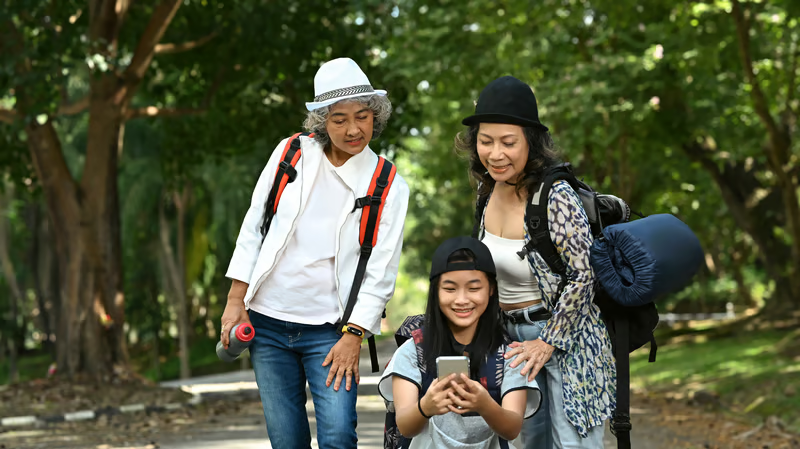
Multi-generational family tours usually include three broad connectivity profiles. Each group can have different data needs and support requirements.
Younger adults and teenagers (18–35): These travelers often have the highest technical confidence. Many can install an eSIM before departure without assistance. They may also help other family members.
Their data use can include social media, photography, messaging, and navigation. Therefore, an unlimited or 20GB plan can be suitable.
Middle-generation adults (36–60): Technical confidence varies within this group. Some users are comfortable managing smartphone settings. Others may rely on younger family members or the guide.
These travelers often use data for navigation, restaurant research, family messaging, and photography. A 15–20GB plan can meet these needs.
Older adults and grandparents (60+): This group may need more installation support. Some travelers may use older devices or feel uncomfortable changing phone settings.
Their data use can be lower. Common activities include messaging, navigation, and video calls with family at home. A 10–15GB plan can therefore be appropriate.
Managing Different Device Types and Ages
The Device Diversity Problem
A family tour can include many different devices. For example, a multi-generational group of 20 families may include more than 60 travelers.
The devices may include:
- iPhones ranging from iPhone XS to newer models
- Samsung Galaxy devices from different generations
- Older Android phones
- Cellular and Wi-Fi-only tablets
- China-mainland-market iPhones without eSIM support
- Carrier-locked phones from different home-market providers
Because of this variety, compatibility checks should happen before departure.
Pre-Departure Compatibility Checks
Family tours require careful device screening. Older travelers may be more likely to use older phones. Some devices may also have carrier restrictions.
Tour operators can include a simple compatibility message in the booking confirmation.
For example:
Your Japan tour includes an individual Japan eSIM data plan for each eligible traveler. Most compatible smartphones can install an eSIM directly. To check your device, open your phone settings and look for an eSIM option.
On iPhone, travelers can check:
Settings → Cellular → Add eSIM
On Android, the option may appear under:
Settings → SIM Manager → Add eSIM
If the option is missing, the traveler should contact the operator before departure. This is especially important for older phones and devices purchased in mainland China.
Physical SIM Backup for Family Tours
Family tour guide kits should also include physical SIM alternatives. The need can be higher than in younger or more technically uniform groups.
A practical guide-kit buffer can be around 15–20% of group size. Standard tour programs may use a smaller 5–10% buffer.
The larger family-tour buffer reflects the wider range of device ages and compatibility issues.
Grandparent and Older Traveler Onboarding
Use Simple Installation Language
Older travelers may understand the installation process more easily when technical terms are avoided.
For example, say:
“Scan this code and your phone will connect to a Japan mobile network.”
This can be easier to understand than a technical explanation about eSIM profile provisioning.
The goal is to explain the result rather than the technology.
Address Installation Anxiety
Some travelers may worry about changing their phone settings. Therefore, guides should explain what the eSIM does and does not change.
A simple explanation can help:
“Installing the eSIM adds a Japan data connection. It does not remove your contacts, photos, or apps.”
This reassurance can make the installation process feel less complicated.
Encourage Family-Led Installation
Family members can also support one another.
For example, a guide can say:
“If you are less comfortable with phone settings, ask someone in your family to help you. You can install it together.”
This approach uses the technical confidence already available within the family.
Provide Video Instructions
A short installation video can support travelers who find written instructions difficult to follow. A two-minute screen recording can show the process step by step.
Japan Sim Data provides video installation guides for agency partners.
Keep Airport Assistance as a Backup
Some travelers may still arrive without completing installation. Therefore, an activation station or support point can provide a final backup.
This is particularly useful for older travelers who need one-to-one assistance.
Kid-Safe Defaults and Device Setup

Do Children Need Their Own Japan eSIM?
Children on family tours can have very different connectivity needs.
Some younger children use Wi-Fi-only tablets. Others use hand-me-down smartphones. Teenagers may have current smartphones and travel independently.
Therefore, not every child needs an individual eSIM.
Young children who mainly use a tablet for entertainment can often use a parent’s hotspot. Older children and teenagers who navigate independently can benefit from their own data plan.
Hotspot Planning for Families
Families that rely on a parent’s hotspot should consider the additional data use.
Streaming, gaming, video calls, and multiple connected devices can quickly increase consumption. Therefore, an unlimited plan can be useful for the parent providing the hotspot.
Parents should also check screen-time and parental-control settings before departure. The eSIM does not change these settings. However, a new mobile connection may require families to review how managed devices access online content.
Bulk Pricing Per Family Unit
The Family Unit Pricing Model
Family tour operators can simplify connectivity pricing by thinking in terms of family units.
Instead of treating every traveler as an identical customer, operators can match plans to each person’s expected use.
For example, a three-generation family might include:
- 2 × 10GB Docomo plans for grandparents
- 2 × 15GB Docomo plans for parents
- 2 × 15GB Docomo plans for teenagers or older children
This creates six plans with different roles within one family unit.
Calculating Seasonal Volume
Consider an operator running 15 departures per season. If each departure includes 12 family units and each family uses an average of 3.5 plans, the operator would handle approximately 630 individual plan activations per season.
This type of volume can support wholesale pricing discussions with Japan Sim Data.
Presenting Family Connectivity as a Bundle
Family connectivity can also be presented as a single travel expense.
For example, the operator can offer a family Japan connectivity pack rather than displaying every individual plan separately.
This approach makes the package easier to understand. It also allows the operator to include different data tiers within the same family package.
Guide Training for Multi-Generational Groups
The Multi-Generational Guide Skill Set
Guide training should cover more than basic eSIM troubleshooting.
Multi-generational groups require additional support because travelers can differ significantly in technical confidence.
Patient Communication
Guides should allow additional time for connectivity support. They should also use patient and non-judgmental communication.
For example, guides can include extra activation time in the departure briefing. This reduces pressure when several travelers need assistance.
Broader Device Knowledge
Guides can also benefit from familiarity with a wider range of devices.
This includes older Android phones, older iPhones, and China-market device variants.
A device compatibility quick-reference sheet can help guides identify common problems quickly.
Family-Pair Coaching
Family members can become part of the support process.
For example, a guide could say:
“I noticed you helped your mum install her eSIM. Could you help your grandmother with the same steps?”
This approach distributes support across the family. As a result, the guide does not need to handle every installation personally.
Physical SIM Installation Practice
Guides should also know how to install a physical SIM when an eSIM is not supported.
This fallback can be particularly useful on multi-generational tours. Practicing the process beforehand can reduce delays at the destination.
Adapting Communication to Different Generations
Younger Travelers
Younger adults and teenagers may respond well to email, messaging apps, and short video instructions.
Therefore, operators can send the QR code together with a simple installation guide and video.
Middle-Generation Parents
Parents may prefer a clear email with one main action.
For example:
“Please install your Japan eSIM before [date].”
A phone-support option can provide additional reassurance.
Older Adults and Grandparents
Older travelers may prefer a phone call or printed instructions.
Therefore, operators can include printed QR cards and installation steps in physical travel documentation.
Use a Multi-Channel Communication Strategy
A family tour operator can combine several communication methods.
For example:
- Send the installation email to all registered family email addresses.
- Provide a short video guide.
- Include printed QR cards when physical documents are mailed.
- Provide a dedicated support contact for Japan eSIM questions.
- Give families a clear installation deadline.
This approach gives each generation a suitable way to access support.
Japan Sim Data Family-Group Support
Mixed-Tier Family Bundles
Japan Sim Data can support agency orders with different plan tiers within the same family unit.
For example, an order could include 10GB plans for grandparents, 15GB plans for parents, and unlimited plans where higher usage is expected.
This avoids forcing every family member onto the same plan.
Video Installation Guides
Short screen-recorded installation videos can help travelers follow the process visually.
They can be especially useful for older travelers who find long written instructions difficult to follow.
Physical SIM Buffer
Family tour guide kits can include physical SIM alternatives. A 15–20% buffer can account for the wider device variation found in multi-generational groups.
Printed QR Cards
For operators that send physical travel documents, print-ready QR cards can be included in the documentation pack.
These cards can combine the QR code with brief installation instructions.
Multi-Generational Guide Training
Extended guide training can cover:
- Device compatibility
- Patient communication
- Family-pair coaching
- Physical SIM installation
- Basic eSIM troubleshooting
Support for Older Travelers
Some operators may also need phone-based support for travelers who prefer speaking with a person.
An agency support channel can help the operator’s team handle individual device questions and escalate more complex cases when necessary.
Conclusion: Design for the Grandparent, Serve the Whole Family
The family tour Japan eSIM strategy should account for the least technically confident member of each family.
In many cases, that person may be an older traveler using an older device and needing more installation guidance.
Therefore, the program should combine several support methods.
These can include:
- Physical QR cards
- Email instructions
- Video installation guides
- Physical SIM alternatives
- Mixed-tier data plans
- Guide training
- Family-pair coaching
- Additional activation time
This approach makes connectivity easier to manage across different generations.
For family tours covering destinations such as Kyoto, Nara, Hakuba, and rural Japan, reliable mobile connectivity can support navigation, communication, and travel planning throughout the journey.
Japan Sim Data provides family-tour support options that include video guides, printed QR cards, guide training, and mixed-tier ordering.
Visit japansimdata.com to discuss a family or multi-generational Japan tour eSIM program.
Frequently Asked Questions

Do children on Japan family tours need their own eSIM plans?
Not always. Older children and teenagers who navigate independently can benefit from individual plans.
Young children who mainly use tablets for entertainment may instead use a parent’s hotspot.
Therefore, the family should choose plans according to each child’s device and expected use.
What’s the best way to onboard older travelers for Japan eSIM installation?
A combination of video instructions, printed QR cards, and phone support can make installation easier.
Family-pair coaching is also useful. A younger family member can help an older traveler follow the installation steps.
How should Japan eSIM plans be priced for multi-generational family units?
Family-unit pricing can combine several plan tiers into one package.
For example, grandparents may need less data than teenagers. Presenting the plans as one family connectivity package can make the structure easier for clients to understand.
What proportion of physical SIM alternatives should family tour guide kits carry?
A 15–20% buffer can be used for multi-generational family tours. This is higher than the 5–10% range suggested for more uniform tour groups.
The larger buffer accounts for the wider range of device ages and compatibility requirements.
How can guides support families with different technical confidence levels?
Family-pair coaching is a practical approach. The guide can identify technically confident family members and encourage them to assist relatives.
The guide can then focus on travelers who need additional help.
It is also useful to allow more activation time during the departure briefing. For example, a 10–15 minute support period can provide more flexibility than a standard five-minute setup.