
eSIM vs Pocket WiFi Japan: The Complete Traveler’s Comparison
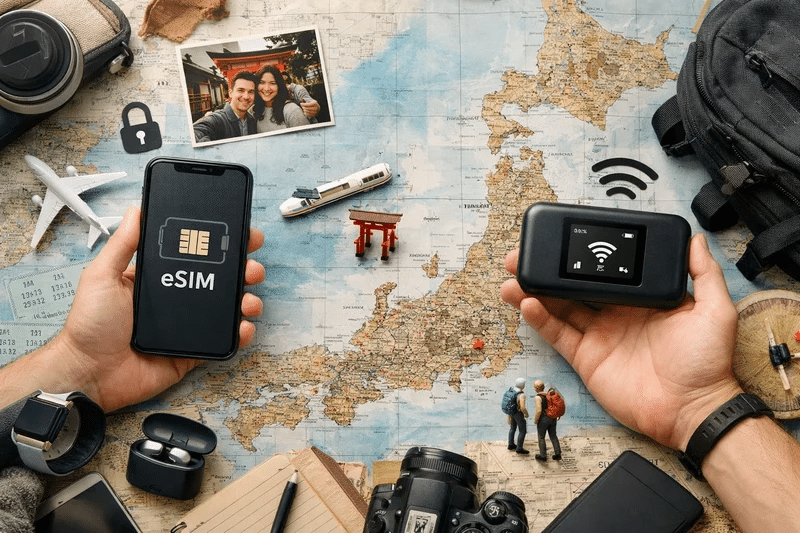
Two connectivity options dominate almost every “how to get online in Japan” search: eSIMs and pocket WiFi routers. Both solve the same basic problem — keeping your maps, translation apps, and messages working while you travel — but they solve it in very different ways, with different costs, setup steps, and trade-offs. If you’re weighing eSIM vs pocket WiFi Japan for an upcoming trip, this guide breaks down exactly how each option works and which one fits your travel style best.
We’ll walk through the mechanics of both options, compare them head-to-head on cost, convenience, and coverage, and highlight the specific situations where one clearly beats the other. By the end, you should have a clear answer for your own trip, along with a look at which Japan Sim Data plans match each approach.
Getting japan tourist connectivity right before you land can make or break the first day of a trip, so it’s worth understanding both options properly rather than defaulting to whichever one a travel forum happened to recommend a few years ago, since pricing and device compatibility for both formats have shifted considerably in recent years.
The Two Most Popular Japan Connectivity Options
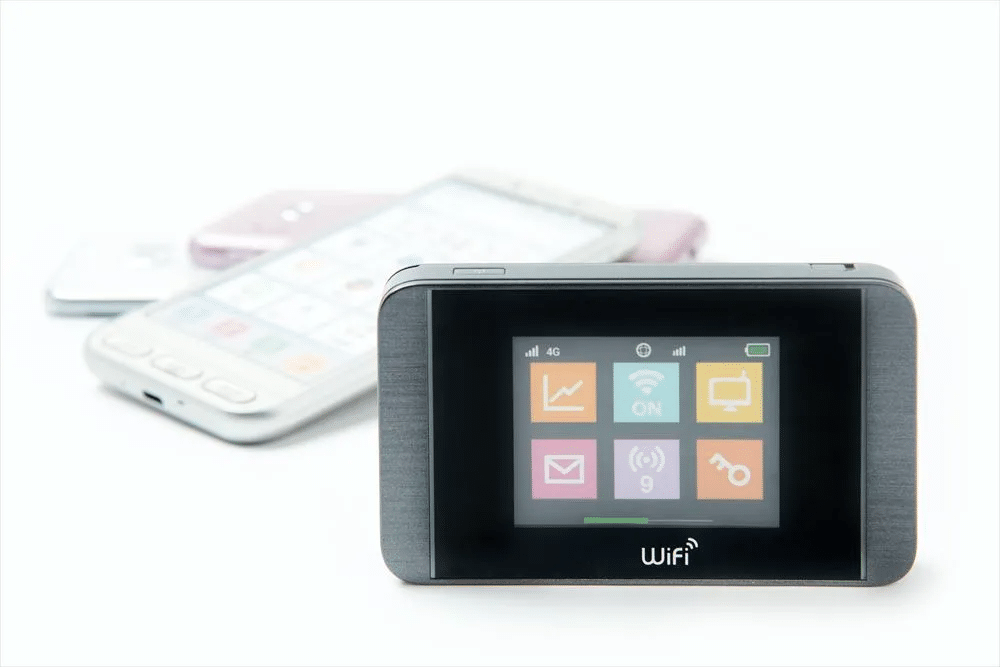
For years, pocket WiFi was the default recommendation for travelers heading to Japan, and it’s still a familiar name in most japan connectivity options guides. More recently, eSIM technology has caught up fast, and for a large share of travelers it’s now the simpler, cheaper choice. Neither option is universally “better” — the right pick depends on how many people you’re traveling with, what devices you’re carrying, and how you like to handle logistics on a trip.
This comparison focuses on the practical differences that actually affect a trip, not just the technical specifications, so you can make a japan esim decision based on how you’ll really use it.
How Each Option Works
A pocket wifi japan rental is a small physical router, usually about the size of a deck of cards, that connects to a local mobile network and creates its own WiFi hotspot. Multiple devices — phones, tablets, laptops — can connect to that single hotspot at once. Most travelers order a pocket WiFi router online before their trip, pick it up at the airport (or have it delivered to their hotel), and return it at the airport or by mail at the end of the trip.
An eSIM, by contrast, is a digital SIM profile installed directly onto your phone or tablet — no physical hardware involved. You purchase a plan, scan a QR code (or tap an install link) to activate it, and your device connects straight to the local network, the same way a physical SIM card would. There’s no device to carry, charge, or return, and no separate hotspot to manage alongside your phone.
Both options ultimately connect you to Japan’s mobile networks — Docomo, SoftBank, or KDDI/au — the difference is purely in how that connection reaches your devices.
A typical japan wifi rental booking works like this: you reserve online a few weeks before your trip, choose a data plan and pickup location, and confirm a return method — usually a postage-paid envelope drop box at the airport, though some providers also offer hotel delivery and pickup. The router itself needs charging every night, much like a phone, and most models last a full day of moderate use on a single charge, though heavy navigation and video streaming will drain it faster.
Cost, Convenience, and Coverage Comparison
Cost. For a solo traveler or a couple sharing one device each, an eSIM is usually the cheaper option, since you’re paying for data on a single device rather than renting hardware. Pocket WiFi becomes more cost-competitive for groups, since one router can serve four or five devices at once, effectively splitting the wifi rental japan cost across the whole group rather than paying per person.
Convenience. This is where eSIMs pull ahead for most travelers. There’s no airport counter to find, no router to charge every night, and no device to remember to return before your flight home — a genuinely common source of last-minute airport stress with pocket WiFi rentals. An eSIM installs in a few minutes from wherever you happen to be, even before you’ve left home.
Coverage. Both options generally draw on the same underlying Japanese carrier networks, so raw coverage is broadly similar in most areas. Pocket WiFi routers can occasionally lose connection if the battery dies or if you wander out of range of the router itself (since it’s a separate device from your phone), while an eSIM’s coverage is tied directly to your phone’s own signal, with no secondary device in the chain to lose charge or connection.
For a side-by-side sense of what each option handles well, a genuine japan esim comparison against pocket WiFi tends to come down to group size and how much you value not carrying an extra gadget.
Battery life deserves its own mention here too. According to GSMA, one of the practical advantages driving eSIM adoption among travelers worldwide is that it removes an entire device from the trip — no second battery to manage, no separate charging cable to pack, and no risk of a router running flat halfway through a long day of sightseeing when your phone still has plenty of charge left. Pocket WiFi users typically carry a portable battery pack specifically to keep the router topped up, which is one more item to remember and one more thing that can run out at an inconvenient moment.
Real-World Travel Scenarios
Numbers on a comparison chart only tell part of the story, so it helps to picture how each option plays out on an actual trip.
A solo traveler on a 10-day trip deciding between japan pocket wifi vs esim will usually find the eSIM both cheaper and simpler: no counter to visit, no router battery to manage alongside their own phone, and a plan that can be topped up instantly if they end up using more data than expected on a heavy sightseeing day.
A couple splitting one data plan often defaults to pocket WiFi so both phones can share a single hotspot, but this is exactly the kind of case where a genuine japan wifi vs data comparison favors two individual eSIM plans instead — each person keeps their own independent connection, so one dead router battery doesn’t leave both travelers offline at once.
A family of five touring Japan together is probably the strongest remaining case for pocket WiFi, since one router shared across five phones and a tablet is very likely cheaper than five separate eSIM plans, even accounting for typical rental fees.
A business traveler juggling a phone and a company laptop without local data access needs both formats at once in practice — an eSIM for their phone, and a WiFi hotspot (either a rented pocket WiFi router or their phone’s own tethering feature) for the laptop.
When you lay out a pocket wifi comparison against these everyday scenarios rather than looking at price alone, the eSIM edges ahead for most individual and paired travelers, while pocket WiFi holds its ground for larger groups and multi-device setups. According to the Japan National Tourism Organization, a growing share of inbound visitors now travel solo or in pairs rather than as large family groups, which is part of why eSIM adoption among international travelers has grown so quickly in recent years.
If you’re still undecided, a simple rule of thumb works for most trips: if you’re traveling alone or as a couple and your phone supports eSIM, that’s very likely your japan esim best value pick. If you’re traveling in a group of three or more, or carrying multiple non-phone devices that need internet, pocket WiFi remains a reasonable japan tourist wifi option worth comparing against individual eSIM pricing before you book.
When Pocket WiFi Still Makes Sense
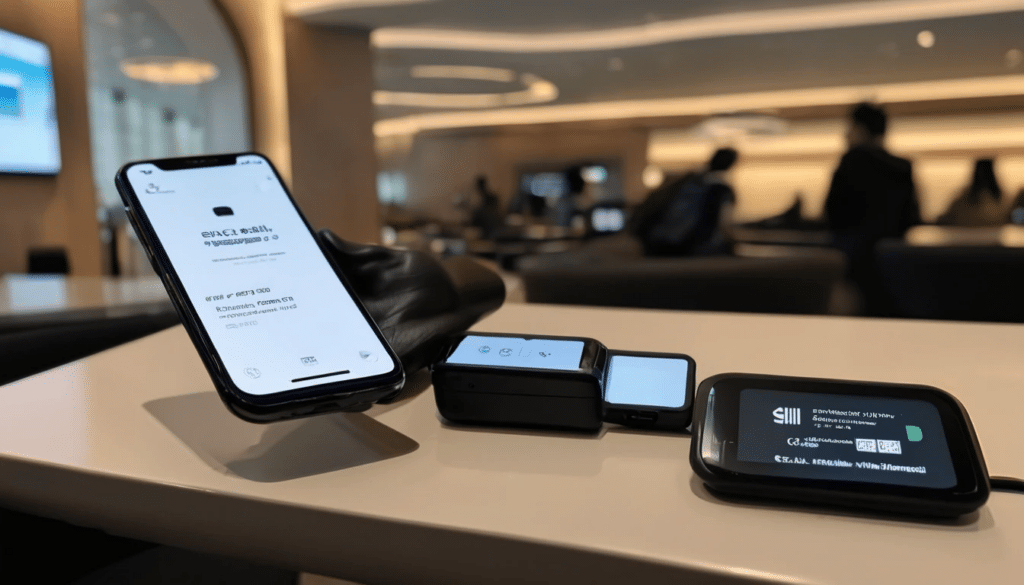
Pocket WiFi isn’t obsolete, and there are real situations where it remains the better call. Group trips are the clearest case: a family of four or five sharing one router can come out ahead on total cost compared to buying individual eSIM plans for every phone. Pocket WiFi is also useful if your trip involves older devices that don’t support eSIM technology, or if you’re traveling with a laptop, camera, or other WiFi-only gadget that needs internet access but can’t take a SIM at all.
Business travelers carrying a company-issued laptop without local data access, photographers moving large files from a camera to cloud storage, or families managing several devices under one data pool are all reasonable candidates for a docomo pocket wifi or softbank wifi rental setup. If you’ve read a japan pocket wifi review online and the group-sharing math works out in your favor, it’s a perfectly solid choice.
When an eSIM Is the Smarter Choice
For most solo travelers, couples, and anyone who wants to be online the moment they land without a pickup counter or a return deadline, an eSIM is generally the smarter pick. It skips the need to carry, charge, or protect an extra device, works the instant you activate it, and eliminates the return-it-at-the-airport step entirely, since there’s simply nothing physical to hand back.
An eSIM also wins clearly on flexibility. If your itinerary changes mid-trip, or you decide to extend your stay, adding more data to an eSIM plan takes a couple of taps, compared to negotiating an extension or a data top-up with a pocket WiFi rental provider. For a japan travel esim vs wifi decision built around minimizing hassle, the eSIM usually comes out ahead — especially for anyone whose phone already supports eSIM technology, which covers the vast majority of phones released in the last several years.
Anyone directly weighing pocket wifi vs esim for a solo or two-person trip will typically find the eSIM cheaper, simpler to activate, and easier to adjust once you’re already traveling.
Japan Sim Data Recommendations
Japan Sim Data’s eSIM plans across Docomo, SoftBank, and KDDI networks are built around exactly the situations where eSIM makes the most sense. For a short solo or couple’s trip, a Day Pass plan covers typical usage without needing to think about data caps. For longer stays, or for travelers who stream video, navigate constantly, and share a lot of photos, one of the higher-tier Plan or Unlimited options avoids any need to monitor usage day to day.
Group travelers aren’t left out either. While pocket WiFi is often the default recommendation for larger groups, Japan Sim Data also offers bulk eSIM pricing for travel agencies and tour operators, which can make individual eSIMs for each traveler in a group cost-competitive with a single shared router — while giving every traveler their own independent connection instead of relying on one router staying charged and in range all day.
Whichever option fits your trip, the underlying goal is the same: reliable mobile data japan options that keep your maps, translation, and messages working from the moment you land. Most travelers only need to make this decision once per trip, so it’s worth taking the few extra minutes to match the option to your actual travel party rather than defaulting to whatever worked on a previous trip with a different group size.
Frequently Asked Questions

Q1: Is an eSIM really cheaper than pocket WiFi for a solo traveler?
A: In most cases, yes. Since a pocket WiFi router’s cost is typically calculated per rental day regardless of how many devices connect, a solo traveler pays the full rental price for capacity they don’t need, while an eSIM plan is scaled to a single device’s actual usage.
Q2: Does pocket WiFi or eSIM have better coverage across Japan?
A: Both draw on the same underlying carrier networks, so coverage is broadly similar. The main practical difference is that a pocket WiFi router is a separate device that needs its own charge and proximity to your phone, while an eSIM’s connection is tied directly to your phone’s own signal.
Q3: Can I use an eSIM if my phone is older or unlocked from a different carrier?
A: Most phones released in the last several years support eSIM, but very old devices or certain carrier-locked phones may not. Pocket WiFi is a good fallback in that case, since it works with any WiFi-capable device regardless of SIM support.
Q4: Which option is better for a family or group trip to Japan?
A: It depends on the group size and budget. A single pocket WiFi router can be cost-effective for four or five people sharing one data pool, though bulk eSIM pricing can make individual eSIMs competitive too, with the added benefit of each traveler having independent connectivity.
Q5: What happens if I lose or forget to return my pocket WiFi router?
A: Most rental providers charge a replacement fee if a router isn’t returned, which is one of the practical downsides of the format compared to an eSIM, where there’s no physical device to lose or return at all.
Conclusion
There’s no single universal answer to esim vs pocket wifi japan — the right choice comes down to how many devices you need connected and how much you value not carrying extra hardware. For solo travelers, couples, and anyone who wants to skip the airport counter entirely, an eSIM is typically the simpler, cheaper, and more flexible option. For larger groups or trips involving WiFi-only devices, a pocket WiFi router can still make practical and financial sense.
If you’re still torn on japan esim or wifi for your specific trip, count your devices and your travel companions first — that single question resolves the decision for most travelers faster than any spec comparison.
Whichever direction you lean, Japan Sim Data’s Docomo, SoftBank, and KDDI eSIM plans offer flexible options for solo travelers, couples, and groups alike, including bulk pricing for larger parties — so you can get set up with reliable, on-arrival connectivity before you even board your flight.