

eSIM for Japan Summer Festivals: Matsuri, Fireworks, and Obon Travel
Japan’s summer is defined by festival culture in a way that no other season quite matches. From July through August, the country’s cities, towns, and villages conduct an annual ritual of community celebration through matsuri — traditional festivals with deep roots in agricultural and religious practice — and hanabi, the fireworks displays that transform Japan’s rivers, bays, and lakesides into temporary theaters of light. Add to this the Obon period in mid-August, when millions of Japanese return to their hometowns to honor ancestors, and Japan’s summer emerges as simultaneously the most culturally rich and logistically demanding season to navigate as an international traveler.
The japan festival esim question is different from the sakura or koyo connectivity challenge. Where those seasonal events concentrate around visual natural phenomena at specific sites, summer festival connectivity involves a specific event-based crowd pattern: the event venue itself, in the hours before and after the main event, generates connectivity demand unlike the sustained site-visit pattern of temple tourism. A hanabi display that draws 800,000 people to the banks of the Sumida River for two hours creates a more intense short-duration network spike than almost any other Japan travel scenario. Understanding this event-specific congestion pattern, and planning connectivity around it rather than against it, is the practical preparation that makes summer festival Japan work.
Japan’s Summer Festival Calendar
Japan’s summer festival calendar is extraordinarily rich — virtually every prefecture, city, ward, and village conducts at least one annual matsuri during the July-August period, ranging from famous events that draw hundreds of thousands of international and domestic visitors to intimate local celebrations where a handful of participants carry portable shrines through narrow neighborhood streets.
The major nationally known summer festivals:
Gion Matsuri (Kyoto, July): One of Japan’s three great festivals — a month-long series of events with the grand procession of elaborately decorated floats (yamaboko junko) as its centerpiece on July 17. The visual spectacle of the enormous moving floats through Kyoto’s central streets draws enormous crowds along the float route.
Awa Odori (Tokushima, mid-August): Japan’s most joyful and participatory festival — the Tokushima city streets filled with processions of dancers in yukata performing the distinctive Awa Odori dance. Viewers are encouraged to join; the boundary between performance and audience dissolves.
Nebuta Matsuri (Aomori, early August): Tohoku’s most spectacular summer festival — enormous illuminated warrior figures (nebuta floats) carried through the streets at night by thousands of participants to the beat of taiko drums and the cry of “rassera rassera.” The visual intensity is extraordinary.
Kanto Matsuri (Akita, early August): Performers balance enormous poles hung with lanterns — some reaching 12 meters — on their palms, foreheads, and shoulders, the lantern arrays swaying in patterns that seem to defy physics.
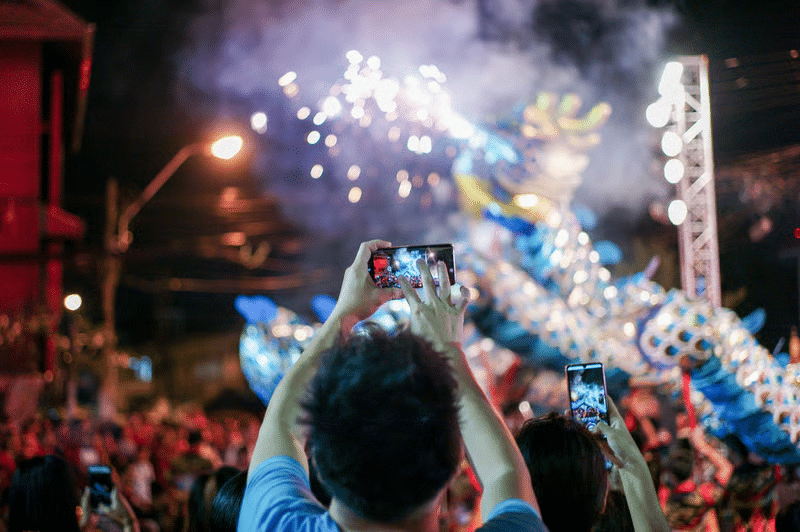
Sumida River Fireworks (Tokyo, late July): One of Japan’s largest and most attended hanabi displays — approximately 20,000 fireworks over the Sumida River in eastern Tokyo, viewed by approximately 800,000 people along the riverbanks.
Best-Known Matsuri and Their Connectivity
Festival Zone Coverage Reality
matsuri esim connectivity at major Japanese summer festivals follows a consistent pattern: adequate underlying coverage from all three carriers, with severe congestion during peak event hours driven by the concentration of attendees simultaneously photographing, sharing, and communicating.
The event-specific congestion challenge is particularly acute at hanabi displays. An 800,000-person crowd concentrated along a riverside over two to three hours generates network demand that Japan’s carriers prepare for with temporary capacity enhancements but cannot fully eliminate. The result: the most photogenic moments of a hanabi display — the finale bursts when the sky is filled with simultaneous explosions — are also the moments of maximum network congestion.
Gion Matsuri Connectivity
The Gion Matsuri float procession route through central Kyoto has coverage from all carriers. The Nishiki Market area, Shijo-dori, and Kawaramachi district that frame the event are within Kyoto’s comprehensive urban coverage zone. docomo festival season coverage is adequate throughout; softbank obon and kddi matsuri networks perform equivalently in this urban Kyoto environment.
Congestion during the July 17 grand procession — when the float route is lined with tens of thousands of spectators attempting simultaneous photo sharing — reduces upload speeds on all carriers during peak viewing hours. Navigation and messaging remain functional.
Nebuta Matsuri Connectivity
Aomori city’s coverage during Nebuta season (early August) is adequate on all three carriers in the main city center festival zone. The nighttime float processions through the central streets are within coverage from all carriers. As a regional city, Aomori’s network infrastructure handles festival crowd additions less resiliently than Tokyo or Osaka — Docomo provides the most consistent performance under elevated Nebuta crowd demand.
The approach to Aomori from other Tohoku destinations — important for travelers combining Nebuta with other Tohoku summer experiences — is best served by Docomo for the rural transit coverage between Tohoku cities.
Fireworks Events and Mobile Congestion
The Hanabi Congestion Problem
hanabi mobile data congestion is the most acute short-duration connectivity challenge in Japan’s seasonal travel calendar. The distinctive characteristics of hanabi events that create this challenge:
Concentration: 500,000 to 800,000 people at a single location along a river or bay, unable to spread across a geographic area in the way that temple visitors at a garden can.
Duration: The peak event lasts 60–90 minutes, concentrating all social sharing demand within this window.
Simultaneity: Every viewer wants to share the same moment — the finale — at the same time.
Limited infrastructure: Riverside hanabi viewing areas often have less fixed telecommunications infrastructure than the urban commercial centers that are more typically network-dense.
Major Hanabi Events and Their Networks
Sumida River Fireworks (Tokyo): The Asakusa and Ryogoku riverside areas are within Tokyo’s urban coverage zone — all three carriers maintain functional connectivity throughout. Upload speed during the finale is reduced on all carriers; messaging and navigation function normally.
Jingu Gaien Fireworks (Tokyo): Meiji Jingu Gaien’s stadium complex has coverage throughout. Slightly less severe congestion than the Sumida event due to lower attendance.
Lake Suwa Fireworks (Nagano): One of Japan’s largest hanabi events, held over Suwa Lake in Nagano Prefecture. Coverage in the lakeside viewing areas is provided by Docomo most reliably — the rural lake setting makes Docomo’s coverage advantage relevant compared to urban hanabi events.
Nagaoka Fireworks (Niigata): One of Japan’s three great fireworks festivals — the Phoenix fireworks finale is legendary among hanabi enthusiasts. The Nagaoka riverside coverage is adequately served by Docomo; the regional city setting benefits from Docomo’s broader rural coverage compared to SoftBank or KDDI.
eSIM Tips for Crowded Event Zones
Pre-Event Data Strategy
The most effective connectivity approach for japan festival travel esim use is identical to the sakura peak site strategy: separate capture from upload.
Before the event (at accommodation or transport hub): Confirm your location and navigation route offline; download the specific area’s offline maps; communicate all plan details to travel companions while connectivity is strong. Check any festival-specific information (route changes, viewing area assignments, prohibited photography zones) while data is flowing freely.
During the event: Photograph and video capture continuously; accept that real-time high-quality uploads are likely to be slow during peak event moments. Use messaging for brief coordination with companions rather than data-intensive communication.
After the event (dispersing from the venue): As the crowd disperses across a wider area, connectivity recovers progressively. Upload queued photography from a convenience store, restaurant, or transport hub as connectivity normalizes.
Navigation During Event Dispersal
One of the most practically important connectivity functions at Japan summer festivals is post-event navigation — finding the exit route from a 500,000-person crowd, locating the transport options in an unfamiliar neighborhood, and navigating to accommodation through street closures and redirected traffic patterns.
Download offline maps for the full festival area before attending any major hanabi or matsuri event. The post-event dispersal moment — when hundreds of thousands of people simultaneously query transport options — can create sufficient network demand to affect real-time map loading on any carrier.
Obon Travel and Connectivity
What Obon Means for Travelers
obon japan internet planning covers the mid-August period when Japanese society undergoes its own version of shogatsu’s homeward movement. The three-day Obon holiday (August 13–15) drives one of Japan’s largest domestic travel surges as urban residents return to family hometowns. This has two implications for international travelers:
Transport competition: Shinkansen, express trains, and domestic flights are intensely booked during Obon departure periods (August 10–14) and return periods (August 16–18). International travelers who haven’t booked transport well in advance will find the same constraints as Golden Week.
The reverse crowd advantage: As Japanese residents leave the major cities for regional hometowns, Tokyo and Osaka become slightly less densely populated than normal. The traveler who stays in Tokyo during Obon’s peak period experiences a city that is fractionally quieter than usual — with correspondingly better network performance at normally congested sites.
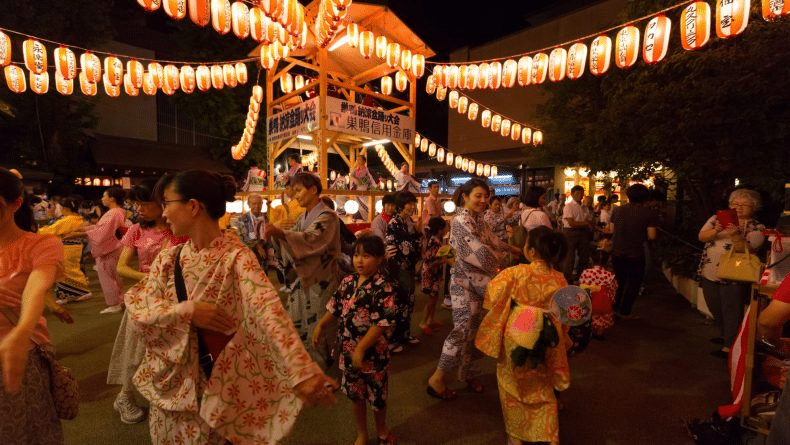
Bon Odori: The community dances that are part of Obon observance — held in local park and temple grounds across Japan during the mid-August period — are more intimate and local than the nationally famous matsuri. Connectivity at these smaller community events is typically adequate on all carriers without significant congestion.
Best Japan Sim Data Plans for Festival Travel
Network Recommendation
For summer festival esim planning concentrated in Japan’s major urban festival cities — Tokyo (Sumida River), Kyoto (Gion Matsuri), Osaka (Tenjin Matsuri), Sendai (Tanabata) — any Japan Sim Data carrier provides equivalent functionality. The connectivity challenge at these urban events is congestion rather than coverage absence, and Docomo, SoftBank, and KDDI all face the same network demand from event crowds.
For festival itineraries extending to regional events — Nebuta in Aomori, Kanto in Akita, Nagaoka Fireworks in Niigata, Lake Suwa Fireworks in Nagano — Docomo’s regional and rural coverage advantage makes it the recommended network for the transit between and around these destinations.
Plan Sizing
Summer festival esim July (single event visit): 10–15GB for a five-to-seven day summer festival focused visit to one or two major events. The event-specific data usage is concentrated rather than sustained, and accommodation WiFi handles the large photo and video backup from intensive festival documentation.
Festival japan data plan for extended summer (2–3 weeks, July-August): 20GB or unlimited for travelers covering multiple summer festival destinations across Japan. The combination of Nebuta travel to Aomori, Sumida River fireworks in Tokyo, and Obon period navigation generates sustained data consumption across the extended summer festival season.
Single hanabi event day trip: The traveler making a day trip specifically for a major hanabi event — Sumida River from central Tokyo, Nagaoka Fireworks from Tokyo or Niigata base — can manage on any standard Japan data plan already allocated to the Japan trip. The day’s data usage is no higher than a typical Japan sightseeing day.
According to the Japan National Tourism Organization (JNTO), Japan’s summer festival season has become increasingly significant for international visitor programming, with Gion Matsuri, Nebuta, and the major hanabi events all experiencing growing international attendance. The GSMA identifies event-based tourism as a high-growth eSIM use case, with crowd density events generating the most distinctive connectivity challenges of any tourist scenario.
Conclusion: Festival Japan Rewards the Prepared Traveler
Japan’s summer festival season is one of the world’s great travel experiences — the sound of taiko drums in a narrow Aomori street at midnight, the shimmer of 20,000 fireworks reflected in the Sumida River, the contagious joy of Awa Odori dancers streaming past in the Tokushima summer heat. These are moments of extraordinary cultural vitality that the prepared traveler — connectivity organized before departure, offline maps downloaded, upload strategy planned — experiences fully rather than fragmentarily.
Japan Sim Data’s eSIM plans on Docomo, SoftBank, and KDDI networks provide the connectivity foundation for every summer festival Japan itinerary — from a single hanabi evening in Tokyo to a full Tohoku matsuri circuit through August. Install before departure, download your offline maps, and let Japan’s summer festival season deliver what it has always delivered to the people who attend it: a reminder that community celebration, conducted at full intensity, is one of human life’s most irreplaceable experiences.
Frequently Asked Questions
Q1: Is mobile data usable during major hanabi fireworks displays?
A: Yes, but with congestion-related speed reduction during peak moments. All carriers maintain functional connectivity — messaging and navigation work throughout. High-quality photo and video uploads during the finale’s peak crowd sharing moment are slower on all networks. The practical strategy is to capture during the event and upload afterwards, when crowds disperse and connectivity recovers.
Q2: Which carrier is best for regional summer festivals like Nebuta and Nagaoka Fireworks?
A: Docomo is the recommended carrier for regional festival destinations — Aomori (Nebuta), Akita (Kanto), Niigata (Nagaoka), and Nagano (Lake Suwa) all benefit from Docomo’s regional coverage advantage in smaller cities that have less dense telecommunications infrastructure than Tokyo or Osaka.
Q3: How much data does a summer festival Japan trip use?
A: A five-to-seven day summer festival visit typically uses 10–15GB, with data consumption concentrated in navigation, festival photography sharing, and transport coordination. Extended summer stays covering multiple festivals across Japan benefit from 20GB or unlimited plans.
Q4: What should I download offline before attending a major matsuri or hanabi?
A: Download offline Google Maps tiles for the full festival area including multiple exit routes; confirm transport schedules and screenshot return times; save accommodation address in Japanese characters. The post-event dispersal moment — when hundreds of thousands simultaneously query navigation — is the highest-risk connectivity moment for data dependency.
Q5: Does Obon affect mobile network performance in Japanese cities?
A: Slightly positively — as urban residents leave for hometown Obon returns, Tokyo and Osaka become marginally less network-congested than normal. The Obon departure and return peak transport periods (August 10–14 outbound, August 16–18 return) generate Shinkansen station congestion that temporarily elevates network demand at major transit hubs.