
Travel Agency Marketing: Selling Japan eSIMs to Modern Travelers
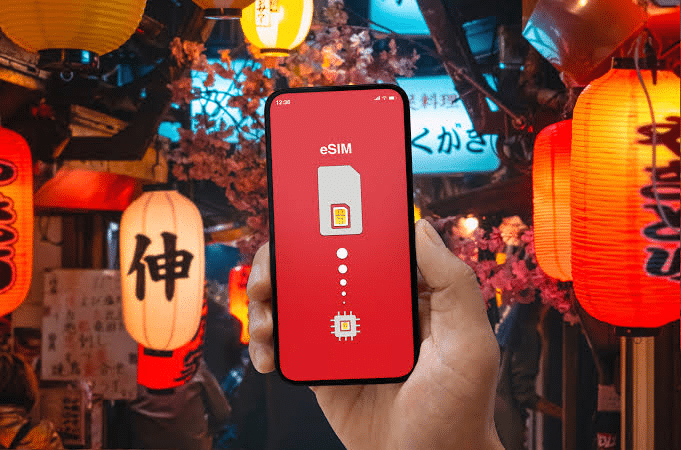
The agencies that sell Japan eSIMs most successfully are not necessarily those with the best product. They are the ones that have figured out how to talk about it. The eSIM itself is straightforward. The marketing challenge is that most travelers do not know they need one until they are standing in a Japanese convenience store, trying to connect to free WiFi to find their next accommodation. At that point, it is too late for the agency to sell it. The marketing task is to create that felt need before the trip, while clients are still planning and able to make a purchase decision.
The sell Japan eSIM travel agency challenge is therefore a messaging problem more than a product problem. The right marketing angles, timing, objection handling, and integration into the existing tour ecosystem can create the conditions where a Japan eSIM sells itself. It becomes not a technical product, but the connectivity confidence that Japan travel demands.
Positioning eSIMs as a Value-Add
The Framing Decision
The first marketing decision for agencies selling Japan eSIMs is how to frame the product. A technical specification such as “individual eSIM data plan, 15GB on Docomo’s network” is accurate and necessary for the inclusions list. However, it does not sell the experience. The outcome framing is more persuasive.
Technical frame: “15GB Japan eSIM on Docomo network, valid 14 days”
Outcome frame: “Your own Japan internet — maps, translation, and communication from the moment you land, no airport queues, no shared devices”
The outcome frame addresses what clients actually care about. They want to navigate confidently after arriving in Japan, translate restaurant menus without asking for help, share photos in real time, and stay in touch with family without searching for WiFi. The technical specification should support the outcome claim rather than serve as the headline.
Positioning Tiers for Different Client Segments
Different client segments respond to different outcome-based messages.
First-time Japan visitors: “Japan is easier with your own data. Navigate the trains, translate the menus, and find the right exit at Shinjuku Station. Your Japan eSIM handles all of it from the moment you land.”
Returning Japan travelers: “Skip the airport SIM queue. Your Japan eSIM installs in five minutes at home and activates when your flight lands.”
Group travelers: “Everyone gets their own data. There is no shared pocket WiFi battery to manage, and no waiting for one person to act as the hotspot.”
Luxury travelers: “Arrive connected. Your Japan eSIM is included, individual, pre-installed, and active from landing. Your Japan experience should not start with a queue at a SIM kiosk.”
Marketing Angles That Resonate
Angle 1: The Arrival Day Narrative
The most emotionally resonant Japan eSIM marketing angle is the arrival-day story. It contrasts the beginning of a trip with and without pre-arranged connectivity.
Without eSIM: “You’ve just landed at Narita after a 12-hour flight. You switch off flight mode, but there is no data. You find the SIM kiosk and discover a queue. Thirty minutes later, you have a SIM, but your checked luggage is already waiting. You still need to find the Narita Express and navigate Tokyo without maps.”
With eSIM: “You’ve just landed at Narita. You switch off flight mode, and your Japan data connects automatically. From there, navigate to baggage claim and find the Narita Express platform. As Tokyo passes by the window, Google Maps confirms your stop. By the time you reach your hotel, you have never had to stop and arrange connectivity.
This narrative focuses on the practical difference clients can experience. It is more persuasive in marketing than a list of technical specifications.
Angle 2: Japan Specifically Needs This
Japan eSIM marketing benefits from the country’s language barrier and complex transportation system. Unlike English-dominant destinations, Japan can create specific moments where translation and navigation are practically necessary rather than simply convenient.
“Japan’s transit system has hundreds of exits, dozens of overlapping operators, and signage that can transition from English to Japanese outside the main tourist corridors. Your Japan eSIM keeps Google Maps and Google Translate available throughout the day, not just when you are near hotel WiFi.”
Angle 3: The Group Responsibility Angle
For group tours, the shared pocket WiFi alternative creates a natural pain point.
“On a group tour, sharing one pocket WiFi device works in theory. In practice, one person has to keep it charged, everyone needs to stay close enough to share the signal, and the moment the group splits for different activities, some travelers lose connectivity. With individual Japan eSIMs, everyone has their own full-speed connection. There is no battery to track, no need to stay close, and no argument about who has the WiFi.”
Angle 4: The Safety Argument
For safety-conscious clients and parents of younger travelers, individual connectivity can provide additional peace of mind.
“Japan is one of the world’s safest destinations. Individual connectivity still means that every member of your group can reach you, find their way back if separated, and access emergency information independently. For peace of mind, an individual eSIM is a safety tool as much as a convenience.”
Bundling eSIMs With Tours, Hotels, and Transfers
The Bundle Marketing Framework
Japan eSIM bundle marketing positions connectivity as part of an integrated travel experience rather than an add-on purchased separately. Bundles can increase the perceived value of each component while reducing the pricing scrutiny applied to individual items.
Tour package bundle:
“Tokyo & Kyoto 10-Day Tour — includes accommodation, Shinkansen, guided experiences, and individual Japan eSIM data plan”
Including the eSIM in the package serves two purposes. It improves the client experience and differentiates the package from competitors that do not include connectivity.
Hotel package bundle:
“Tokyo Luxury Hotel + eSIM Data Bundle — arrive connected at [Hotel Name] with your Japan data ready from landing”
For accommodation-only bookings, an eSIM add-on can turn a passive transaction into an experience-enhancing advisory interaction. When an agent asks, “Would you like to add a Japan eSIM so you’re connected from arrival?”, they position themselves as a proactive travel expert rather than simply a booking processor.
Transfer + eSIM bundle:
“Narita to Hotel Transfer + Japan eSIM — your driver plus your data, organized before you land”
An airport transfer and eSIM naturally complement each other. Both address the arrival experience, so packaging them together creates a single “arrival experience” product with clear value.
Objection Handling for Skeptical Clients
The Five Objection Scripts
Objection 1: “I’ll just use the airport WiFi.”
Response: “Airport WiFi in Japan works fine while you are in the terminal, but it stops when you board the Narita Express to the city. That 60-minute train journey is when you may need maps most, and there is no guarantee of WiFi. Your eSIM covers the whole journey.”
Objection 2: “I’ll use my international roaming.”
Response: “Roaming is convenient, but the cost can add up quickly. Some carriers charge $10–15 per day, which could reach $100–150 per person over 10 days. Our Japan eSIM costs significantly less for the same connectivity and may offer better speeds. Would you like to see the comparison?”
Objection 3: “I’ll use hotel WiFi.”
Response: “Hotel WiFi is great for evenings, downloading maps, and uploading photos. However, you may spend twelve or more hours sightseeing each day. That is when you need translation and navigation most. Hotel WiFi does not help you outside the hotel.”
Objection 4: “It sounds complicated.”
Response: “It genuinely isn’t. Installation involves a few taps in Settings, similar to connecting to a new WiFi network. We send step-by-step instructions with your booking, and installation takes about five minutes at home. When you land in Japan, it activates automatically. Most clients tell us it was simpler than they expected.”
Objection 5: “My companion and I can share one plan.”
Response: “You could use one phone as a hotspot for the other, but that can drain the hotspot phone’s battery faster. You also lose connectivity on one device if you are ever in different locations. Two individual plans are a small additional cost for genuinely independent connectivity. Both travelers can navigate and translate at the same time.”
Website, Email, and Social Messaging Examples
Website Product Page Copy
Headline: “Stay connected from the moment you land — Japan eSIM included”
Subheadline: “Your own mobile data on Japan’s network. Navigate, translate, and share without airport queues or shared devices.”
Body copy:
“Every Japan tour we operate includes an individual Japan eSIM data plan — [X]GB on [Network]’s network, valid for your full trip duration. Before you travel, you’ll receive installation instructions and your personal QR code. Five minutes at home is all it takes, and you’re connected from the moment your plane lands at Narita.
No airport SIM kiosk. No shared pocket WiFi. Just your own reliable Japan data, ready when you are.”
FAQ Section
Does this work on my phone?
“Works on any iPhone from 2018 or later and most Android smartphones from 2020 onward. We’ll send you a quick compatibility check with your booking confirmation.”
What if I run out of data?
“Our plans are sized for the average Japan traveler’s daily usage, including navigation and social sharing. If you’re a heavy user or content creator, ask about our unlimited upgrade.”
Pre-Sale Email Copy
Subject: “Your Japan trip — have you sorted your data?”
Body:
“Japan is one of the world’s great travel destinations. It is also a destination where your phone can become essential the moment you arrive.
Google Maps helps you navigate Tokyo’s station labyrinth. Google Translate helps with restaurants that have no English menu. WhatsApp lets you share that shrine photo before anyone back home is awake.
All of this needs data. Hotel WiFi ends at the hotel door, while roaming can cost considerably more. A Japan eSIM gives you your own data connection on a Japanese network, active from landing.
We offer individual Japan eSIM plans starting from [price] for a [duration]-day trip. Install at home before you fly and activate on landing.
[Book now / Add to your trip]”
Social Media Post Examples
Instagram (visual: traveler navigating Tokyo station):
“Landed at Narita. Google Maps is live. The Narita Express is found. Tokyo, here we go.
Individual Japan eSIM — your own data from the moment you land. Available as a tour inclusion or standalone add-on. Link in bio.”
Facebook (for agency’s Japan tour audience):
“Quick question for anyone planning Japan this year: how are you handling mobile data?
Most travelers don’t think about it until they land. Then they are at an airport SIM kiosk, tired from a 12-hour flight and trying to figure everything out.
We include individual Japan eSIM plans in our tours, so that’s one less thing to sort out. If you’re booking independently, we offer them as standalone add-ons too.”
Japan Sim Data Reseller Marketing Support
What Japan Sim Data Provides to Agency Marketing Teams
Japan Sim Data’s Japan eSIM reseller marketing support package for agency partners can include several resources.
Product copy library: Ready-to-use product descriptions in short, medium, and long formats can support inclusions lists, website pages, brochures, and email templates. Materials are available in English and Asian languages for agencies serving multiple origin markets.
Photography and visual assets: Lifestyle imagery can show connected travelers in Japan, including airport arrival scenes, Shinkansen journeys, restaurant translation moments, and shrine navigation. These assets can support digital and print marketing with appropriate attribution.
Campaign template toolkit: Email campaign templates can support pre-sale eSIM promotion, post-booking upsells, and pre-departure installation reminders. Agencies can edit the templates in common email platforms.
Co-branded content: High-volume agency partners can use co-branded content development for blog posts, social media content, and destination guides. These materials can feature the eSIM product naturally within Japan travel content.
Performance data: Aggregate data on client activation rates, plan utilization, and satisfaction metrics can help agencies use social proof in marketing. For example, an agency could highlight its connection success rate if the underlying data supports the claim.
According to the GSMA, connectivity is an important consideration in travel and digital services. The Japan National Tourism Organization (JNTO) provides information on digital resources and services for international visitors to Japan.
Conclusion: Messaging Is the Product
The Japan eSIM positioning conclusion for agency marketing teams is simple. The product becomes easier to sell when the messaging frames it as a travel outcome rather than a technical specification.
The arrival-day narrative highlights the practical value of staying connected after landing. The Japan-specific language barrier argument shows why connectivity matters during everyday travel. The group independence angle addresses the limitations of shared WiFi. The safety dimension adds another reason to choose individual connectivity.
Objection-handling scripts address the concerns clients are likely to raise. Website, email, and social examples also give marketing teams ready-to-use language instead of forcing them to start from a blank page.
Japan Sim Data’s reseller marketing support materials can complete the toolkit. Product copy, visual assets, campaign templates, and co-branded content can extend an agency’s marketing capability without requiring the agency to create everything from scratch.
Visit japansimdata.com to access the reseller marketing support package for agency partners.
Frequently Asked Questions
Q1: What’s the most effective single marketing message for Japan eSIM?
A: “Connected from the moment you land” is a strong option. It is specific, benefit-led, and addresses the arrival-day concerns of Japan travelers. The headline works across website, email, and social contexts because it communicates the product’s practical value.
Q2: Should agencies include eSIM in tour pricing or offer it as an add-on?
A: For quality-positioned agencies targeting the mid-to-premium Japan travel market, inclusion can provide stronger differentiation and a better client experience. For agencies serving price-sensitive clients, an add-on allows travelers to choose while still creating additional revenue opportunities. Both models can work, depending on the agency’s audience and positioning.
Q3: How should agents respond when clients say they’ll just use roaming?
A: “Roaming is convenient, but the cost can add up. Some carriers charge $10–15 per day, which could reach $100–150 per person over 10 days. Our Japan eSIM costs significantly less for the same connectivity and may offer better speeds. Would you like to compare the options?”
This response is specific and comparative while moving the conversation toward a purchasing decision.
Q4: Does Japan Sim Data provide marketing materials for agency partners?
A: Yes. Agency partners can receive product copy in multiple formats and languages, lifestyle photography for Japan eSIM marketing, and email campaign templates for pre-sale and upsell communications. High-volume partners can also access co-branded content development. Contact japansimdata.com for the full reseller marketing support package.
Q5: What’s the best timing to pitch Japan eSIM in the client journey?
A: Introduce the product at booking confirmation to plant the seed. Follow up in the first post-booking communication by explaining its practical value. Then make a final offer three to four weeks before departure, before the pre-departure QR code distribution.
The post-booking period is particularly useful because clients are actively planning their Japan trip. That engagement can create strong purchase intent for relevant add-on products.