
Translation Apps for Japan: Data Usage and Which Ones Work Offline

Japan’s language barrier is real and genuinely consequential in ways that other popular travel destinations aren’t. Unlike much of Western Europe where English signage and English-speaking staff are common in tourist zones, Japan’s visual environment — restaurant menus, transit information boards, product labels, street signs, temple information panels — is predominantly in Japanese, often entirely in kanji characters that have no phonetic relationship to any other language a Western traveler might know.
This makes translation apps not a luxury for Japan travel, but a practical necessity. The question isn’t whether you need them, but which ones, how they actually perform in Japan’s specific linguistic and visual environment, how much mobile data they consume, and which can function offline when you’re in areas with limited connectivity. For travelers on data-conscious Japan eSIM plans, understanding the data footprint of their translation tools is as important as understanding their navigation apps’ data use.
This guide covers Google Translate’s Japan-specific performance, DeepL’s strengths for written Japanese, camera translation for signs and menus, offline language packs, voice translation for real-time conversation, and practical tips for tour groups communicating across the language gap throughout a Japan itinerary.
Google Translate for Japan: Features and Data Use

Google Translate is the most widely used translation app among international Japan travelers, and for good reason: its Japanese language coverage is comprehensive, its camera translation function is the most capable available for Japanese text recognition, and its offline language pack allows complete zero-data operation for most translation needs.
Text Translation Accuracy
Japan google translate text translation handles everyday tourist Japanese — restaurant menu items, product descriptions, transit notices, hotel check-in instructions — with accuracy that has improved substantially through Google’s neural machine translation investments. Perfect literary precision it is not; practical tourist communication it very much is.
Japanese-to-English translation quality in Google Translate covers standard situations well and occasionally produces the awkward near-miss translations that have become a genre of Japan travel humor (the Japanese description of a dish that becomes an alarming phrase in English). For practical purposes — understanding what the dish contains, what the ticket machine options mean, what the hotel instruction sign is asking — accuracy is high enough to navigate confidently.
Camera Translation Function
The camera translation function — pointing your phone camera at Japanese text to see an AR overlay translation in real-time — is one of the most practical tools available for Japan travel. It handles:
- Restaurant menus in printed or handwritten Japanese
- Product labels in supermarkets and convenience stores
- Transit signage and ticket machine interfaces
- Temple and shrine information panels
- Business information, hours, and notices
The function works by streaming camera imagery to Google’s servers for OCR (optical character recognition) and translation processing — which means it requires an active internet connection in its live mode. This is the most data-intensive translation function, consuming approximately 3–8 MB per minute of active camera-on use.
Data Usage Summary for Google Translate
- Text translation (online mode): Under 1 MB per query
- Voice input + translation: 1–3 MB per query
- Camera translation (live, online mode): 3–8 MB per minute of active use
- Offline text translation (downloaded language pack): Zero data consumption
- Offline camera translation (downloaded language pack): Zero data consumption
DeepL for Japan
DeepL has established a strong reputation for translation quality in European languages, and its Japanese capability — while less famous than its European language work — is genuinely strong for written Japanese translation tasks.
DeepL’s Japan Strengths
Japan deepl performance is particularly notable for longer, more complex Japanese text: formal notices, detailed product descriptions, multi-paragraph temple histories, and business correspondence. Where Google Translate sometimes produces stilted or overly literal translations of formal Japanese, DeepL’s contextual processing often produces more natural English output.
For japan business translation scenarios — interpreting contract language, business correspondence, formal notices, or technical product documentation — DeepL is a strong choice alongside or instead of Google Translate. For daily tourist use at restaurants and tourist sites, both perform adequately with minimal practical difference.
DeepL’s Limitations for Japan
DeepL’s camera translation function is less developed than Google Translate’s for Japanese specifically. The real-time camera overlay that Google Translate provides for menus and signs doesn’t have a direct equivalent in DeepL at the same maturity level. For camera-based translation — the most common tourist need in Japan’s visual environment — Google Translate remains the stronger tool.
DeepL also requires internet connectivity for its translations; there is no meaningful offline mode for the standard DeepL app as of 2026.
Japan Translation Data Usage for DeepL
- Text translation (online only): Under 1 MB per query, similar to Google Translate
- Offline mode: Not available for standard use
Japan-Specific Translation Apps
Beyond the global platforms, several translation tools designed specifically for Japan travel offer complementary capabilities.
Yomiwa
Yomiwa is a dictionary and translation app specializing in Japanese character recognition and reading assistance — particularly useful for travelers who want to understand the Japanese writing system rather than just getting a translation result. Its kanji lookup by drawing or photograph provides Japanese script breakdowns alongside translations, making it popular among Japan travelers with some language learning interest.
Yomiwa’s character recognition works offline with a downloaded database, making it useful in low-connectivity environments for understanding specific kanji characters even if full-sentence translation isn’t available offline.
imiwa?
imiwa? (iOS) is a comprehensive Japanese dictionary app popular with travelers who have some Japanese language background. It provides character readings, grammatical information, and example sentences alongside translations — more depth than a tourist needs for basic communication, but valuable for travelers with Japanese language interest.
Japanese by Renzo Inc.
A Japan language app popular with serious Japanese learners that includes offline capability, kanji lookup, and phrase guides alongside standard translation — useful for travelers who want structured language support alongside on-the-fly translation.
Camera Translation for Japanese Signs and Menus
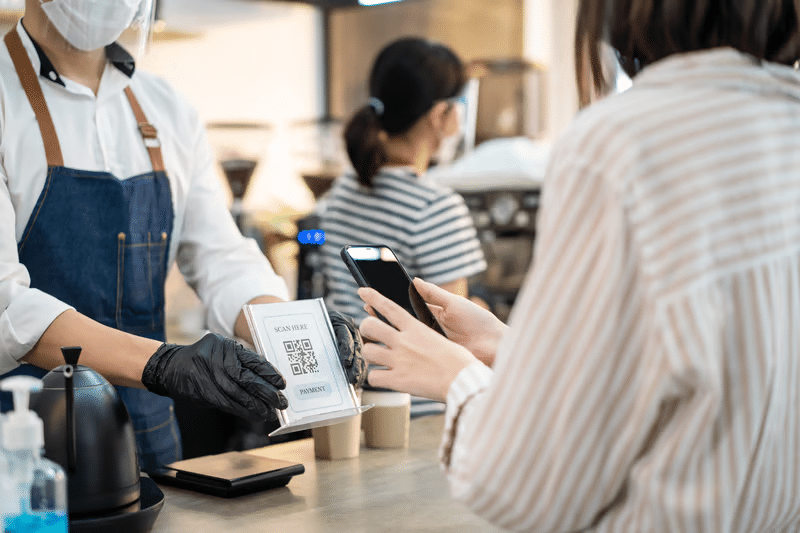
Japan translate camera function is one of the most transformative tools for Japan travel comfort, converting the country’s menu and signage environment from opaque to navigable in seconds.
Google Translate Camera: How to Use Optimally
For japan menu translation and sign translation specifically:
- Open Google Translate, select Japanese → English
- Tap the camera icon
- Hold the camera steady over the text — the live overlay appears within 1–2 seconds on a good connection
- For longer text (a full menu page), tap the scan button for a higher-resolution capture and translation
Pro tip: The “instant” (live camera) mode is faster but less accurate for complex or handwritten Japanese. Tapping “scan” captures a still image for a more thorough translation — particularly useful for handwritten specials boards at izakayas and traditional restaurants.
Handling Handwritten Japanese
Japan’s restaurant and café culture includes a significant amount of handwritten text — daily special boards, welcome signs, menu additions on paper slips. Handwritten Japanese (particularly in casual or cursive styles) is harder for camera translation apps to process than printed text.
Google Translate handles printed Japanese best, manages standard handwritten Japanese adequately, and struggles with highly stylized or artistic handwriting. For genuinely illegible handwritten text, a combination of the camera translation attempt and asking staff (pointing at the item) is usually more practical than repeated app attempts.
Offline Camera Translation
Downloading Google Translate’s Japanese language pack enables fully offline camera translation — a capability that many Japan travelers don’t know exists and which fundamentally changes the data equation for translation use.
With the offline pack downloaded (approximately 45 MB), camera translation for menus and signs works with zero data consumption, making it equally fast on low-connectivity mountain trails as in central Tokyo.
This is one of the most important Japan travel preparations available: the combination of offline maps (Google Maps) and offline translation (Google Translate Japanese pack) eliminates the two largest sources of continuous data consumption during Japan exploration, extending any fixed eSIM plan’s effective duration significantly.
Offline Translation Packs for Japan
Japan offline translation capability through downloaded language packs represents the clearest example of a preparation step with asymmetric value — a small upfront effort producing continuous daily benefit.
Downloading Google Translate’s Japanese Pack
- Open Google Translate
- Tap the language selector for the source language
- Search for “Japanese”
- Tap the download icon next to Japanese
- Download over WiFi before departure (approximately 45 MB)
Once downloaded, the Japanese pack enables:
- Text translation (type or paste Japanese text) — offline
- Voice input translation — offline (using the device’s on-device voice recognition)
- Camera translation — offline, including real-time AR overlay and scan modes
- Conversation mode — partially offline (see below)
What Offline Mode Doesn’t Cover
The offline Japanese pack doesn’t include:
- Real-time conversation mode with back-and-forth automatic language switching (requires connectivity for the best experience)
- Translations for very recent vocabulary or specialized technical terms that may have been added after the last pack update
For standard japan tourist language app use — menus, signs, transit notices, product labels, accommodation instructions — the offline pack covers essentially everything you’ll encounter. The online mode’s advantages are most apparent for unusual vocabulary, formal business Japanese, and conversational nuance.
Real-Time Conversation Translation in Japan
Japan voice translation and conversation translation has reached a level of practical usability that makes genuine communication with Japanese speakers possible through apps alone.
Google Translate Conversation Mode
Google Translate’s Conversation Mode allows two people to speak to each other with the app translating in both directions — you speak in English, the app translates and plays Japanese audio; a Japanese speaker responds in Japanese, the app translates to English text and optionally audio.
This mode requires an internet connection for the best quality — offline conversation mode is available but accuracy drops noticeably for conversational Japanese. In practice, having your Japan eSIM active is the key to making conversation mode work smoothly.
Real-world Japan situations where this genuinely helps:
- Restaurant situations where you need to explain dietary requirements or allergy restrictions
- Hotel check-in situations with specific requests
- Asking for directions when maps haven’t helped
- Medical situations requiring detailed communication (pharmacist, clinic)
Japan Tourist Phrases as a Complement
Despite excellent app translation, knowing a handful of Japan tourist phrases provides social lubricant that apps can’t fully replicate — particularly because Japanese communication culture values the attempt to use local language, however imperfect. A few words of Japanese alongside your translation app interaction typically produces a warmer response than app-only communication:
- ありがとうございます (Arigatou gozaimasu) — Thank you
- すみません (Sumimasen) — Excuse me / Sorry
- これをください (Kore wo kudasai) — This one, please (pointing)
- 英語のメニューはありますか?(Eigo no menyu wa arimasu ka?) — Do you have an English menu?
Best Practices for Tour Groups
Japan tour group translation management requires thinking beyond individual app use to coordination across a group with varying technology comfort levels.
Standardizing on One App
For japan tour group translation consistency, recommending a single app to all group participants (Google Translate, with the offline Japanese pack downloaded before departure) produces the most consistent experience. When every group member uses the same tool, the tour leader can troubleshoot confidently and provide identical setup instructions.
Pre-departure communication from travel agencies should include specific steps for downloading the Japanese offline language pack — many participants won’t do this spontaneously, and the benefit is significant enough to merit explicit instruction in pre-trip materials.
Translation Cards for Specific Needs
For group members with specific dietary requirements, allergies, or medical conditions, pre-prepared translation cards in Japanese are more reliable than real-time app translation for high-stakes communication. Printable Japanese allergy cards (“I am allergic to shellfish / nuts / dairy” in formal Japanese) are available through multiple Japan travel resources and should be distributed to affected group members.
Business Group Communication
For japan business translation needs in a group meeting context — interpreting presentations, discussing contracts, facilitating Q&A with Japanese counterparts — professional interpretation is the appropriate solution for anything involving consequential decisions. Translation apps provide adequate communication for logistics and social interaction; they introduce enough ambiguity in nuanced business contexts that relying on them for consequential business communication carries real risk.
According to the Japan National Tourism Organization, language accessibility is consistently identified as the most significant barrier for first-time Japan visitors, making translation app preparation one of the highest-value actions any Japan traveler can take before departure. Google’s official Google Translate support page provides current documentation on offline pack downloads and camera translation features for travelers confirming setup before their Japan trip.
Conclusion

Translation apps in japan 2026 have reached a level of practical capability that makes Japan’s linguistic environment significantly more navigable than even five years ago. Google Translate’s camera function converts opaque Japanese menus and signs into comprehensible English in seconds; the offline Japanese language pack extends this capability to zero-data operation for both text and camera translation; and conversation mode enables genuine back-and-forth communication in situations where language matters most.
The preparation is minimal but consequential: download Google Translate’s Japanese language pack before departure, download your destination regions’ offline maps in Google Maps, and arrive in Japan with both tools fully functional without any data connection required. These two downloads together — approximately 250–450 MB total — eliminate the two largest continuous data consumers of Japan tourist app use, meaningfully extending any Japan eSIM plan’s effective coverage.
Japan Sim Data’s eSIM plans on Docomo, SoftBank, and KDDI provide the data connection that powers your translation tools at their best — real-time camera translation at restaurants and temple information panels, online conversation mode when you need genuine communication with Japanese speakers, and everything else Japan’s visual and linguistic environment requires. Explore Japan Sim Data’s eSIM plans and arrive in Japan equipped to navigate its language with confidence.
Frequently Asked Questions
Q1: Does Google Translate work well for Japanese menus?
A: Yes, very well for printed menus. Google Translate’s camera function provides real-time AR overlay translation for printed Japanese text — hold your camera over a menu and the Japanese text is replaced by English translation in the live view. Accuracy is high for standard food vocabulary and menu descriptions. Handwritten daily specials boards are more challenging — the scan mode (capturing a still image rather than live camera) often produces better results for handwritten text than the live camera overlay.
Q2: Can I use translation apps in Japan without data?
A: Yes, with preparation. Downloading Google Translate’s Japanese language pack (approximately 45 MB) before departure enables fully offline text translation, camera translation, and basic voice translation with zero data consumption. This is one of the highest-value Japan travel preparations available — complete it over WiFi before departure or at your airport on arrival. DeepL does not currently offer meaningful offline mode for Japanese.
Q3: How much data does Google Translate camera translation use?
A: In online mode (without the offline pack downloaded), the camera translation function consumes approximately 3–8 MB per minute of active live camera use — the most data-intensive standard tourist app function. Downloading the offline Japanese language pack reduces this to zero, with camera translation running entirely on-device using locally stored language models. For travelers on smaller Japan eSIM data plans, downloading the offline pack is essential preparation.
Q4: Is DeepL or Google Translate better for Japan?
A: For everyday tourist use — menus, signs, transit notices, product labels — both perform adequately with minimal practical difference. For camera translation specifically, Google Translate is significantly better developed for Japanese, with a more capable real-time AR overlay and scan mode. For longer, more formal Japanese text — business documents, detailed institutional information, complex formal notices — DeepL’s contextual translation quality often produces more natural English output. The practical recommendation: use Google Translate as your primary Japan translation tool for its camera capabilities, with DeepL as a secondary option for longer written text.
Q5: What’s the best translation approach for communicating dietary restrictions in Japan?
A: A combination of a pre-prepared Japanese dietary restriction card (printed or saved as an image) and Google Translate’s camera and conversation modes provides the most reliable communication. Apps handle standard allergy vocabulary well, but showing a pre-prepared card in formal Japanese (“私はエビアレルギーがあります” — “I have a shrimp allergy”) is more reliable than real-time translation for high-stakes food safety communication. Japan travel resources provide printable allergy cards for common dietary restrictions; these are worth preparing before departure for any affected traveler.