
eSIMs for Japan Coach and Bus Tours: Onboard Connectivity Solutions

The Japan coach tour remains one of the country’s established international tourism formats. These multi-day scenic circuits travel through landscapes that the Shinkansen can pass too quickly to appreciate.
Coach tours also reach destinations that rail access does not easily serve. In addition, guides provide cultural context for first-time visitors who may not speak Japanese.
However, connectivity creates a unique challenge for coach tour operators.
Onboard WiFi vs Individual eSIMs
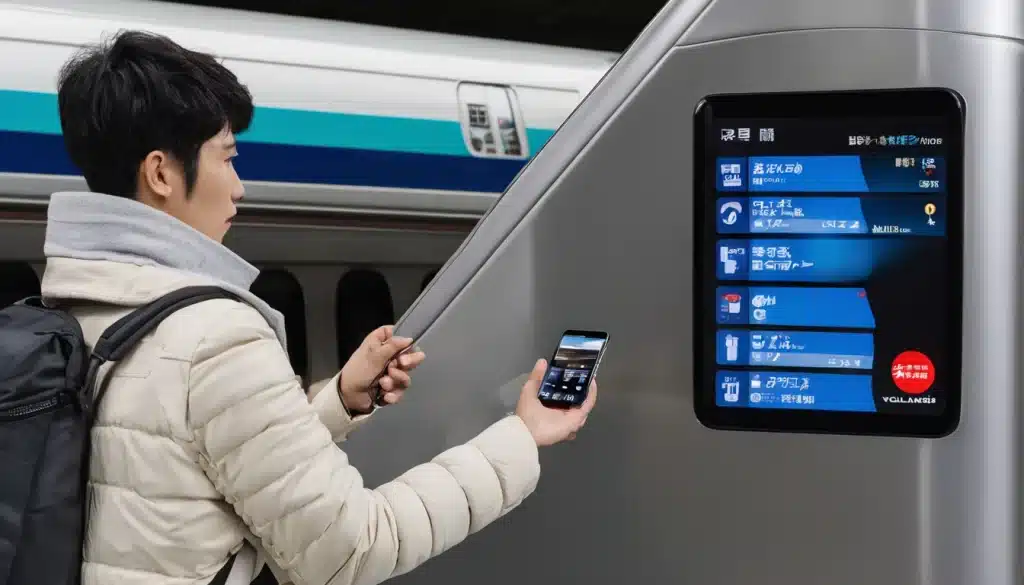
Many Japan coach tours already provide onboard WiFi. A router inside the vehicle shares internet access with passengers during transit.
Therefore, operators often ask whether individual eSIMs remain necessary.
The answer depends on where passengers need connectivity. Onboard WiFi and individual eSIMs serve different purposes.
What Onboard Coach WiFi Provides
Japan coach tour onboard WiFi usually comes from a 4G mobile router. The router uses a Japanese carrier SIM and creates a shared passenger network.
Passengers can browse the internet, send messages, and use basic online services while the coach travels between destinations.
Onboard WiFi capabilities include:
- Shared internet access during coach transit
- Basic messaging and email
- Light browsing
- Social media access during transit
However, onboard WiFi also has important limitations.
Shared Bandwidth
A coach may carry 30 or more passengers. All passengers share the router’s available bandwidth.
As a result, heavy use can reduce speeds. Photo uploads and video streaming can affect other passengers’ connections.
Transit-Only Coverage
Onboard WiFi works while passengers remain on the coach.
Once passengers leave the vehicle, they leave the WiFi network behind. This creates a problem during temple visits, market stops, scenic viewpoints, and restaurant breaks.
Coverage Dependency
The onboard router depends on the mobile carrier network that supports it.
Therefore, the router can experience weak service in rural or mountainous areas. Individual eSIMs can face similar limitations when they use the same network.
Battery and Charging
The router also depends on the coach’s electrical system.
This normally presents no issue during transit. However, operators may need to consider power availability when the coach remains parked for an extended period.
What Individual eSIMs Add
Individual eSIMs provide connectivity that follows passengers after they leave the coach.
This difference makes them useful throughout the full tour day.
Connectivity at Destination Stops
Passengers can use their own data while exploring a destination.
For example, they can navigate a temple complex or find a particular shop. They can also use translation tools and share photos with family.
Restaurant and Shopping Connectivity
Free-time periods create another important use case.
Passengers may need directions to a restaurant. They may also want to translate a menu or research a product before buying it.
Individual eSIMs support these activities without requiring passengers to return to the coach.
Emergency and Group Communication
Individual connectivity also supports group communication.
For example, a passenger may become separated from the group at a large attraction such as Fushimi Inari or Arashiyama. Their eSIM allows them to contact the guide.
The onboard router cannot provide this connection when the passenger is away from the vehicle.
Evening Connectivity
The coach may drop passengers at their accommodation in the evening.
At that point, the vehicle’s WiFi stays with the coach. Individual eSIMs continue to provide connectivity at the hotel or other accommodation.
Why Both Systems Matter
The practical relationship is simple.
Onboard WiFi supports passengers during coach transit. Individual eSIMs support passengers at destinations and during the evening.
Therefore, the two systems can work as complements rather than substitutes.
Guide-Led eSIM Activation on the Coach
The coach can also provide a useful environment for eSIM activation.
Unlike an airport arrivals hall, the coach gives passengers time to sit down and access their phones.
The guide can also provide assistance while the group travels toward the first destination.
The Coach as an Activation Environment
For tours that collect passengers from an airport, hotel, or central departure point, the first coach journey can create a useful activation window.
A 30–60 minute journey gives passengers time to complete the setup.
Example Guide Announcement
A guide could say:
“Before we reach our first destination, let’s get everyone’s Japan eSIM connected. I’ll walk you through it. It only takes a few minutes.”
The guide can then provide simple instructions.
- Open the pre-departure email containing the QR code.
- On iPhone, go to Settings → Cellular → Add eSIM.
- On Android, go to Settings → SIM Manager → Add eSIM.
- Scan the QR code.
- Select the Japan eSIM as the mobile data line.
- Confirm that the Japan network appears on the device.
Why Coach Activation Works
The coach environment offers several practical advantages.
- Passengers are already seated.
- They are not handling airport luggage.
- The guide remains available for questions.
- The group has a clear destination deadline.
- Passengers needing help remain close to the guide.
As a result, the coach session can provide an effective backup for passengers who did not complete installation before departure.
Pre-Activation vs Coach Activation
Pre-departure installation should remain the preferred approach.
Passengers can install their eSIM at home before the tour begins. This allows them to connect soon after arrival.
The coach session then becomes a backup for passengers who did not complete installation.
Pre-Departure Communication
Operators can include a simple instruction in the pre-departure pack:
“Your Japan eSIM QR code is included in your travel pack. Please install it at home before departure. Your guide will assist with questions during the first coach journey.”
This approach reduces pressure on the guide after arrival.
Rural Routes and Coverage Planning
Japan coach tours often travel through rural and mountainous areas.
That geographic reach is part of the appeal of coach travel. However, it also makes connectivity planning more important.
Japan Coach Tour Coverage
Coach itineraries can pass through rural Nagano valleys, the San’in coast, Hokkaido’s agricultural areas, and mountain routes in the Kii Peninsula.
These environments can have different coverage conditions from major cities.
Therefore, operators should set realistic expectations before departure.
Docomo Network Planning
The source article recommends Docomo for Japan coach tour programs because these itineraries often include rural and scenic sections.
However, coverage can still vary by location. Even a strong national network may experience temporary limitations in remote mountain areas.
Coverage on Common Coach Routes

Kyoto–Nara–Osaka
This route is primarily urban and has broad mobile coverage.
Passengers can generally expect strong connectivity throughout the main route.
Kyoto–Hiroshima–Miyajima
The main route has broad coverage.
However, some mountain approaches may experience temporary variation.
Takayama–Shirakawa-go–Kanazawa
Mountain sections can create variable coverage.
Operators should prepare passengers for possible short interruptions in rural areas.
Tohoku Scenic Routes
Tohoku includes rural and mountainous sections.
Therefore, passengers should expect some coverage variation away from towns and major roads.
Hokkaido Scenic Routes
Routes such as Sapporo–Furano–Biei–Otaru include agricultural and rural areas.
Coverage can vary outside major towns. Passengers should prepare for occasional interruptions in remote locations.
Setting Passenger Expectations
Pre-departure materials should explain the coverage situation clearly.
For example:
“Your Japan eSIM provides strong connectivity in cities and along major routes. However, some rural mountain sections and remote scenic areas may have temporary coverage limitations. Service normally improves as the route reaches towns and cities.”
This message helps passengers understand normal coverage variation before the journey begins.
Connectivity During Extended Rest Stops
Individual eSIMs become especially useful during longer destination stops.
A group may have 90 minutes at a historic market or two hours at a temple. Passengers can use their own data throughout the entire stop.
Navigation During Free Time
Passengers can use navigation apps while exploring.
They can also find meeting points and check walking routes without returning to the coach.
Group Communication
Individual connectivity also helps guides communicate with passengers.
For example, a guide may send a group message:
“Bus departs in 20 minutes from the car park entrance.”
Passengers can receive this message even when they are several hundred meters away from the coach.
Restaurant and Shopping Breaks
Free-time periods often include restaurant and shopping stops.
Individual eSIMs allow passengers to find restaurants, translate menus, and research products.
Therefore, connectivity supports both practical needs and independent exploration.
Bulk Pricing for Repeat Coach Itineraries
Coach operators often repeat the same Japan circuits.
For example, an operator may run the Kyoto-Hiroshima-Nara route several times during a peak season.
Repeated departures can create substantial annual eSIM volumes.
Example Coach Tour Volume
Consider this example:
- Classic Japan circuit: 20 departures × 35 passengers = 700 activations
- Japan Alps scenic circuit: 8 departures × 30 passengers = 240 activations
- Hokkaido summer circuit: 10 departures × 25 passengers = 250 activations
- Additional guide and staff plans
Together, these programs create more than 1,200 annual passenger activations.
Therefore, repeat operators can discuss wholesale pricing based on their total activation volume.
Repeat Itinerary Batch Processing
Repeat itineraries also create operational efficiencies.
Once the operator establishes the eSIM template, the same setup can support future departures.
The operator can then use:
- Weekly batch orders based on passenger manifests
- Consistent QR code delivery
- Standard pre-departure messages
- Reusable guide instructions
- The same network and plan specifications
As a result, the administrative work can decrease after the initial setup.
Japan eSIM Coach Group Setup
A standard process also makes guide training easier.
The operator can establish one activation workflow for each circuit. Guides then follow the same steps on every departure.
This consistency can reduce confusion and make troubleshooting easier.
Japan Sim Data Coach-Tour Support
Japan Sim Data can support operators with several elements of the coach eSIM program.
Repeat Itinerary Templates
Operators can establish templates for recurring coach circuits.
Each template can include the network, plan type, validity period, and delivery format.
Only the passenger count may change between departures.
Guide Activation Training
Guide materials can explain how to run an activation session on the coach.
They can also cover common device issues. This allows guides to help individual passengers without stopping the entire session.
Rural Coverage Materials
Pre-departure materials can explain expected coverage variation.
Clear communication can reduce confusion when passengers experience temporary service interruptions in remote areas.
Driver and Staff Plans
Agency bulk orders can also include plans for drivers and logistics staff.
This gives the operational team connectivity for navigation, coordination, and communication.
Seasonal Coach Tour Support
Some operators run seasonal circuits.
Examples include:
- Hokkaido summer tours
- Kansai sakura tours
- Tohoku autumn foliage tours
Advance planning can help operators coordinate batch orders around these seasonal departures.
Conclusion: Individual eSIMs Complete the Coach Tour Setup
Onboard WiFi and individual eSIMs serve different functions.
The onboard router provides shared connectivity during coach transit. Individual eSIMs continue working when passengers leave the vehicle.
This distinction matters throughout a Japan coach tour.
Passengers need connectivity at temples, restaurants, markets, scenic viewpoints, and accommodation. They also need it for navigation, translation, group communication, and emergencies.
For this reason, operators can treat the two systems as complementary parts of the tour’s connectivity setup.
A Japan eSIM program can also support repeat departures through batch ordering, guide training, and standard activation procedures.
Visit japansimdata.com to establish your Japan coach tour eSIM program.
Frequently Asked Questions
Q1: Does every Japan coach tour passenger need an individual eSIM if the coach has onboard WiFi?
Onboard WiFi only works while passengers remain connected to the coach router.
At destinations, restaurants, shopping areas, and accommodation, passengers may no longer have access to the vehicle’s WiFi.
Individual eSIMs provide connectivity throughout these periods.
Therefore, operators can use onboard WiFi and individual eSIMs for different parts of the tour.
Q2: When should passengers activate their Japan eSIM?
Pre-departure installation is the preferred approach.
However, the first coach journey can provide a useful backup activation window.
Passengers are seated, and the guide can provide assistance. A short activation session can therefore help passengers who did not install their eSIM before departure.
Q3: Which carrier should coach tour operators specify for Japan programs?
The source article recommends Docomo for Japan coach tour programs.
The recommendation reflects the rural and mountainous routes used by many scenic coach tours.
However, actual coverage can vary by location. Operators should communicate this possibility to passengers.
Q4: How should passengers prepare for rural coverage limitations?
Pre-departure materials should explain that coverage can vary in rural and mountain areas.
Passengers can also download important maps before entering remote sections.
This provides an offline navigation option if mobile service temporarily becomes unavailable.
Q5: Can Japan Sim Data provide eSIMs for drivers and logistics staff?
Yes. Agency bulk orders can include driver and logistics staff plans alongside passenger plans.
These plans can support navigation, operational communication, and coordination during the tour.